PROMOMED expands its portfolio of incretin drugs in Belarus
24.10.2025
Corporate
Production
Industry development
24.10.2025
The first medical management body in Russia, the Apothecary's Order– was created during the reign of Ivan the Terrible, in the 16th century. At the same time, the country's first pharmacy was founded.
Half a century later, the state medical school opened, and in the middle of the 18th century, Russia's first medical faculty of the Imperial Moscow University opened its doors to students. Later it became an independent university and now bears the name of the world-famous Russian scientist Ivan Mikhailovich Sechenov.
And it was the opening of the first medical faculty that marked a new stage in the development of the domestic pharmaceutical industry. So, in the 19th century, medical universities and academies began to appear all over the country. Special emphasis was placed on surgery, obstetrics and nursing, pharmacology and sanitation.
It turns out that the history of the Russian pharmaceutical industry dates back 500 years, and during this time it has become an independent branch of the economy, which now employs about 200,000 people. And the market volume is showing annual growth, and, according to analysts, it may reach 3 trillion rubles by the end of 2025.
Every day, scientists – developers and pharmacologists – study the effects of various compounds on the body in order to create new drugs. Their work is a series of big and small discoveries that bring us closer to victory over diabetes, cancer, cardiovascular and other diseases.
Russian scientists and pharmaceutical companies have repeatedly proved that the country can count on them in difficult times.A striking example was the COVID-19 pandemic and the urgent development of domestic vaccines and antiviral drugs for the treatment of the disease, one of which was Areplivir, created by the Russian biopharmaceutical company Promomed.
It was covid that showed how important it is to be able to combine basic science and industrial readiness for the immediate launch of drug production. Promomed coped with this task. And after the end of the pandemic, it has not slowed down in the development of the domestic pharmaceutical industry.
THE INNOVATION PIPELINE
Promomed celebrates its twentieth anniversary in 2025. During this time, the company has become one of the most prominent participants in the Russian pharmaceutical market.
She has behind her the largest research in the world, the creation of an advanced pharmaceutical plant, large-scale localization of the full cycle of production of vital drugs, the development and market launch of unique innovative drugs, a patent portfolio, international expansion and IPO on the Moscow Stock Exchange."We are simultaneously developing and launching dozens of drugs. And we work as a conveyor of innovations, creating solutions for the treatment of socially significant diseases," Kira Zaslavskaya, director of new products at Promomed, told RIA Novosti.
She explained that the company provides access to the most modern drugs available in the world and creates its own innovative drugs that are in demand by the healthcare system. "We don't copy other people's drugs. Even when creating medicines based on known molecules, we invest in advanced developments and create our own technologies for drugs with improved quality, efficacy and safety. And our main focus is on the latest molecules," Zaslavskaya said.
Over the past few years, Promomed has conducted about a hundred medical studies. Among them, there are bioequivalence studies, when the company checks to what extent the reproduced drugs (generics) are equivalent to foreign precursors.
A significant part of the research is aimed at researching the effectiveness and safety of innovative drugs. Only in 2025, the Russian company launched the first-in-class innovative drug Amberwin Pulmo for the treatment of a wide range of respiratory tract diseases, created and launched a new generation drug for the treatment of overweight and obesity Velgia Eco, which managed not to use any preservatives.
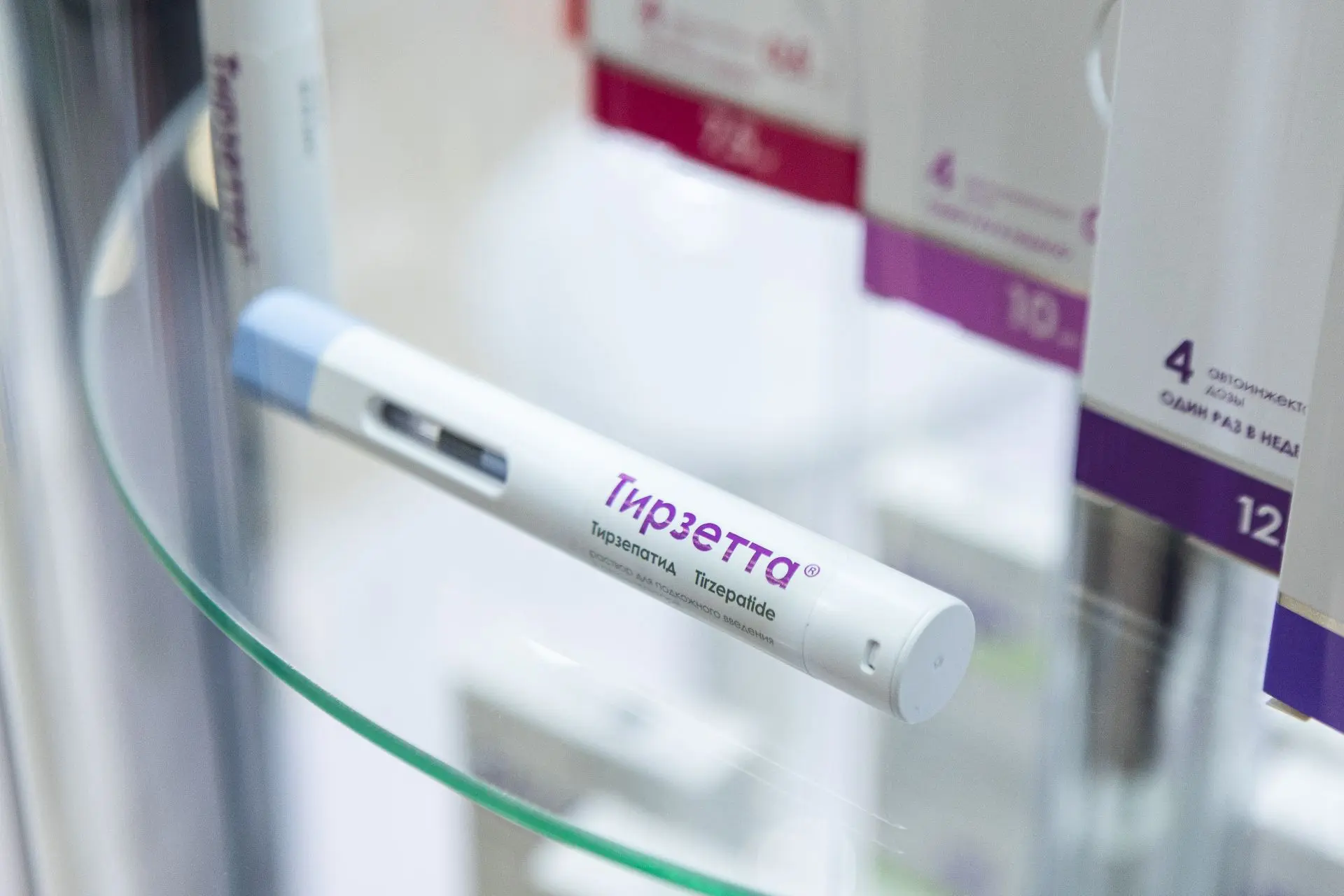
Promomed also has in its arsenal an advanced drug for the treatment of obesity and type 2 diabetes, Tirzetta, which allows you to get rid of fat deposits and at the same time strengthen muscle mass.
And at the end of the summer, the company announced that it was working on drugs for the treatment and prevention of HIV that would improve the quality of life of patients with this infection – they would be able to inject every few months and even every six months instead of taking a large number of pills daily.
Promomed's area of interest is not limited to Russia – the company is actively developing cooperation with other countries, introducing drugs to new markets. For example, she works with the Vietnamese pharmaceutical company Vinafarm in the field of drug production and distribution, research and synthesis of new molecules.
Also in the summer, Promomed signed a trilateral cooperation agreement with Mordovia and Bahrain. And at the beginning of the year, he announced plans to enter the market of a number of countries in the Middle East, for example, Iraq.According to the founder of the company, Peter Bely, the visible results of the "innovation pipeline" will show significant growth in the next few years, until 2028. The reason is objective – the passage of clinical and preclinical studies of the drug, as well as the process of its registration by the regulatory authority of each specific country. But success is only a matter of time.
"True import substitution lies precisely in the development of domestic innovations. Otherwise, we'll always be catching up, and people will always be surprised that we've learned how to do it. That's why we are working on the latest technologies," explained Bely.
THE MAIN SUPPORT IS THE STATE
As stated by the head of the Ministry of Health, Mikhail Murashko, about 85% of medicines registered in Russia over the past year and a half are domestic. And this is due not only to the industry, but also to the authorities, who provide tremendous support to pharmacists.
The active work of medical companies is accompanied by the state policy of import substitution, as well as national projects in the field of healthcare, which were launched in 2025. In May, Russian Deputy Prime Minister Tatyana Golikova announced that 3.2 trillion rubles would be allocated for their implementation over the next 6 years. Thus, the first national project “Long and active life” is responsible for increasing life expectancy to 78 years by 2030, and to 81 years by 2036.
The second national project, New Health Saving Technologies, is aimed at the development and implementation of domestic medicines and medical products. And within the framework of the national project “Family”, it is planned to equip and re-equip 120 perinatal centers, expand the network of women's consultations and re-equip children's hospitals.
In addition, the Industrial Development Fund allocates preferential loans for the construction of new facilities for the development of innovative drugs. Preferential financing conditions greatly help market participants in conditions of high key interest rates. "This is a huge support for manufacturers. Without it, it would be extremely difficult to build a working system," says Bely.
There are also regional support mechanisms. "Moscow has excellent programs to support the development of the industry. There are good programs in Mordovia. Let's not forget that we have preferential VAT on medicines, which eases the burden on cash flow," he said.
According to him, the state is doing a lot to ensure that the pharmaceutical industry develops: "And this is an indisputable fact. Without it, we would have remained in a state of ruins." Other support measures include reducing and speeding up bureaucratic procedures, including the registration of new drugs.
Government support is relevant for pharmaceutical companies precisely because the industry has a demand for innovations and new treatment methods. And this demand, as a result, generates market growth, Zaslavskaya summed up.
BIOLOGICAL SAFETY
So why should the government and business invest huge resources in research and development of medicines if they can be bought abroad?The answer is obvious, because people's health and longevity are at stake, which means the security of the nation. And the experience of sanctions, which have affected many sectors of the economy, has shown that it is better to invest money, time and resources in creating your own industries. And there is a return on the efforts invested.
First, let's return to the experience with the pandemic, when companies learned how to quickly mobilize research and production capacities in a crisis. By the way, a similar experience happened in 1959 in the USSR, during an outbreak of smallpox in Moscow. When it became known about the disease, the capital was quarantined, and the Ministry of Health increased the production of vaccines and began vaccinating residents of Moscow and the Moscow region. As a result, almost 10 million people received the vaccine in just one month. The emergency measures of the Ministry, law enforcement agencies and doctors helped to quickly overcome the outbreak. Secondly, in a number of areas, such as oncology and immunotherapy, Russian companies are creating competitive products and platforms that are adapted to the national market and healthcare system.

© Photo provided by the press service of Promomed Pharmaceuticals
So, the Promomed team is currently developing a melanoma vaccine: it is planned that the first phases of clinical trials in this area will begin in 2026. "Here we are keeping pace with world leaders, because no one has advanced further than us yet," said Bely. In addition to the quality of the drug being developed, another advantage of the vaccine is its low cost due to its inexpensive production technology.
And thirdly, as mentioned earlier, business is focused on import substitution, and the government, realizing the importance, provides appropriate support measures. If before 2022 it seemed to us that nothing would happen if we under-researched something and bought from others, then today's world shows that if a country wants to be truly sovereign, it must provide for itself as much as possible, primarily with scientific developments, head of the Russian Academy of Sciences Gennady said in a recent interview with RIA Novosti. Krasnikov.
And in order to achieve Russia's technological sovereignty, a strong link between fundamental science and applied research and production is needed. This is exactly what Promomed is doing.
Moreover, there is no time to pause – there is a huge collaboration between scientists and business ahead within the framework of the new national project "Technological support for Bioeconomics", which will be launched from the beginning of next year.
This national project is complex in nature and defines strategic directions for the development of a number of industries: chemical industry, food industry, energy, medicine, ecology and agriculture. Today, the range of applications of bioeconomic technologies covers such advanced sectors as genetic engineering, synthetic biology, microbiology, biochemistry, biosynthesis and precision fermentation. This means that it is necessary to consolidate efforts and resources, create new capacities and production facilities in order to regain the country's leading position in the biotechnology market. Therefore, Russia definitely cannot do without innovation. Sources

Get the most interesting news and publications first!
Sent successfully!

Press office
To request a press release or interview, please contact our press office