Expert RA upgraded PROMOMED DM's credit rating to ruA
17.04.2026
Corporate
17.04.2026
Founder, Chairman of the Board of Directors of Promomed company — in the TASS special project "Top Officials of Science and Business"
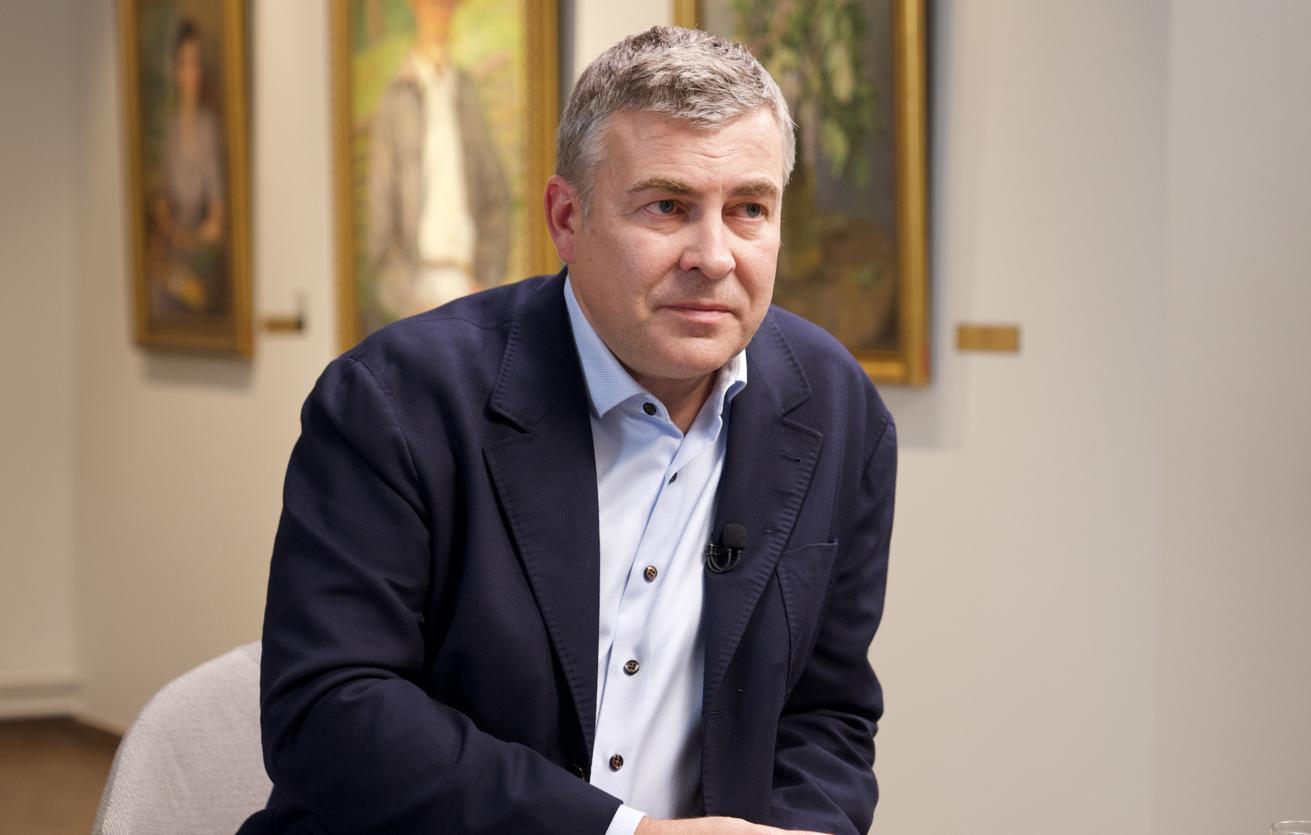
Peter Bely© TASS
About choice, Indian kingdom, business for health, contract with society and disease X
— Do you have a family of scientists?
— You could say that. My parents graduated from a chemical college. Dad defended his dissertation, participated in the work, which eventually received the USSR State Prize. Then he abruptly changed his line of work, took up Pushkin, wrote several books, and became a doctor of philology. He was a brilliant lecturer and an interesting conversationalist. His older sister and my aunt Galina Belaya taught at the MSU journalism faculty. The whole university came running to listen to her. He is also the author of many books.
Grandpa knew an incredible amount of poetry in different languages.
In general, linguistic and philological traditions were alive in the family.
"And Mom?"
— I graduated from the same university as Dad. She worked— interestingly enough — at the Institute of Antibiotics. We have a huge factory in Saransk, which we have completely reconstructed, having invested hundreds of millions of dollars in it. At one time, the Soviet homeland built it for the synthesis of antibiotic substances. Mom worked with penicillin, the first generation of antibiotics, and we are already making the fourth, fifth generation.
You must agree, there is a continuity here for me. You could say I've caught the baton.
And another important aspect. A sign of the strength of the state is the availability of its own pharmaceutical production of modern drugs — oncological, endocrine, and antibiotics…
The whole cycle is from the synthesis of the substance to the finished forms.
— We will come to talk about it. So far, it's about your 17 years. I didn't just ask. As far as I understand, Leninsky Prospekt is one location, but there was a second one.
— Oh, yes! Sailor's Silence. That's where my medical school is located.…
I got there, one might say, by accident. I studied at a good special school with an advanced foreign language, I passed a competition to go to the senior class, and suddenly, after all the crucible, four days before September 1, I told my father that I had changed my mind and wanted to go to medical school. They say that if I graduate with a red diploma and excellent qualifications, it will be easier to get into medical school.
Of course, my father tried to dissuade me, but I stood my ground. We toured several educational institutions together, and they agreed to take me far from the most prestigious one located in Sokolniki. And the neighborhood there was a peculiar one: on the one hand, there was a prison, on the other— a mill complex.
The area is specific, to put it bluntly.
— How long did you study at Matrosskaya Tishina?
— Three years. I honestly tried to stick to the plan that I outlined to my father: I was an active member of the Komsomol, studied well, eventually becoming the number one graduate.
— Are you in the Indian kingdom?
— Yes, yes! I still have relationships with some of my fellow students.
You know, since that time, I've come to understand that our country relies, excuse me, on women. Girls work much better, they are ready to give much more energy to the cause than men. Unfortunately, we are less plastic…
— In short, did you regret that you found yourself in this "Silence"?
"Not anymore.
"And then?"
— I was disappointed. Medicine was in shambles, there was nothing to treat, there was little technology, and hospitals were despondent. You can't even compare it to what it is now. Heaven and earth! Russia has one of the best healthcare systems in the world, and the availability of advanced technologies is very high.
— It's today. But after graduating with a red diploma from the college, you didn't go to the medical institute, as planned, did you?
— Everything happened, however, a little later. First, I decided to teach economics. I quickly realized that I had to return to medicine. I established good contact with the teaching staff, and I got into the department, which eventually became crucial for me. He defended both his PhD and doctoral dissertations there. My supervisor Igor Veniaminovich Mayev is one of the leading gastroenterologists in the country, then a professor, Doctor of Sciences, now an academician. A terrific man of encyclopedic knowledge, an example of a real Russian educated doctor. It was contagious.

Peter Bely and Andrey Vandenko
© TASSI plunged into the familiar atmosphere of living science. The teachers also advised me to go into research medicine. After receiving my diploma, I did just that, I stayed at the department. And my future professional life turned out to be connected with research.
— The availability of specialized education is mandatorywhat is the prerequisite for working in this field?
— Of course, knowledge and understanding of medicine as a science is very necessary. It is extremely important to understand biochemistry, cellular processes, and molecular biology in order to predict where science will go. Any serious pharmaceutical company imposes strict requirements even on the lowest level of employees, not to mention highly qualified specialists. Otherwise, you will not be able to have a professional conversation, there will be no communication. And we have great examples: an employee started his career as an assistant to a medical representative, and now heads the research department of the company, director of new drugs, member of the board of directors of the company.
It is impossible in our field without medical education.
— And who did you consider yourself to be, a doctor or a businessman?
— A research doctor, of course. And the economic basis allows me to do a lot, bringing the future closer. Rather, it's like this: the future has already arrived, we can reap the benefits. To say, "We'll get over the superinfection soon!" And defeat her.
— At the same time, you are making money.
— The company invests, earns and invests again, but where? In research, the creation of new drugs. We are focused on this. My personal passion is the strategic committee on the board of directors, the vision of the product portfolio, global medical challenges that our company will work with for many years. As a controlling shareholder, I have to make sure that the right decisions are made.
— But whoever pays, orders the music. A doctor's main commandment is "Do no harm," while a businessman's goal setting is somewhat different.
— It seems to me that the medical formula of Hippocrates has been slightly transformed today towards greater concretization. The safety of a medicinal product is only one of the sides. If there are concerns, it will not go beyond the first phase of clinical trials.
Efficiency is the second most important component. Therefore, "Do no harm" is the basic level. The most important thing is that drugs treat what was previously considered impossible, do it as painlessly as possible for the patient and in the shortest possible time. This is modern medicine.
And, to be honest, I don't see any contradictions in the concepts of medical and business.
— But you have to make a profit, right?
— We must! To then invest in the creation of new medicines. It's part of the social contract. You've done something good, produced a cure for something that was previously incurable. They give you a patent for that. In fact, the market is being monopolized. But when making a profit, you should at least partially reinvest the profit in the search for new solutions to make society healthier. It is an unbroken chain, a single system.
The pharmaceutical business is not a stall: it started, closed and left. No! A huge cycle, thousands of employees. Today you were awarded an order for a new drug, and tomorrow you are already taking risks, you may not go through some phase of clinical trials. You have to be prepared for defeats, have a plan B, C, D in order to solve the medical problem.
— Did you create the company in 2005 and started researching then?
— Well, we were very young. What they could afford is not comparable to what Promomed is doing now. Nevertheless, from the very beginning, we set a course for complex products.
We have taken up the problem of obesity, and this is one of the key problems preventing humanity from living happily ever after. Most somatic diseases are directly or indirectly related to the problem of obesity, metabolic unhealthiness, let's say in a general word, insulin resistance.
— Maya Plisetskaya answered this question a long time ago. They asked her, "How do I keep the same shape as yours?" she said: "Don't eat!"
— And Maya Mikhailovna was right. If all of humanity could answer like that, there would be another life, another planet. I do not exclude that in 100 generations we will learn to control our appetite with the power of thought, to limit the energy consumption that we receive from food. But now, evolutionarily, this is not the case. People have always lived in conditions of nutritional deficiency. It continued right up to the last generation.
Dad told me how he and his twin brother, my uncle, almost starved to death after the war. When they were brought to Moscow, they were blue and transparent. The doctor told them: your diet consists of three "m's" — butter, meat, milk.
All generations before us have faced hunger. Humans do not have the genetic mechanisms to limit their food intake. On the contrary, all our genetic systems are set up to store. This model is hundreds of millions of years old. And the gray matter, with which we hope to limit hunger by saying to ourselves, "Enough, don't eat!" is much younger, it is only 70 thousand years old. The forces are unequal.
Drug therapy comes to the rescue. As a tool to combat obesity and metabolic syndrome.
— You named This is a non-communicable pandemic of the 21st century.
—That's right. The plague of our century, if you will.
— And what is your historical contribution to the fight against this infection?
— In 2005-2008, a first-generation drug was developed that limited hunger. In Russia, it was called Reduxin. This molecule has a very difficult fate, and there have been medical wars around it. Together with the best doctors in the country — leading endocrinologists, cardiologists, gynecologists, and internists — we conducted the largest study in world endocrinology that demonstrated the effectiveness and safety of the drug. It is still in service with our healthcare system.
Now it's time for a new generation of drugs, the so-called glucagon-like peptide agonists have appeared. The first of them was Ozempik, the next generation was tirzepatide and its analogues.
We were the first in the country to produce the drug "Quincenta" — the Russian "Ozempik". Now we already have Tirzetta, Velgia Eco. Regardless of weight loss, the parameters of the lipid profile, glycated hemoglobin, a number of metabolic parameters, and the insulin resistance index improve, which are critical for a long-term favorable prognosis of a healthy human life.
For us, endocrinological drugs are one of the key portfolios along with oncological ones. The whole history of Promomed is inextricably linked with endocrinology and the fight against metabolic syndrome. Plus oncology, infections, neurological drugs.
— You also talked about the so-called X disease.
"That's right. That's when covid emerged. He came out of nowhere and created a viral threat that humanity was not ready for. Millions of people have died and hundreds of millions have been ill. What is the result? It turned out that a drug that is quite simple in its mechanism of action is sufficient, which, acting on an enzyme, blocks the reproduction of this virus. That's all. And how many copies were broken, discussions were held. Now there is no problem. There are medicines and vaccines.
Disease X is a threat modeled by humanity. What happens if such a thing suddenly turns out to be resistant to all currently available antibiotics? How to deal with it? Research medicine must have a solution plan. And Promomed is the company that has a solution for disease X.
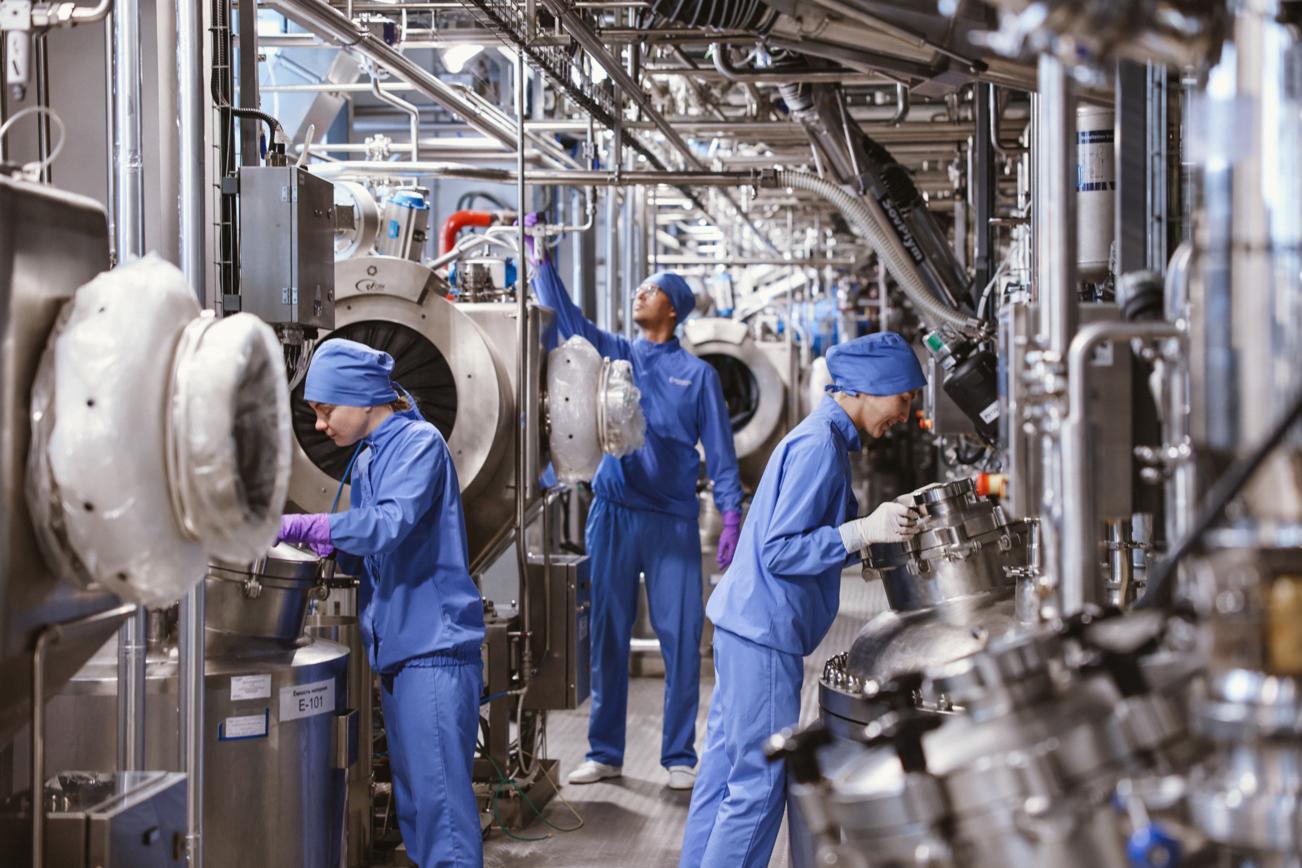
The site of synthesis and purification of active pharmaceutical substances (API)
© Daria Karakulova/ The press service of PJSC PromomedYou must admit that it is difficult to deal with cutting-edge drugs without your own production base.
— It makes sense.
— Therefore, at some point we faced a dilemma: we must either build our own production or buy some kind. As a result, we did just that, we acquired a factory in Saransk. 22 hectares of land, 60 buildings and structures. It was once the pride of the Soviet Union, where cutting-edge technologies for the synthesis of first-generation antibiotics were used. But the plant was built in 1959, and since then many workshops have not been reconstructed. It was easier to demolish and rebuild everything. We had to invest huge amounts of money to renovate each workshop, build new ones and create conditions for the synthesis of three types of substances — chemical, microbiological and biological. It took 10 years of work and more than 300 million dollars.
— Did you go around the world with a hat?
— Well, fortunately, it didn't come to that. There have been better and worse times.
— Did you borrow money?
- of course. Some of them have already been given away, and we continue to return some of them. The financial life cycle of an enterprise is a separate science. When the bank provides the first loan, you get not money, but trust in your plan. The next step is the placement of bonds. Highbrow specialists will meticulously recalculate everything under a microscope, lay down risk models. When we made a public offering and gained a wide range of shareholders, it imposed even greater responsibility. This story is even more important than the money itself.
Biotechnology medicine is now opening up fantastic opportunities. You can spend any amount, and still not have enough — there are so many interesting things around. We need to invest, invest, invest... In the human brain, in the hypothalamus, there is a special area responsible for pleasure. It is important to enjoy life and experience happiness. It's the same in business. This is a reward when you promise investors that you will bring supernova drugs to the market, which will increase in price 10 times in two years.
About covid, the miracle pill, the Order of Pirogov, the substituted shoulder, import substitution, victory over cancer and generics
— You have really risen to the COVID-19 pandemic.
— I want to think that the company is steadily developing due to the consistent implementation of its strategy.
— But 2020 has made you rich.
— Indeed, he has become very successful for us. But on what basis would it beIs it done? When we bought the factory in Saransk, we realized that we inherited not only the building that needed to be reconstructed, but also the spirit of the company that made substances for antibiotics. Yes, according to outdated technologies, but still. We have created an infection control research center to make the latest generation of antibiotics. We were technologically ready to synthesize new substances, and people understood the specifics— technologists, molecular biologists, and engineers. With the outbreak of the pandemic, the research center was adapted from bacterial technologies to antiviral ones, and it worked. But it didn't come out of thin air. Our strategy initially envisaged the creation of such a center.
And in the therapeutic area, we have a similar one.
— You once told me that covid caught you in South Korea, from where you were going to China. We talked on the phone with my mom, and she advised: "You don't have to go there, son."
— There was a case, yes. But the bottom line is something else.
— It's a bit like a fairy tale story: in early January 2020, when no one had ever heard of COVID-19, they returned to Russia and immediately addressed this issue. Ahead of time. Were you curious or did you make a fuss by picking up a Japanese remedy that had already been developed?
— You're talking about favipiravir. Yes, we have launched production, we have made Areplivir. In Russia, society initially reacted lightly to the threat of a pandemic. It was only a matter of time before this lethal viral infection reached our country. Maybe we were a little lucky that we realized a little earlier that the danger was really large-scale. In January, everything seemed like a made-up story, a journalistic hoax, and in March, specific patients were already dying from covid. There were a lot of them.
— Did you register Areplivir quickly?
— The government has created a special fast track, a registration system for breakthrough drugs aimed at the prevention and treatment of covid.
"A" in Latin is a piece of negation. Areplivir is a physical block of virus replication. There were several months of very intensive work, almost around the clock. And not only our developers, but also a wide team of researchers at the clinics. Imagine what it's like to conduct clinical trials in overcrowded hospitals when both staff are sick and doctors are infected.
— Have you been ill, by the way?
"A couple of times.
Yes, indeed, the concept of this molecule was invented by the Japanese, but they never brought it to the market. What does it mean? I had to recreate the synthesis technology, figure out how to improve it, optimize it, and what kind of stereometry it should be in order to work better. A formula written on a piece of paper is completely different from a molecule in bulk. It is necessary to conduct all clinical trials and create a ready-made form so that the drug proves not only safety, but also effectiveness. And all this in the shortest possible time. I repeat once again: many clinicians worked at different bases. It was very difficult. There is no one to work in covid offices, some people come here and say: "Listen, examine the drug, fill out the labels, check all the tests." There are requirements, the international standard GCP [good clinical practice], compliance rules [a set of rules and requirements governing the circulation of medicines], the doctor must follow them. He needs to save patients, and here you are with your paperwork... Nevertheless, people understood that it was important. We managed to form a huge team and complete the research in a very short time. We recruited hundreds of patients literally within two to three weeks, and we got an amazing result.
Now we have a line of these drugs: favipiravir, which in our case is called Areplivir, Esperavir, and the next generation of Skyvir.
Because of that catastrophic situation, we received medicines of a fundamentally new class.
— During the pandemic, when people were in dire need of medicines, your Areplivir cost 12 thousand rubles. Do you think he was available to everyone?
- of course. The state played a very important role. It came and said, "Great. This is not an ordinary drug, but a means to help defeat the pandemic. We include it in the list of vital and essential medicines. The price is registered for it." It immediately became four thousand rubles. For us and for other manufacturers. Everything happened very quickly.
What does it mean to be included in the list of vital and essential medicines? The government buys them in large volumes. Increasing the scale of production drastically reduces costs. This model has become justified. The industry took on the risks by investing in research, and when the result was obtained, the government was able to properly manage it, saving the lives of citizens, creating conditions for optimizing costs so that therapy was genuinely available.
This is an example of the correct, effective interaction between government regulation and industry.
— You received the Order of Pirogov in 2021. The reward found the hero. Is this the result of working in a pandemic?
— It was very important for us that the awards were given to leading researchers and people who worked in departments that conducted clinical trials with their hands. The motherland recognized our work and highly appreciated the drugs that saved the lives of probably hundreds of thousands of patients who were hanging by a thread. We recently completed studies showing that Esperavir is effective against viruses. And you ask, why the orders?
Russia has clear rules for the registration of medicines, and a system of requirements for a drug in terms of proving its effectiveness and safety. We don't need to maintain giant overheads, or carry an additional financial burden. This is all a minus from the final cost. Moreover, both the cost and the future price of the drug are controlled by the state when it comes to medicines on the vital list.
What are we coming to? To be honest about the creation of the drug, its real cost is such that even with all the research that we do in Russia with the involvement of the best leading specialists, the drug costs 10 times lower than in America. Now the question is: should we be dependent on what is there, but expensive, and here someone does not allow us to produce? So, in the interests of patients who are sick and suffering, we must find a solution. Especially when it comes to drugs that open up a new class...
— The range of medicines that people need includes hundreds, thousands of medicines.
—That's right. Let's take the other drugs we're dealing with. We have a wide portfolio of cancer drugs. Cancers are the second leading cause of death after cardiovascular diseases, not only in our country, but also in the world. Moreover, if...
— Let me quote you, and continue.
— Come on.
"In a few years, we'll treat cancer like a migraine."
— That's right.
— It sounds beautiful. But, you know, I remember a Soviet song: "And apple trees will bloom on Mars." Not really yet. With apple trees. So the story of cancer is hard to believe.
— When I was a child, I read from Ray Bradbury how people from different countries and even continents talk to each other via video, and even mobile, I knew for sure that this would never happen in my lifetime. It's impossible. And now extrapolate this to the treatment of cancer. We must believe in progress!
What is the essence of treatment now? We'll postpone the old chemotherapy. This is not even the first generation, but the zero generation due to toxicity. But it is impossible without chemistry. We have a new class of biotherapeutic drugs. It started with monoclonal antibodies. These are substances that can recognize precisely and exclusively an oncological cell without affecting healthy tissue. The problem seems to have been solved: a much safer drug makes the cancer cell visible to the immune system.
But here's the thing: the cancer cell is tricky, it always has a plan B, C, D in reserve — several types of protein synthesis, different types of biochemical processes by which the cell can survive and deceive the immune system. We act on one receptor — okay, this process has stopped. The cancer cell immediately moved to the second one. And she has five or six such backup options. We are making a drug that affects more than three. This is already a very good result.
For example, we have a molecule that has not yet been named by WHO. It targets the most complex types of cancer — hepatocellular carcinoma, in fact, liver cancer, and pancreatic cancer. Do you remember Steve Jobs? One of the richest people in the world applied everything he could, even had a liver transplant affected by toxic cancer drugs, but could not cope with the disease. There were no drugs yet that could treat cancer like a migraine. We are making the first drug that acts on a number of receptors at once, blocking several types of reactions.
It's right there... Let's refrain from using the word "panacea" for now, but this is a new era of human life. If we compare two factors — weight control, against which we have no genetic protection tools, and cancer control, designed to deceive our immune system, we get 20 years of healthy life plus what we have now. If today, on average, people live about 80 years, it will be 100.
Of course, we are not the only ones dealing with the problem, there are other leading Russian pharmaceutical companies, the best specialists around the world. You can't even imagine how fast they're running! Money has physically stopped being counted for these studies, huge sums are being invested just to get to the point where you can say: that's it, it's curable.
— We have now run into the future, God willing, a bright one. Let's get back to the present.
What our pharmaceutical industry offers today is adequate to, what happened before February 2022? Do the generics that we sell match the quality of the expired drugs? I want to hear a clear and honest answer from you.
And, accordingly, is patent infringement piracy?
— In order.
Generics. Generics are usually referred to as reproduced drugs of a chemical nature. Our industry is able to make any or practically any generic of any active substance known in the world. Where are the difficulties here? The so—called small molecules - there are no problems with them in Russia at all.
"It's one—on-one, isn't it?"
— Absolutely. And in terms of quality... If we reproduce drugs at Promomed, we try to make sure that they have improved properties, technology, and safety profile. There are biotechnological drugs that represent the future of medicine. In particular, the means to cure cancer.
There is no concept of "generic" here, there are biosimilars. These macromolecules, especially in stereometry, are not the same. Therefore, they have more requirements in terms of evidence-based medicine and clinical research results to prove that the biosimilar is the same as the original. But when it's done, we don't doubt either its effectiveness or its safety.
It takes longer and is more expensive, but nevertheless everything necessary is being done. There are several great biopharmaceutical companies in Russia that produce biosimilars and produce original drugs. And we are doing a lot along the way — building, registering, researching. Our country is making tremendous efforts to become a strong biotech power. The export of biotechnological drugs from Russia is already comparable to the export of drugs made from small molecules. The industry is developing so fast.
Now about patents. There will be no innovation without them. Patents are important both for foreign pharmaceutical companies operating in Russia and for domestic manufacturers who bring original drugs to the market. But a patent is too general a word to limit yourself to a phrase about its importance and close the topic, turn the page.
There are many patents where the level of intellectual property protection does not match the actual invention. This is the case when our pharmaceutical industry must legally prove in court that drugs become available to society at a fundamentally more affordable price.
Now we and other top pharmaceutical companies in the country have strong patent departments and advocacy groups that are able to analyze this, go to court, and prove what is wrong.
In particular, Promomed has a successful track with a well-known cancer drug. We showed our generic product and complained about why we did not agree with the grant of the patent. By offering a generic drug at a much more affordable price, the national pharmaceutical company is acting correctly.
But there is one more important nuance. What kind of liability is provided for patent holders who, in fact, have been illegally extracting excess profits from something that does not belong to them for years? It turned out that there are no such measures in either the Civil Code or the Criminal Code. We will discuss these issues in the Federation Council at the Intellectual Property Commission. We want to come out with a legislative initiative.
The basic principle of any economically developed society is competitiveness. But she's not here. It seems like Russia is a territory where you can come and stake out a claim, even if you're wrong. Why should society overpay at times? This is an important topic. We will have to improve legislation, and the industry will have to agree on how to live with each other. Super-expensive drugs mean that someone won't get them: regional budgets don't have enough money, and families don't have the money to buy them. And the foundation of society is equal opportunities for everyone, regardless of financial status. Everyone should receive the most up-to-date therapy.
— Is there an agreement within the domestic pharmaceutical industry?
— Yes, but don't underestimate foreign companies. This is a well-consolidated group that knows how to protect its assets. He's been doing this for decades. We do not have the term "lobbying" in our legislation, but this does not mean that efforts are not being made by the interested party. But we are not idle either. There is an import substitution policy, and everyone understands that we need to act to make drugs more accessible. If the patent is not very good, it is necessary to make way for the reproduced drugs as soon as possible. While this is not entirely true, we as a society still have a difficult path to go through, to realize the problem, to form ways to solve it.
— How many people are involved in the development of new drugs?
— The company employs over 200 people with academic degrees, candidates and doctors of sciences, and professors. Both your own and those attracted. We should have more.
We have ambitious plans ahead of us. There aren't enough people thatWe would like to conduct large-scale research and create more and more new drugs. But the road will be mastered by the one walking.
Money is like blood in the pharmaceutical industry. It's a way to invest in innovation. If the cycle stops, the company is ruined. In our business, you can't live without a new one. Even generic drug manufacturers are expanding their portfolio without creating innovations. We are creating drugs of fundamentally new classes to treat the same hepatocellular carcinoma or complex diseases such as blastoma and glioblastoma.
This is the path that we have chosen for ourselves, which we are following in order to get a completely new quality of life. Age-related, genetically determined diseases have not gone away. There is still a threat of Alzheimer's, Parkinson's, and all types of dementia. This causes irreparable damage to health in terms of life expectancy. We have something to do.
Let's imagine that five to seven years have passed and cancer is already being treated like a migraine, this problem has been solved. What, everything became cloudless at once, people stopped getting sick? No, of course not. And at the age of 95, they will be eligible for super-effective therapy.
I'm sorry, but is a banal migraine going anywhere? Do you know how difficult it is to cure it? Well, just really! We have just developed monocolonal bodies, which are giving encouraging results. And the headache? God, we have so many pain pills! Or try to cure a runny nose. This is a complex disease with a lot of etiological prerequisites.
We will have a huge number of medical problems that will need to be addressed. For example, diseases of the central nervous system. A huge area is already looming, which in 10 years will look as scary as cancer now. People will live longer, the nervous system will wear out much more, and humanity will face problems with dementia, motor disorders, and atrophy of nerves or the myelin coating around them. It will look as invincible as cancer today.
— Is this your ambition?
- of course. Promomed wants to defeat cancer, and then cure Alzheimer's disease.
That's our challenge.
"Will we live?"
— Absolutely!
About space, substances, artificial intelligence, a subject for pride and personal example
— Yes, everything looks more convincing and clearer at the factory.
— Our holy of holies is a place where pharmaceutical substances are made, in other words, an active substance that directly cures. We have seven independent lines, including the production of cancer drugs. They are in isolation design.
The plant can produce about 150 different substances with a total volume of more than 350 tons per year. It is one of the largest substance production facilities in the country. The scale is so important and significant that President Vladimir Putin, the head of Mordovia, Artyom Zdunov, and the federal ministers of industry and health participated directly in the opening of the plant. I told Vladimir Vladimirovich that producing substances is as important for the country as flying into space.
Judge for yourself: in 2024, about 300 new molecules were registered in the world. They are better at treating or even creating new therapy classes. These molecules will not come to Russia. We can see that the number of clinical trials conducted by foreign companies in our country has decreased by 20 times. Isolated studies are underway, and hundreds were conducted before 2022. This means that these molecules will not be here, the drugs will not be registered, they will not become available.
How can we ensure that our patients receive cutting-edge therapy and it doesn't stay out there? It is necessary to create domestic original or reproduced, improved molecules. They must be made somewhere, and this is impossible without our own synthesis of pharmaceutical substances. I repeat, this is a matter of national sovereignty. There is no developed country without a powerful pharmaceutical industry that synthesizes substances by itself. There is such an industry — a strong country.
At the Saransk plant, we produce microbiological and biological synthesis of almost any substance. But Kira Zaslavskaya, the company's director of new drugs, will tell you about this better, which I want to include in our conversation.
Kira Zaslavskaya: The great role of using artificial intelligence is in the creation of innovative molecules. Firstly, it allows you to create ranks of potential candidates much faster and with greater efficiency than traditional methods. And secondly, with the help of AI, we can program the future properties of molecules, their contact with the target cell, in order to determine what the best safety profile it will have and show its effectiveness.
Artificial intelligence methods (for example, bioinformatics) allow us to speed up the processing of fundamental science data, which also helps us endlessly. Previously, people spent months processing information, choosing the best target had an impact.twia, now everything is processed in a few hours, collecting global data. AI also helps to choose the best synthesis method and even predict the results of clinical trials and their correct design. It has already been proven that artificial intelligence accelerates the withdrawal of new drugs for years...
— Is there a specific example of how much the neural network has shortened the research process for you? And in banknotes: how much money did it save you?
Peter the White: Previously, finding a molecule for an original drug was an achievement akin to a miracle, but with the help of AI, we launched a pipeline of original drugs. We know how many will enter the first phase of clinical trials this year and how many next year.
—How much?"
Peter the White: In 2025, we have five candidate molecules, three of which are entering the research phase.
— Would it normally take years?
Kira Zaslavskaya: At least three years.
"For every molecule?"
Kira Zaslavskaya: Sure. Previously, dozens of molecules participated in the primary screening (it's even called "wet studies"), but now artificial intelligence does everything, and we have literally three to five candidates. And after the Insilico studies, we already clearly understand the leader molecule, the compounds that go further into animal research. Moreover, now a number of animal studies are also being replaced by either AI research or physico-chemical research. There are even articles — we're talking about evidence-based medicine, which say that the time to market an innovative drug, if artificial intelligence is used, is shortened by three years. Previously, one molecule out of 10 could enter the market, now it is more than 90%. Naturally, there are huge savings in funds that are being spent on the development of the next drug.
— Is it possible to completely exclude the human factor from the chain, or is this too fantastic a story?
Kira Zaslavskaya: Artificial intelligence still needs to be trained for a long time. We're talking about medicine, where there are a lot of nuances.
Complex programs, specific server hardware, specially trained people…
— Including you?
Kira Zaslavskaya: Sure. By the way, we even contributed to the opening of the Department of Medical Cybernetics at Rosunimeda to teach specialists who work with artificial intelligence in the pharmaceutical industry.
Peter Bely: The Russian University of Medicine is my native university, it used to be called the Third Honey...
Kira Zaslavskaya: If we return to the use of artificial intelligence at the Saransk plant, I will say that we have established automated production of tablets and capsules. Promomed has such equipment only in Germany, South Korea and Russia. What is the special feature? With the help of AI, all programs for the production of a particular drug are loaded. Previously, 10 people worked at the site, now one is enough. An employee comes, selects the right drug, and then the entire pill production cycle takes place without human intervention. The mixture is received without contact, processed with various sophisticated technologies, and production is completed.
— Did you mention artificial intelligence not for the sake of red words?
Kira Zaslavskaya: Of course not. The programs manage all sets of equipment.
Peter the White: The first contact of the tablet with the external environment occurs when it is ready. All stages of production take place in a completely closed loop. And the exclusion of human error is a factor of pharmaceutical safety. And the answer to the question of which pill is better, the original or the generic, lies not in what country or company produced it, but in the specific production conditions and the level of pharmaceutical safety. Today we have the maximum.
And then make a conclusion, which pills are better.
— As they say, an autopsy will show.
Peter the White: Kira, as the director of new drugs, what are you particularly proud of?
Kira Zaslavskaya: To many. Naturally, substances are incredibly important, but, in my opinion, it is equally important that the created drugs are convenient to take. You've probably discussed our recent achievements, such as Tirzetta and Velgia ivf. Previously, injectable drugs were used to treat obesity or diabetes, but I, for example, am afraid of injections, for me sticking a needle into myself is such a... peculiar action.
Peter the White: We are proud of what we do.
Kira Zaslavskaya: When people realize that taking care of themselves and their health is normal and right, then we will live in health and happiness.
"Are you doing this, Pyotr Alexandrovich?"
Peter Bely: Do I use a "Tirzetta"? Definitely. Not only me, but also my mom and sister. Moreover, Mom has reached such heights, she says: "I've already gone over the cutse weights. How would you like to eat back now?"
— That's it, you're not getting off the needle?
Peter Bely: At any moment! But we must understand that any weight loss is a long process. And it is important to take preventive measures in advance. The brain must get used to the fact that it needs less food. The process takes several years. At least two years. The habit should take root, and drugs will not be needed in the future. There is a big difference between addiction and rational behavior. A dependent person painfully cannot refuse to take the drug, a rational person behaves differently.
Kira Zaslavskaya: Nowadays, no one is surprised when people take blood pressure medications all their lives. I drink L-thyroxine every morning because I have thyroid disease. I'll always drink, and I won't have a thought: am I used to this medicine or not.
When we talk about treating obesity or reducing excess weight, and most importantly, about restoring what is called metabolic health, we need to understand: this is also a chronic problem. And a person takes care of himself. It is ok. Yes, the therapy is lifelong, but we do it not even to be beautiful, but to prevent diabetes, heart attack and stroke, and improve reproductive function.
A source: tass
Get the most interesting news and publications first!
Sent successfully!
Press office
To request a press release or interview, please contact our press office