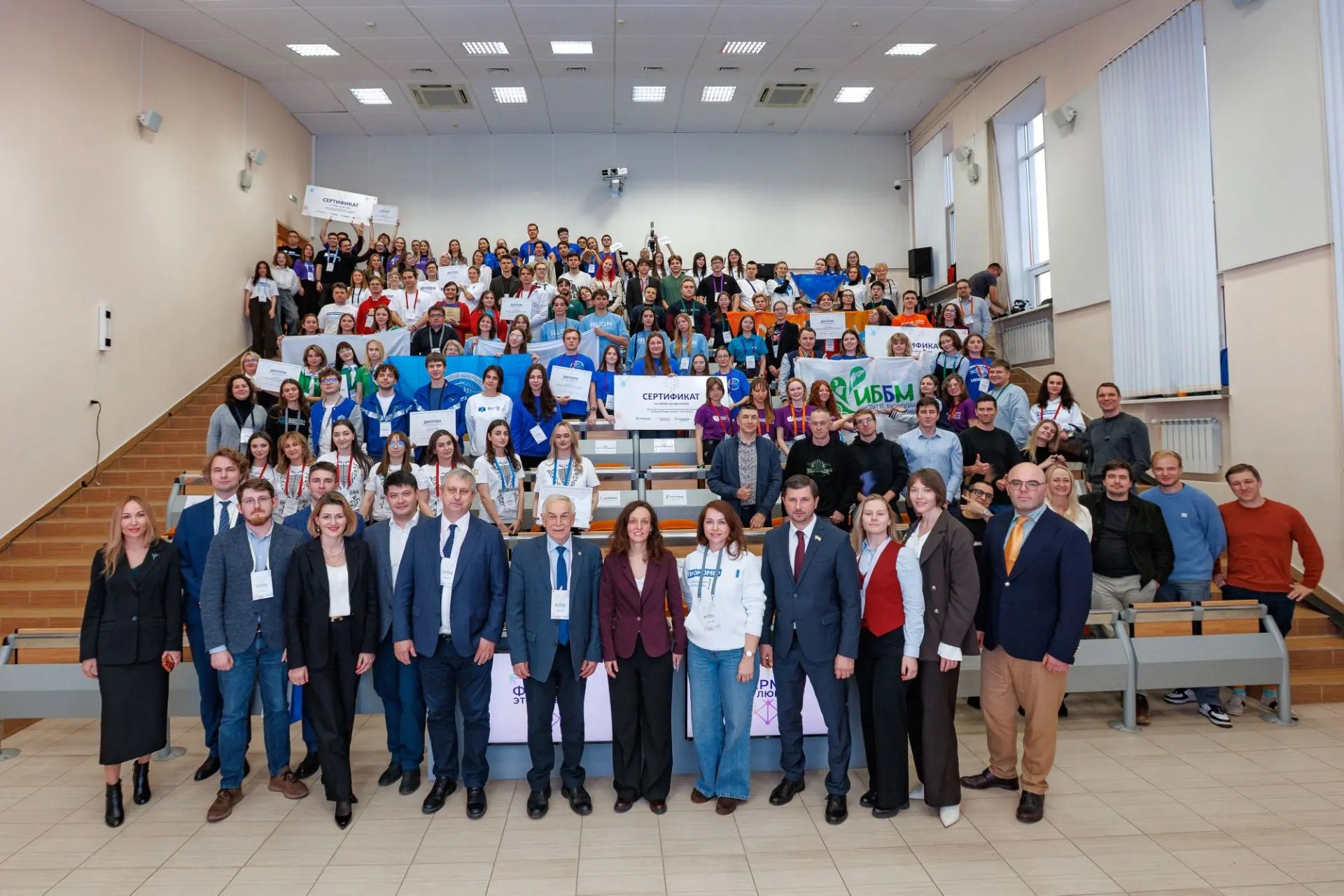
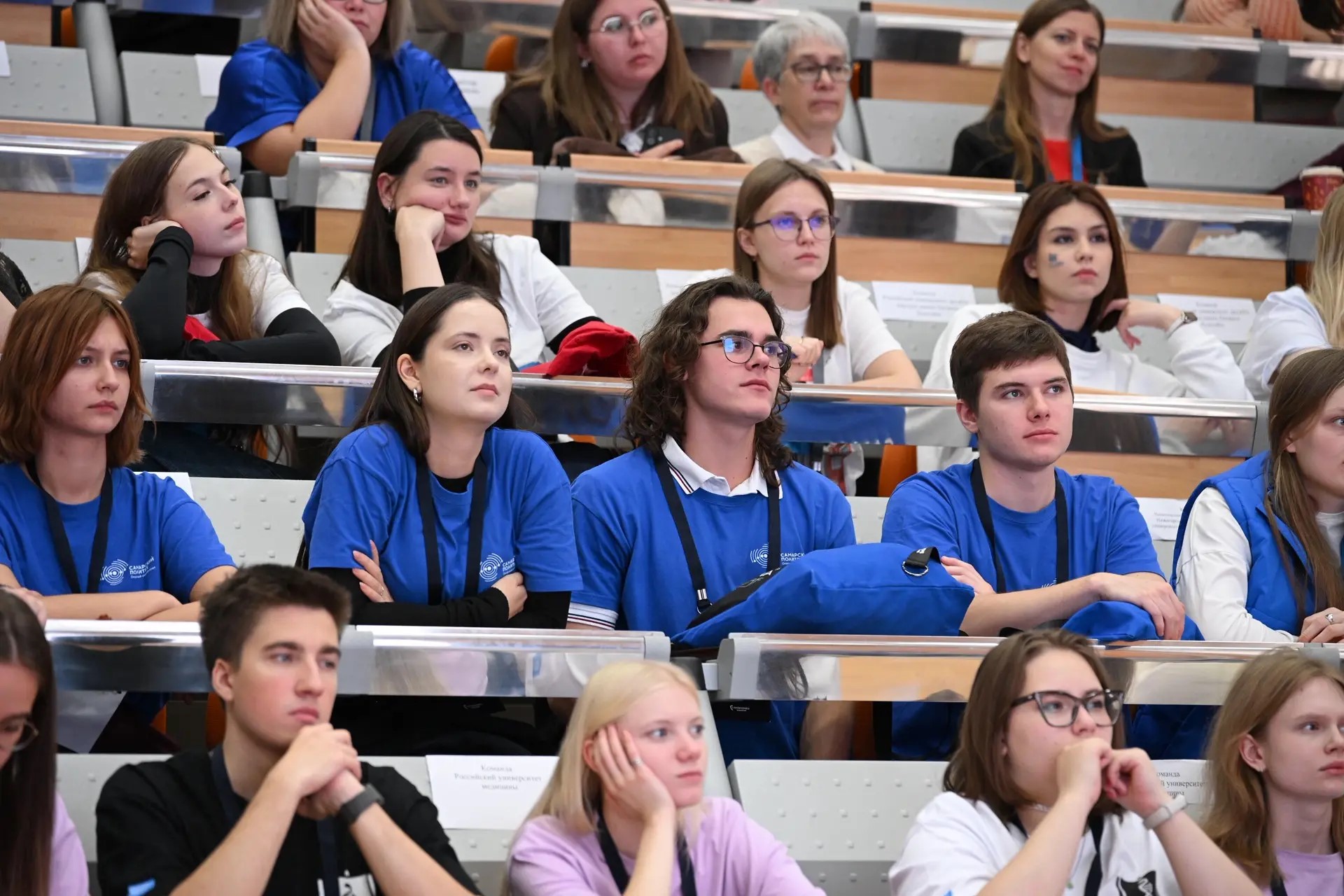
The All—Russian Festival of Young Scientists "Pharma is Love" has ended in Saransk
23.06.2022
Production
Medicines
23.06.2022
Kira Zaslavskaya, Director of New products at Promomed Group, a participant in the SPIEF, agreed to answer questions from Komsomolskaya Pravda journalists.

— Your company is known for its contribution to the fight against coronavirus. Tell us, how did the scientific research and production of anti-covid drugs go?
— The topic of coronavirus infection is important for a company that strives to develop various innovations in the pharmaceutical industry. As soon as the threat of a pandemic arose, we, having extensive experience in cooperation with research institutes and the medical community, immediately began working together with the academic consortium for the study of coronavirus infection. And we realized that one of the key therapeutic opportunities that can make it possible to defeat the pandemic is the development of drugs for etiotropic therapy, that is, antiviral therapy.
We started thinking about which drugs could be repositioned so that they would be universal and work against coronavirus infection. In close cooperation with the consortium, we were the first in Russia to develop favipiravir and areplivir for the treatment of coronavirus infection. But we didn't stop there: it was clear that the viral load would continue not only at the outpatient stage.
The fact is that the virus can stay in the body for a long time in both mild and severe patients, although there were disputes about this in the medical community at that time. However, we were sure that this was the case. Back in early 2020, they began developing a drug for injectable use, for the treatment of hospitalized patients with coronavirus infection. We were right. Recent publications show that the virus has been in the body for a very long time, for several months, even in those patients who have already died from coronavirus infection.
We were able to develop injectable favipiravir to increase the effectiveness of therapy in moderate and severe patients in the hospital. Russia now does not need to purchase an expensive imported drug, but has the opportunity to use an original domestic drug that has shown very high efficacy in clinical trials.
However, the strains mutate, so you can't just focus on one molecule. There is an urgent need to create a platform for rapid drug repositioning and the development of drugs for the treatment of not only coronavirus infection, but also possible future infections. The idea arose to take up molnupiravir, later nirmatrelvir and ritonavir. These are the most effective active ingredients in the treatment of coronavirus infection at the moment. We managed to combine them in a single dosage form. The American equivalent is separate tablets, separate capsules. And we have managed to create a single dosage form, which reduces the number of tablets taken by three times. This is critically important for elderly patients, as it increases the safety and effectiveness of therapy.
— What was the most difficult part of developing these drugs?
— A sense of responsibility. We were walking blindly, like the rest of the world. We were not completely sure whether the drug would be effective or safe. When choosing a drug for repositioning, we studied a huge amount of literature and chose a molecule with the highest degree of safety. Nevertheless, the very idea that it was necessary to remove a strong drug in the shortest possible time made us worried. But everything worked out for us.
— Do scientists have everything they need to do science and make discoveries now?
— It is incorrect for me to speak for all Russian science. As for our developers and our cooperation with the Research Institute, there are a large number of potential projects in the future. As an industrial partner, we support their development, as any research and development depends on financing. We consider it important for us to participate in the development of Russian science — we are confident that this will lead to the creation of innovative drugs.
Although there are difficulties involved. At the moment, it is necessary to develop alternative ways of logistics, to work on new technologies, on a substance of domestic production. But all these challenges only move science forward. Together we have high chances.
— Tell us about developments in the field of neutroprotection and biotechnology.
— If we are talking about neuroprotection, then a couple of months ago we managed to bring to the market an original domestic drug, which, on the one hand, is a combination of two well-known active ingredients, on the other hand, this drug was developed using a unique technology that has undergone a full cycle of clinical trials. This is the Brainmax drug, which, due to the synergistic action of the components, provides the highest level of neuroprotection, antioxidant cell protection, and cell protection under stress. And this makes it possible to use the drug for the treatment of both neurological diseases of various natures and cardiac diseases.
We are currently conducting a large clinical trial on the use of this drug for the treatment of post-covid syndrome. And we are already seeing good results.
We are also currently working on three original drugs in the field of neurology. But I can't disclose them yet. One thing is for sure: biologics are the future. They make it possible to provide targeted action, to get closer to personalized medicine, to the treatment of currently incurable diseases. We are actively developing a biotechnological platform, or rather, a direction from cellular technologies at our factory to a ready—made dosage form. One of the drugs from the group of monoclonal antibodies is in the stage of clinical research.
At the same time, we have already launched a drug based on double—stranded RNA, Radamine Viro. The topic of RNA biotechnology is one of the most relevant. We have managed to develop a biotechnology with high productivity of microbial strains, from which RNA is then extracted, and offer the market a drug that is an inducer of all types of interferons. This allows it to be used not only in the usual field of colds, but also to talk about its possible potential effectiveness in the treatment of certain oncological diseases, multiple sclerosis. Clinical trials of this drug are also expected in the near future.
A source: kp.ru
Sources
Get the most interesting news and publications first!
Sent successfully!
Press office
To request a press release or interview, please contact our press office