Expert RA upgraded PROMOMED DM's credit rating to ruA
22.06.2022
Industry development
22.06.2022
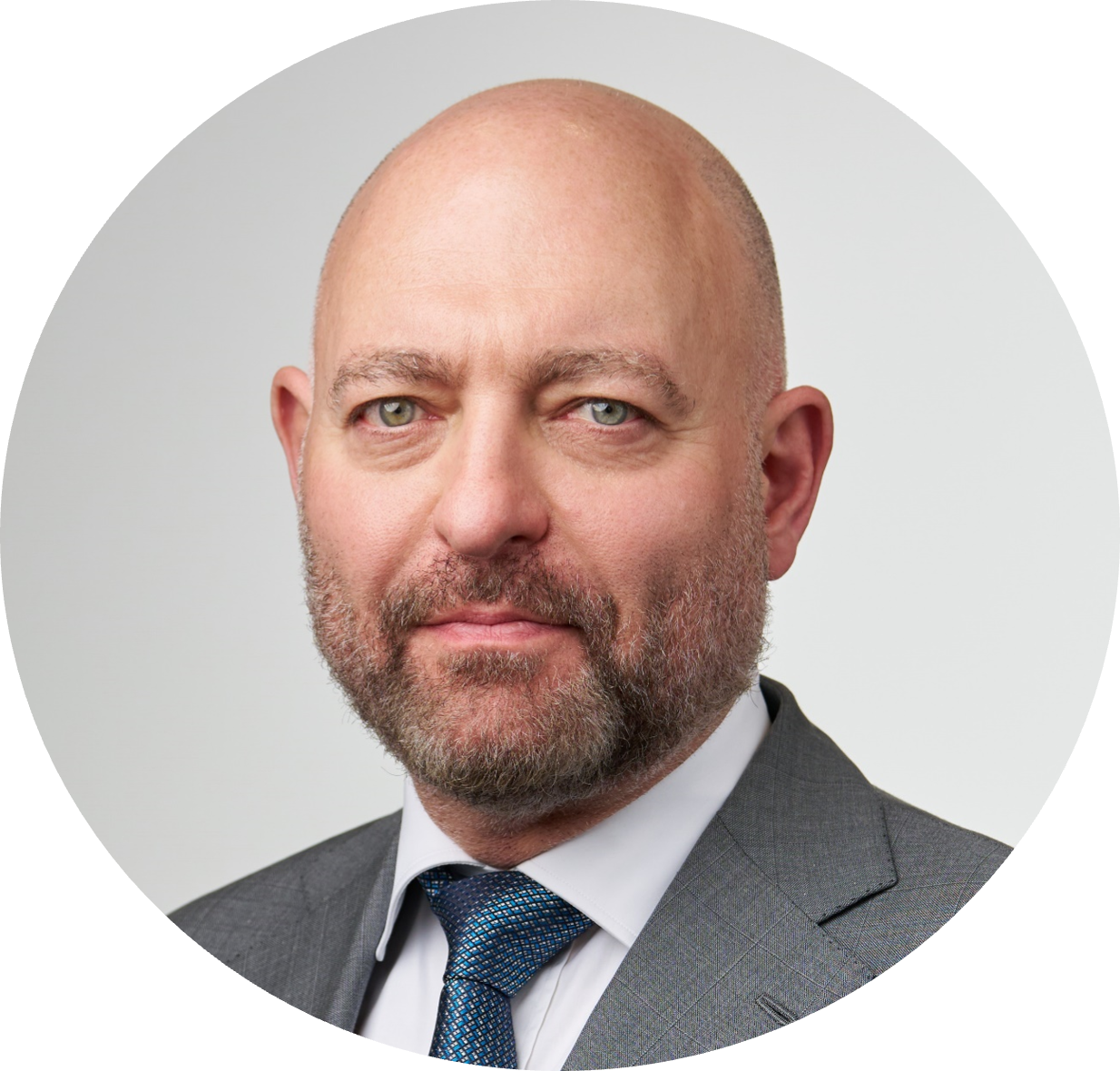
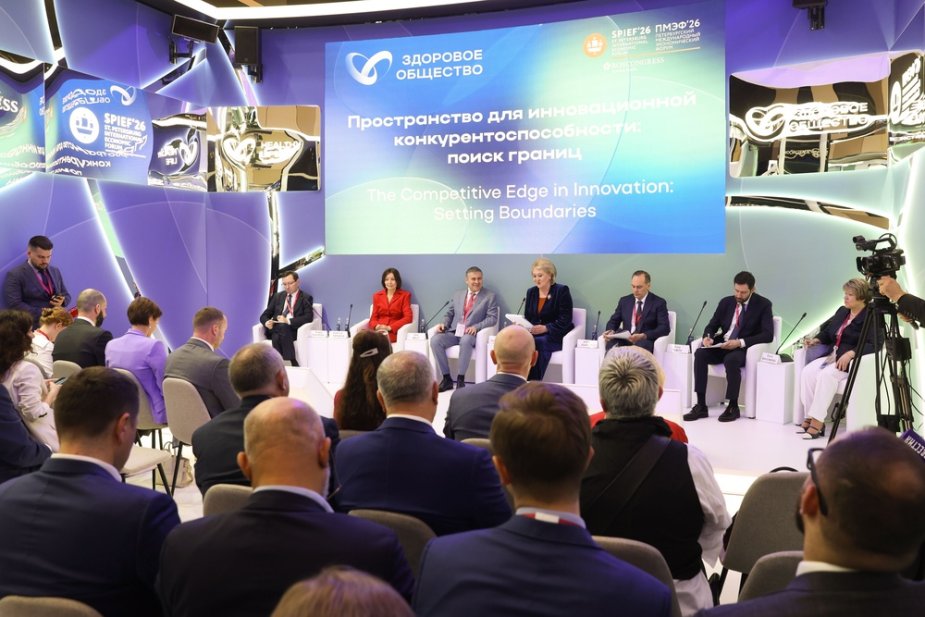
Peter Bely, Chairman of the Board of Directors of Promomed Group, spoke about plans to launch life-prolonging drugs on the market, the creation of drugs against the severe form of coronavirus, and the prospects for developing therapy for new infections in an interview with TASS at SPIEF 2022.
.jpg)
— Good afternoon. Please tell me, what is the current situation with Promomed Group's supply of imported components and equipment, and have there been any deliveries from other countries?
— I can tell you clearly: there will be no shortage of medicines in Russia. We are provided with everything, and this is not just a declaration. We approached this as follows: we divided the entire drug portfolio into groups A, B, and C according to priority. Group A are the most important and unique drugs, Group B are very important drugs, the availability of which is important for the country, and group C are easily replaceable drugs. According to groups A and B, our stock of the substance ranges from six months to a year, and the stock of ready-made dosage forms is about the same. Therefore, there is no risk to the supply of the country for any critically important nosologies in which Promomed operates.
At the moment, we can work as planned. We are currently opening one of the largest substance production facilities — 150 names of molecules. This is a gigantic production facility: seven workshops, three of them oncological. This is not only our independence from foreign suppliers, but also the opportunity to be very flexible about the raw materials we use. We clearly understand our priorities and are doing a lot to ensure that independence at the level of supply of substances is realized in the shortest possible time.
I must say that we didn't start yesterday. This is not a project that can be completed in two or three months. It took years. But, fortunately, we are already in a very high state of readiness. We are currently in the stage of commissioning for a number of projects. It will take a few more months, and it will be a gigantic full-cycle industry for a very wide range of drugs.
— Are you maintaining investment plans for the current year due to the economic situation?
— We have not only preserved them, but also expanded them. We think that our response to the risks associated with economic uncertainty should be to increase the portfolio of innovative medicines, and this requires increased investment in production facilities. As a rule, innovative drugs require new equipment and increased investments in clinical research and development. We have increased our budgets in both areas. To date, we have more than 20 medicines at various stages of clinical trials of innovative drugs.
I'll give you one example. We have a medicine for the treatment of syndromes associated with impaired cerebral circulation. In fact, for the treatment of stroke. And then we had a clinical hypothesis that this drug can be effectively used to treat the neurological complications of covid. It is very important for us that our hypothesis is supported by the country's leading neurologists and academics. This is, of course, a promising drug. If our clinical hypothesis is confirmed, then this drug will actually become a pioneer.
There is currently no drug anywhere in the world with a clinical indication for treating the neurological effects of coronavirus. And this may be a much bigger scourge than covid itself. This drug is currently in the final stages of a clinical trial.
— When can they be completed?
— We are talking about several months.
— So this year it can be launched on the Russian market?
— This year, of course, if the findings of the clinical trial confirm our clinical hypothesis.
— You said that you have more than 20 innovative drugs at the stage of clinical trials. What proportion of them are anti-covid drugs?
— No more than five. The rest are neurology, infection control, and oncology. For example, we are conducting research that we think will significantly increase the survival rate of patients with advanced stages of cancer — the third and fourth. In the course of preclinical studies, we saw a significant increase in the average survival period. We are not talking about two or three weeks, but about a significant increase in life expectancy.
— It follows from the data of the State Register of Medicines that Promomed conducts clinical trials of an injectable drug against covid for the treatment of patients with moderate to severe disease.
—That's right. This is one of the five clinical trials I mentioned. We are deepening our knowledge of how covid can be treated at more advanced stages. After all, people don't die at home, but in pain.not when the course of the disease has worsened significantly. And we think we can offer another effective solution. Now, when the incidence of coronavirus is perhaps at a minimum for the entire period of its historical development, the recruitment of patients for research is quite slow. Nevertheless, we are optimistic about the timing of its completion. We think that it will be completed this year.
— Due to the fact that the incidence of covid has decreased significantly, how much have you reduced the production of drugs against it?
— Of course, they reduced it. Our budget for the second half of the year does not include the production of these medicines at all. We have enough stocks of substances and finished products.
If there is any sudden outburst, we are ready to turn on, but now there is no such need. It seems to me that any planned movement is more important than an emergency movement. That's why we produce 250 types of drugs that are not related to covid. And they are very important for our healthcare system.
— Are you considering the possibility of developing drugs against smallpox in monkeys?
"Maybe." We do not yet see any prerequisites for this disease to become a pandemic or even an epidemic. Nevertheless, this is a kind of new nosology. At least we must have a long list or a short list of molecules that can be effective in combating this RNA virus. We have such sheets. And now we are in a rather deep stage of understanding our technological capabilities. That is, most likely, we will definitely be able to produce one or two molecules that will have a high efficiency profile.
— It follows from the SPARK data that Promomed acquired 18% of the Biolife Research and Development Center. What is the purpose of the transaction?
— This is a very good laboratory. We have indeed acquired a stake in this company, strengthening it from a technological point of view. The deal will allow us to significantly expand the amount of analysis that we can perform during the development of new drugs. This is part of our plan to expand our R&D capacities.
— Tell me, does Promomed plan to enter new foreign markets and export drugs to new countries?
— Of course, this is part of our strategy. It is almost impossible to enter foreign markets with a generic portfolio. This can only be done with original products that have a unique efficacy and safety profile. Now that we have a lot more such drugs in our portfolio, we have all the possibilities — both technical, physical, and resource — to enter extraterritorial markets. And the first positive experience, of course, was shown by covid. Russia has managed to take a giant step forward compared to the rest of the world and to some extent even ahead of its time with direct antiviral therapy.
We can see that the interest, primarily from Asian countries— has been enormous. For example, our "Areplivir" in Vietnam is the most "fashionable" drug for the treatment of covid. There are many such examples.
Then we created an innovative form of Areplivir, an injectable drug for the treatment of hospital patients with severe coronavirus. This is a story that we are no longer dependent on fashion, with which we can confidently go from country to country, conduct local clinical trials. Such drugs form the basis of our export portfolio for the future.
The main focus of our export efforts is, of course, Asia and Southeast Asia.
We see great opportunities for exporting original and biological drugs, anti-infection drugs, and RNA therapy drugs. Moreover, everything is easier with drugs against covid. Most countries have a mechanism for very fast admission of such drugs to the market. In traditional therapeutic groups, it is necessary to conduct additional local clinical trials and register drugs. This process usually takes several years.
— Is there a risk of higher drug prices in the current situation? Do you see the need to re-register prices for some of your drugs?
— In general, the system is working well. Of course, we have some anachronisms. There is a good drug, the registered price of which is 5 rubles 60 kopecks. There is some kind of penicillin or cefazolin, the price of which is 10 rubles. And a subway ride costs 55 rubles. These are disparate values—a life-saving drug, an antibiotic, and subway fare. But the system is designed so that it keeps these extremely low prices. This leads to the fact that most drugs in the low-price segment are not produced. This problem is not new, it is being discussed on various platforms. So far, no universal solution to this problem has been found.
But now we are all much more concerned about the issue of bringing new drugs to the market. And there are clear furs herestate regulation algorithms and working methods. As a rule, it is possible to achieve mutual understanding between regulators and the industry. Therefore, if we look from a bird's-eye view, there is no global pricing problem. Of course, if we look at each segment separately, we may find some problems. But, probably, this is not a topic that requires emergency measures.
— And in conclusion, what is missing from your company right now to develop fully?
— In cooperation with government regulation, there are several very important areas in which we are interested and actively involved. One of them is to provide a system that would allow Russian inventions to receive a level of legal protection comparable to that received by our colleagues from the world's leading economies. Very important steps are already being taken in this direction, but we have, in fact, only just begun this path. Without reliable legal protection of intellectual property, we will have no export movement.
The second direction is the creation of a system for accelerated market launch of innovative drugs. The first such fast track system appeared in our country during covid. And this allowed our country to be ahead in terms of advanced therapeutic practices. But covid is not the only nosology that causes high mortality. It is important that mechanisms similar to the 441st decree appear for Russian innovative medicines, which accelerated the launch of anti-covid drugs on the market. This is also a very important area of dialogue with the regulator. Any success in this area will also make us, as a country, much stronger.
Source: tass.ru
Sources
Get the most interesting news and publications first!
Sent successfully!
Press office
To request a press release or interview, please contact our press office