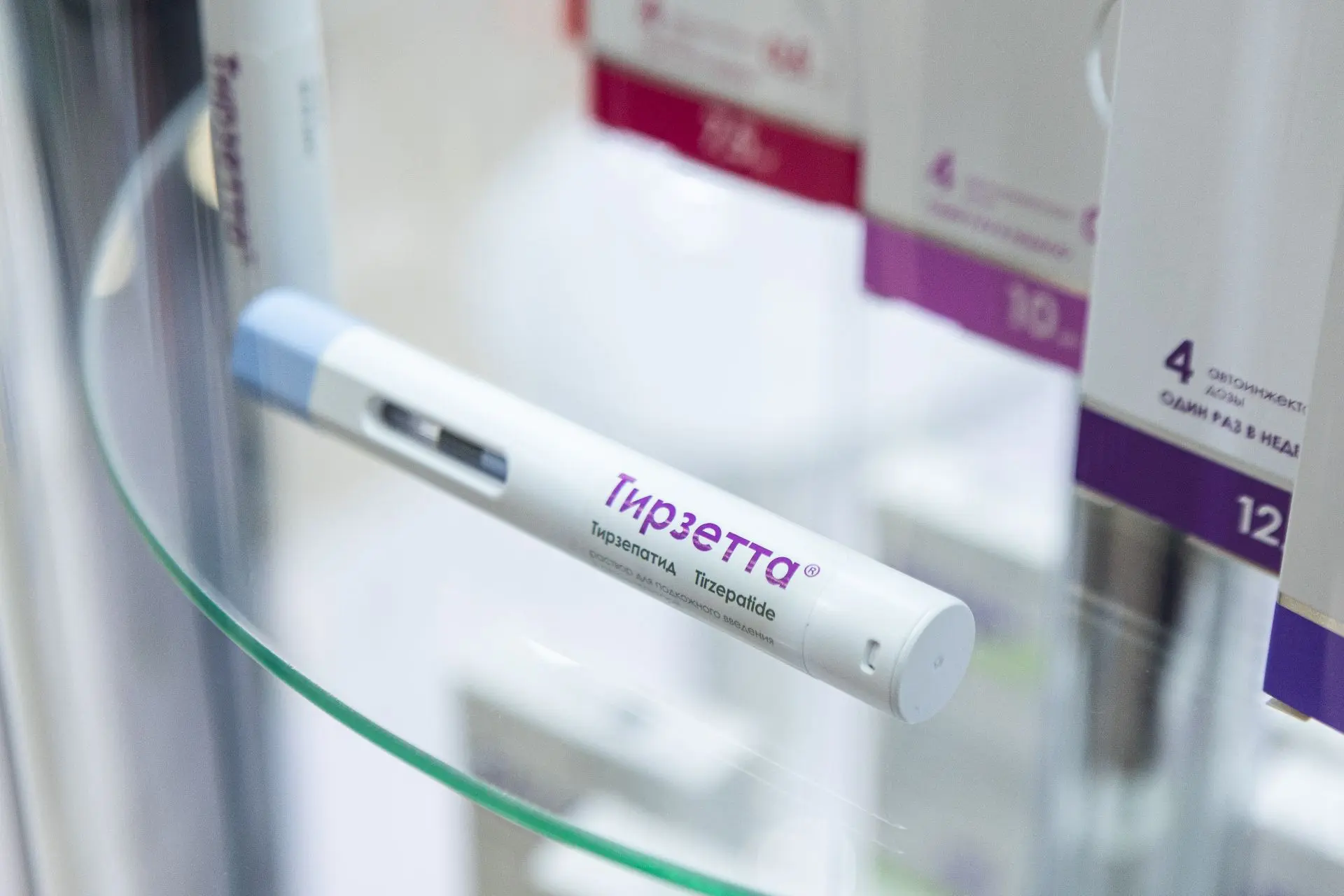
PROMOMED expands its portfolio of incretin drugs in Belarus
08.04.2022
Industry development
08.04.2022
The Biochemist plant became part of the Promomed group of companies five years ago, which was the start for the modernization of the enterprise. The study and introduction of new technologies in production allowed not only to ensure the mass production of an important "reserve antibiotic" with the active ingredient vancomycin, but also to start the production of modern drugs for the treatment of significant diseases. At the moment, the company's drug portfolio includes more than 180 items.
"Against the background of the universal problem of antibiotic resistance, there is an urgent need to localize the production of substances of effective antibacterial agents, in particular, medicines for the treatment of severe nosocomial infections," Promomed said.
Antimicrobial resistance occurs when bacteria develop mechanisms that protect them from the effects of antimicrobials by destroying the active substance. Bacterial infections are more difficult to treat, which requires the use of increased doses or combinations of antibacterial drugs, which may be due to the presence of pronounced side effects.
For many years, the global scientific community has unsuccessfully tried to solve this problem, while cases of the appearance of multidrug-resistant bacteria have been reported, in which "medicine is powerless." One of them was fixed in the United States in 2016, when a patient was found to have a superbug resistant to 26 types of antibiotics available in the United States.
In this regard, the World Health Organization has called on governments around the world to develop a plan to combat antibiotic resistance.
Veronika Skvortsova, head of the Federal Medical and Biological Agency (FMBA) of Russia, who served as Minister of Health of the Russian Federation at the time, also stated We hope that Russia will continue to develop new antibiotics that meet all Russian and international quality standards. At that time, fifth-generation antibiotics in tablet form were created only in the USA.
At that time, the Biochemist plant in Saransk, launched in 1959 to produce drugs from the penicillin, streptomycin and ampicillin groups, became part of the Promomed group of companies. The pharmaceutical company's plans included a large-scale modernization and reconstruction of the enterprise, which allowed the plant to be one of the first to participate in the implementation of a unique and important project for the whole country to develop and manufacture a new generation of domestic antibiotics.
"The significance and complexity of the project at the same time lay in the fact that we had to start developing and manufacturing our own substance," the company recalls. — This was supposed to reduce the dependence of the domestic pharmaceutical industry on foreign partners. At that time, raw materials for antibiotics were imported into our country from other countries, which contradicted the interests of Russia's national security. The uniqueness lay in the launch of full-cycle production without the use of imported components."
In December 2016, during Veronika Skvortsova's visit to Saransk, an agreement was signed on the establishment of the pharmaceutical research, production and engineering center (NPTs) "Antibiotics" on the basis of Biochemik. Subsequently, it became the base of the company for the production of modern antibacterial drugs.
When the reconstructed ampoule production workshop was just opened, all attention was focused on the priority task — the release of antibiotics from the reserve group.
Promomed Group acted as an innovator, starting with the release of the "reserve antibiotic" with the active ingredient vancomycin, which had not previously been produced in full—cycle enterprises in Russia, despite its importance.
The drug is used in the treatment of endocarditis, sepsis, bone and joint infections, lower respiratory tract infections, skin and soft tissue infections, and was previously produced from foreign raw materials. It is prescribed only in the most extreme cases, when the use of first-line medicines is no longer sufficient.
"At the end of August 2017, during a visit to Saransk by Russian President Vladimir Putin, as part of a progress report on the project for the development and production of domestic antibiotics, the first sample of a drug with the active ingredient vancomycin, produced at the Biochemik plant in a full cycle, was handed over," the company said.
"For the first time in Russia, Promomed has mastered the full cycle of its production without imported components — from the producer strain to the finished dosage form," recalls Nikolai Yushchuk, academician of the Russian Academy of Sciences, president of the Moscow State Medical and Dental University named after A. I. Evdokimov.
"The modernization of the enterprise, the study and introduction of new technologies in production allowed us not only to provide Russian patients with a drug that is strategically important for the drug safety of the Russian Federation," Promomed commented, "but also to start production of three more modern antibiotics from the class of glycopeptides."
The production of proprietary substances in all known nosologies remains the number one task for all participants in the pharmaceutical market. Through joint efforts of the government and pharmaceutical companies, it is possible to change the situation so that each domestic manufacturer has its own production of substances, especially in terms of drugs from the list of vital and essential medicines (VED). At the moment, the focus of the Russian Government is on solving this important problem, which in the future will allow us to get away from the so-called "substantial slavery", Promomed Group believes.
Partner's material: Promomed Group of Companies
A source: pharmvestnik.ru
Sources
Get the most interesting news and publications first!
Sent successfully!
Press office
To request a press release or interview, please contact our press office