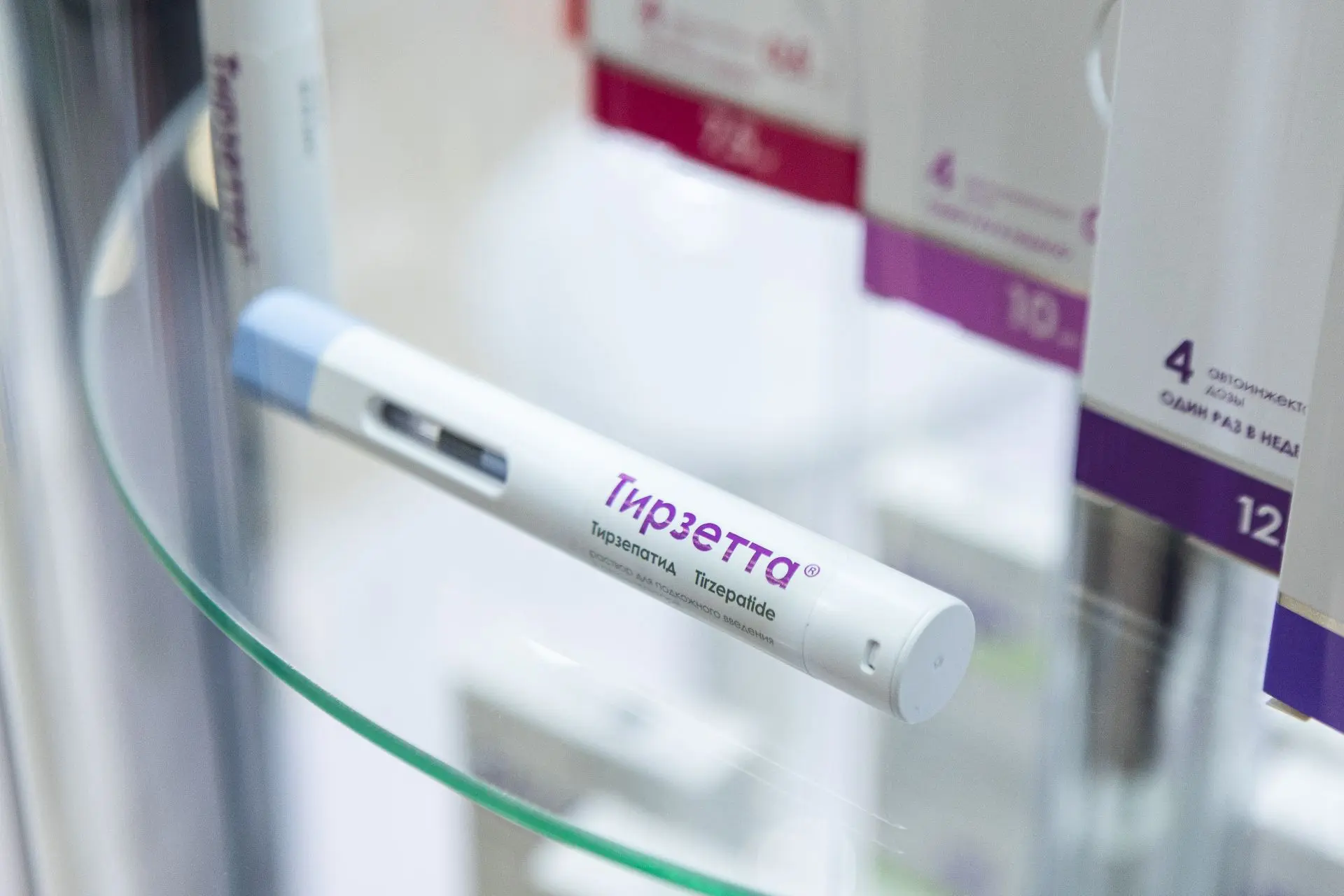
PROMOMED expands its portfolio of incretin drugs in Belarus
02.09.2022
02.09.2022
Drug safety is one of the things that Russians took care of during the period of sanctions that hit the country. Experts at various levels warned about the shortage of medicines that could arise against the background of logistical restructuring. However, not everyone needs imported raw materials — for example, the coronavirus drug Areplivir is produced in Russia at all stages: from creating a molecule to packaging a medicine before sending it to a pharmacy, and it is produced at a factory in Saransk, which has a history of more than 60 years.
On the front line of the pandemic
In times of pandemic, the Russian Biochemist plant took over the development of an impressive proportion of COVID-19 drugs. This company is located in Saransk, its history began back in 1959. In 2020, the plant launched Areplivir, the first domestic drug for the treatment of coronavirus.
"It was a significant event. We were the first to introduce such a drug into the healthcare system," recalls Dmitry Zemskov, Executive Director of Biochemik.
It took Biochemik four months to develop the drug and launch it on the market, despite the fact that the drug was produced from start to finish at a factory in Russia. Subsequently, Biochemist's covid portfolio expanded significantly. "Of the first covid protocol, which included 21 drugs, we supplied 18 to the healthcare system," Zemskov notes.
Today, Biochemist is one of the ten largest pharmaceutical companies in Russia. In 2021 Forbes He placed it on the sixth line of the rating, estimating the company's revenue for 2020 at 9.3 billion rubles.
The plant produces 100 million vials of antibiotics annually. They, as well as antiviral drugs, occupy up to 20% of the plant's portfolio. In addition, Biochemist produces oncological, neurological, and endocrinological drugs.

From raw materials to your medicines
The production of ready-made medicines has not always been a specialty of the Saransk plant. At the dawn of its existence, it produced raw materials for drugs that were sent to the countries of the Union or abroad — to Europe, India, China and African countries.
"This is how the Soviet system was built: heavy production (biological or chemical) was concentrated in the Russian SFSR, and the production of finished medicines was already located in the Union republics," explains Zemskov. In total, the plant's products were exported to 14 countries at that time.
Despite the success that the site had during the Soviet era, there were serious problems in the history of Biochemik. The transition period in the country's history, which occurred in the 1990s, severely crippled the company: the release of substances on it almost stopped then. The crisis cut off investments in technology, equipment, and personnel, so in the following years, Biochemist did not work as much as it existed.
This continued until 2015. Then a new milestone began in the history of Biochemik: the plant became part of the Promomed group of companies and became a modern production complex of the largest domestic pharmaceutical manufacturer.
The plant was audited, production facilities were upgraded, and a modern production culture was introduced. Now it produces both substances and medicines themselves. The company's products are supplied to almost all CIS countries, and it also has a registered office in Vietnam. "Now we are starting to work with Latin American countries. We see a certain export potential there," says Zemskov.

The path of a single drug
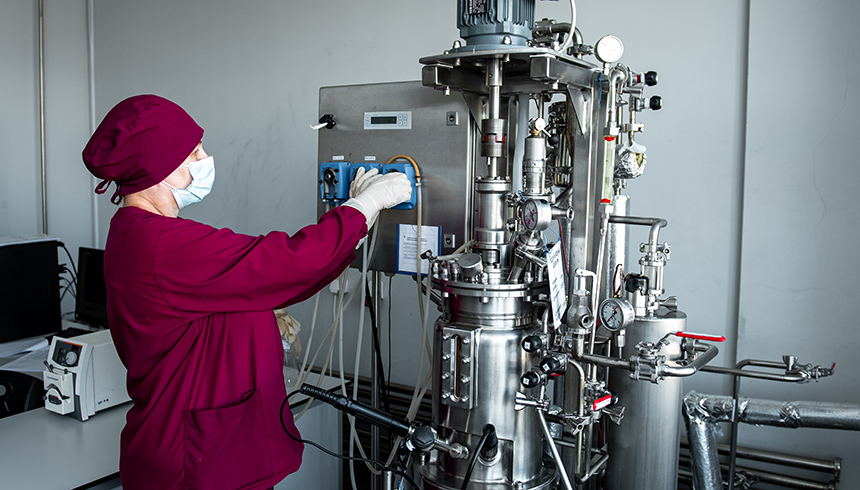
Biochemik produces about 60% of the drugs in its portfolio in a full cycle. Such medicines go through all the stages at the factory: from the creation of a pharmaceutical substance to packaging. In total, Biochemist has five workshops. They produce tablets, capsules, ointments, gels, solutions, ampoules, and more. 1.5 thousand people are involved in the creation of each drug.
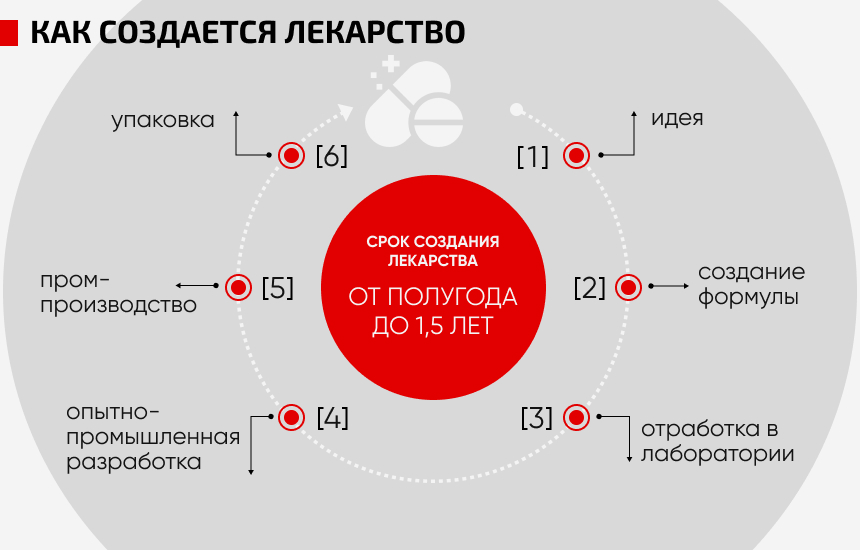
Creating a drug from scratch goes through many small stages, Biochemistry notes. "It all starts with an idea that is born in the minds of chemists and biologists. Then drug development specialists start working with this idea," says Zemskov.
At this stage, a chemical formula is created, which is then tested in the laboratory and transferred to the pilot development stage.
At the second major stage, the creation of a ready-made dosage form begins. The drug is transferred to an industrial site, where it goes through the stages from mixture preparation, granulation, tableting to packaging (it is created by suppliers for the "Biochemist").
The pace of drug production from scratch has accelerated significantly over the past years. "At one time, the period from idea to implementation took from one to three years. Today, it takes from six months to one and a half years," Zemskov notes.
Nevertheless, a full cycle of drug production in Russia is still a rarity rather than a standard practice. Until recently, it was economically impractical.
Tens or hundreds of millions of rubles are spent on drug development (technology creation + registration + clinical trials). In the case of a full production cycle, this should include the costs of developing a technology for producing substances, creating separate production facilities for their production, significantly expanding the analytical base of the enterprise, hiring or training highly qualified personnel — in this case, we are talking about billions of dollars in costs. At the same time, the payback period for such facilities is very high.
"It turned out that the cost of the substances produced would be significantly higher than if they were simply imported from India or China. Now, economic and political factors are significantly changing this paradigm, and we are talking not only about the economic feasibility of production, but also about independence in ensuring uninterrupted production of medicines," Zemskov notes.
Your own, but not all
And although the production of medicines from scratch in Russia is already working, it is still impossible for pharmaceutical companies to do without imported equipment. At the moment, according to Zemskov, there is no established production of technological equipment for the pharmaceutical industry in Russia.
He noted that the country produces capacitive equipment, pipelines, filtration devices, and "this is already a big step forward compared to what it was 5-10 years ago." However, equipment for the production of finished medicines (for example, tablet presses and blister machines) is mainly imported from abroad.
In recent years, Russia has been shifting the vector in purchasing equipment from the West to the East, Zemskov says. For example, many technologies are already coming from China. There is also more domestic equipment, but this process is not fast. "So we will not be able to ensure sovereignty in the creation of the equipment manufacturing industry in the next year or two," he admits.
As for drug sovereignty, its achievement in Biochemistry is considered possible and extremely important. "All related industries need to be developed here, especially small and medium—sized chemicals, which are currently present in insufficient quantities in the country," Zemskov notes.
According to him, the country's drug safety is impossible without the transition of all plants to full-cycle technology, and sooner or later this transition will happen. "Otherwise, it is simply impossible to work based on the realities of the time," concluded Zemskov.
Vremya Nashe is a project of the Company magazine jointly with the Ministry of Economic Development and the FCC. In it, we talk about Russian companies and brands that have been able to replace production with imports and produce truly domestic products.
A source: ko.ru
Get the most interesting news and publications first!
Sent successfully!
Press office
To request a press release or interview, please contact our press office