
Access to therapy is part of the protection of the constitutional order: Peter Bely spoke at the SPIEF session on intellectual property
26.04.2024
Corporate
Production
Medicines
Industry development
26.04.2024
This year, the Biochemist plant, which is part of the Promomed group of companies, celebrates its 65th anniversary. During this time, the company, which became one of the leaders in the production of antibiotics in the Soviet Union, turned into a multidisciplinary, state-of-the-art pharmaceutical plant capable of creating almost any drugs, including those for export abroad. Kommersant talked with Kira Zaslavskaya, Director of New products at Promomed Group, about how the company is currently operating and what goals it sets for itself in the future.
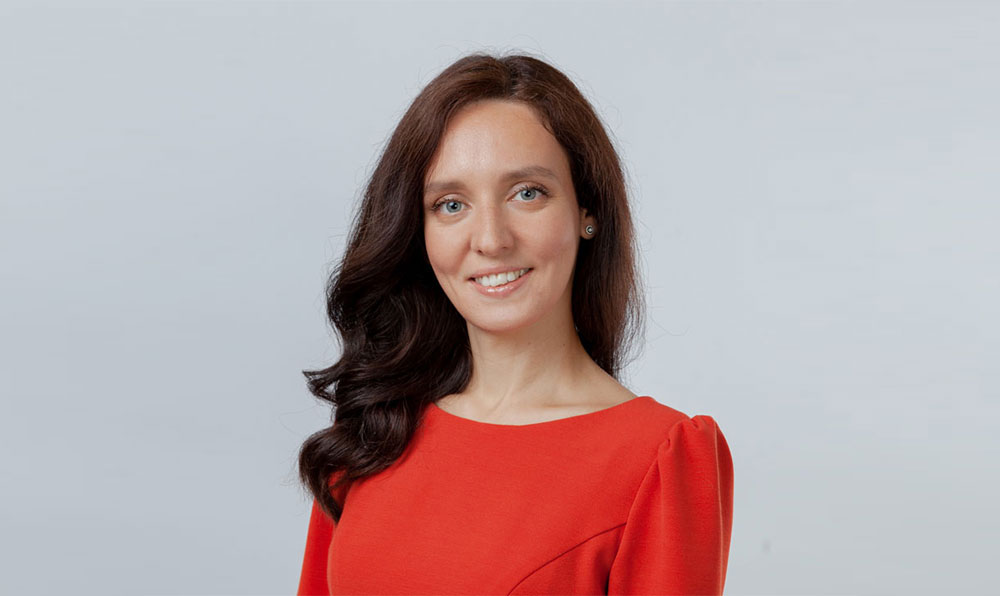
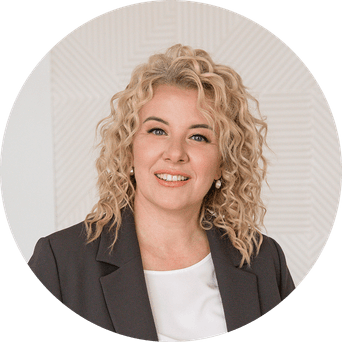
Kira Zaslavskaya, Director of New Products at Promomed Group of Companies
Photo: Provided by Promomed
— Initially, Biochemist emerged as an enterprise for the creation of antibiotics. Why was this necessary in our country?
— The need for our own mass production of drugs for the treatment of bacterial infections became apparent during World War II, when hospitals received a flood of wounded with wound infections who needed effective antibacterial treatment.
As follows from the decree of the Chairman of the Council of Ministers of the USSR, such plants were supposed to be built in four cities: Saransk, Penza, Kurgan and Krasnoyarsk.
In this cohort, the Saransk plant became one of the best: in a short time, through the efforts of scientists and manufacturers in the 1950s, it was possible to establish mass industrial production of the first Soviet antibiotic, penicillin.
— When was Biochemist able to present the first batch of its product?
— Already in 1958, the first 15 grams of penicillin were obtained. On November 5, 1959, the first stage of penicillin production was put into operation — this date is considered to be the birthday of the plant.
— But wasn't Biochemist already producing more than antibiotics in Soviet times?
— Yes, of course. In the mid-1960s, the plant began work on the creation of blood substitutes — drugs used for therapeutic purposes to replace lost blood, replenish its volume during blood loss or correct its composition with intravenous administration of drugs.
In 1969, Biochemik's specialists created the first industrial enzyme technology in the Soviet Union — the production of 6-APC, the main intermediate for the production of synthetic antibiotics.
— What has happened to the plant in recent years? To what extent did its development meet the expectations of the Promomed Group?
— When we acquired Biochemik in 2015, we set ourselves the task of using the accumulated potential that the plant had and creating the most modern production facilities to implement our strategy for the development and production of innovative high-tech medicines for the treatment of socially significant diseases. Today, Biochemist is one of the largest pharmaceutical enterprises in the country, the foundation of national drug independence. This required serious work on the modernization and construction of new workshops and sites. To make multibillion-dollar investments in the company's infrastructure.
For example, we have re—equipped the workshop for the production of solid dosage forms - now it is the best and only one in the country in terms of production automation.
— And why is it necessary?
— This allows us to increase labor productivity, implement the principles of lean manufacturing, and produce tablets of a specific configuration, for example, double-layered or with liquid inside. And this, in turn, allows you to achieve the desired properties of the drug (speed of action, concentration in the blood, etc.) and the required high therapeutic effect.
When developing the technology for the production of a particular drug (both a generic, a biosimilar, and an innovative drug), we are always working to improve its consumer properties.
"Like what?"
Russian russians can use as an example our drugs from the group of agonists of the glucagon—like peptide type 1 "Enligria" and "Quintenta", the same ones that journalists dubbed the Russian "Saxenda" and the Russian "Ozempik". These products are used to regulate weight, treat overweight and obesity, correct eating behavior, and also as the first line of therapy for patients with type 2 diabetes. The Danish company that produced the drugs of this group announced its withdrawal from the Russian market in 2023. It is easy to imagine what catastrophic consequences and risks this could lead to for the health of patients with type 2 diabetes.
We have radically changed the API production technology, using fundamentally different schemes for its production. As a result, medical research has shown that Enligria and Quincenta have achieved better results than their foreign predecessors in a number of indicators.
While developing the technology, we are thinking about ensuring that a patient who needs constant medication for the treatment of a chronic disease does not give up on it due to side effects.
— And which other of your developments can be classified as innovative drugs?
— We are actively developing biotech innovations. Biochemist initially focused on the creation of biotechnological drugs, because it was built as a plant specifically for the microbiological synthesis of antibiotics. The subtleties of working with cell cultures and the ability to achieve the required productivity of strains are passed down from generation to generation at the enterprise.
Of course, now biotechnologies have reached another level. We have developed a whole platform for the progressive development of such innovations. We continue to increase our competencies in biotechnology, because it is precisely biotechnological drugs that target the right targets and provide a personalized approach to therapy.
For example, we have in our portfolio a patented innovative drug based on double—stranded RNA, Radami Viro, which is an inducer of three types of interferons - alpha, beta and gamma, due to which the drug has both high activity in the fight against various infectious diseases and a pronounced anti-inflammatory effect.
We believe that it is the introduction of original drugs to the market that is the true guarantee of import independence.
We are developing a range of innovative medicines for the treatment of common diseases with a high socio-economic burden. For example, for the treatment of oncology, hepatitis and HIV, autoimmune diseases such as rheumatoid arthritis, Crohn's disease, etc. Our goal is to cure the disease or radically change the prognosis of patients with previously incurable, disabling diseases.
Already, we have more than ten original drugs in our portfolio, both based on small molecules and created with the help of biotechnologies.
— Does the creation of original drugs imply the presence of your own research center?
ight: 1.07917; "> — Yes, and today pharmaceutical companies with such capabilities in Russia can be counted on the fingers of one hand. This is our great competitive advantage, which makes us different from conventional generic manufacturers. Our research R&D hub is a complex of laboratories in Saransk based on JSC Biochemik, as well as several laboratories and centers in Moscow, including Moscow Technopolis. This is our own technology transfer center, which allows us to quickly scale the drug production process from laboratory technology to industrial production.Our specialists work on innovations and interact with leading specialists of the medical community and research institutes of the country. For example, we have developed Brainmax, an innovative neuroprotector for the treatment of a wide range of diseases, from stroke to cognitive impairment and post—kidney asthenia. Together with the Research Institute of Neurology, we conducted a study of the effects of Brainmax using functional magnetic resonance imaging. For the first time, for drugs of this group, it was possible to obtain objective data, that is, based on the results obtained through instrumental studies, on devices, on the effectiveness of Brainmax in increasing the activity of brain neurons and improving cognitive functions, even after a coronavirus infection.
In conclusion, I would like to note that a revolution in medicine is taking place before our eyes, when the creation of drugs for personalized medicine and a long, fulfilling life for patients with diseases that were previously considered deadly or deeply disabling are no longer the distant future, but the present. Today, we are able to qualitatively integrate the discoveries of fundamental science into industry, use the capabilities of biotechnologies to influence almost any target and to correct genetic "breakdowns", apply bioinformatics methods for the operational analysis of large amounts of data, use artificial intelligence to create molecular structures with predictable properties, conduct chemoreactome analysis and determine the full range of properties of the compounds under consideration and the targets of their impact.
Promomed Company makes a significant contribution to the development of the innovative potential of the Russian pharmaceutical industry and to solving critical tasks of modern healthcare. The company remains at the forefront of scientific progress and mass production, as it has been since the establishment of our renowned Biochemist plant.
Source: Kommersant Sources

Get the most interesting news and publications first!
Sent successfully!
Press office
To request a press release or interview, please contact our press office