PROMOMED expands its portfolio of incretin drugs in Belarus
15.05.2026
Corporate
Industry development
Education
15.05.2026
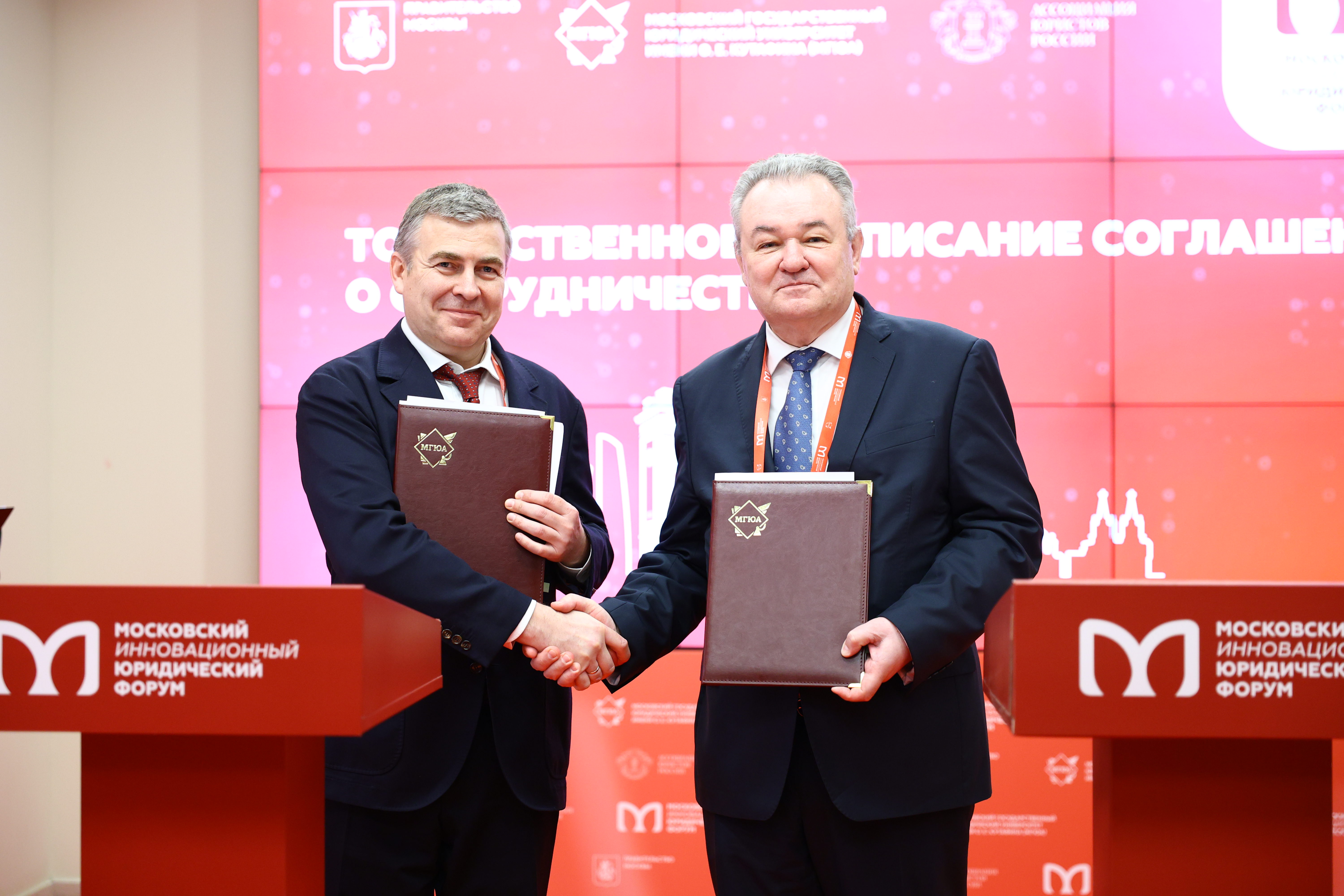
Within the framework of the International Innovative Legal Forum, PROMOMED and the O. E. Kutafin University (MGUA) signed a cooperation agreement. The parties are joining forces in analyzing the current legal regulation of the circulation of medicines and in developing proposals that balance the interests of domestic developers, manufacturers and patent holders.
The agreement provides for joint expert and analytical work, knowledge exchange, development of proposals and holding professional events. The interaction formats include bilateral and multilateral meetings, working group meetings, round tables, and conferences dedicated to the problems of law enforcement practice in the pharmaceutical industry.
"Russian biopharmaceuticals has reached an innovative level, which poses completely new regulatory challenges for the industry. We consider cooperation with the Moscow State Law Institute as a fundamentally important stage in the development of legal mechanisms in the field of biomedicine. Combining the efforts of the country's leading lawyers and biopharmaceutical enterprises will help in adapting law enforcement practices and developing legal mechanisms to protect manufacturers. It is this kind of interaction that serves as a solid foundation for the emergence of innovations in the pharmaceutical industry," said Peter Bely, Founder and Chairman of the Board of Directors of PROMOMED.
The cooperation between O. E. Kutafin University (MGUA) and PROMOMED focuses on several thematic areas, including the study of market trends taking into account geopolitical events, the legal specifics of the circulation of medicines, intellectual property issues, the analysis of the regulatory framework, including really working mechanisms, the comparison of world practices and experience with the legislation of the Russian Federation.
"Intellectual property issues in the pharmaceutical industry directly affect the availability of therapeutics, the competitiveness of manufacturers, and investments in R&D. Regulatory errors lead either to shortages or to a weakening of incentives for innovation. We expect that this agreement can become a pillar for the entire domestic pharmaceutical industry. One of the key goals of the document is to help the industry develop regulatory mechanisms comparable to global approaches, but adapted to the Russian legal system and law enforcement," said Viktor Blazheev, Rector of Kutafin University (MGUA).
The agreement will be an important step in shaping more predictable rules for investment in innovation, as well as reducing legal uncertainty for manufacturers.
Petr Bely raised the issues of intellectual property protection within the framework of the business program of the forum. Illegal monopolization and a four-year moratorium on the issuance of compulsory licenses have the most negative impact on the Russian pharmaceutical industry. As a solution to the problem of illegal monopolization, the expert suggested introducing a system of dual control — by government agencies and a system of public control in the form of public discussions and opinions. According to Petr Bely, this approach reduces the risk of mistakes and promotes the emergence of innovative solutions in the country. Another obstacle to innovation in Russia is the compulsory license rule, according to which it is necessary to wait four years for a patent to be unused. This is a long time for patients with life-threatening diseases, for the medical community, and for pharmaceutical manufacturers. If we add to it the time spent on litigation with patent holders and clinical research, real access to therapy is delayed for many years.


Get the most interesting news and publications first!
Sent successfully!

Press office
To request a press release or interview, please contact our press office