PROMOMED expands its portfolio of incretin drugs in Belarus
10.06.2026
Corporate
Industry development
10.06.2026

Kira Zaslavskaya
© Valery Sharifulin/ TASS
— In one of our conversations, you separated the concepts of therapeutic and preventive cancer vaccines, emphasizing that we are talking specifically about cancer treatment. At what stage are your mRNA developments and what nosologies are we talking about?
— Let me clarify right away: we are not only talking about mRNA vaccines. When it comes to therapeutic cancer vaccines, our task is to ensure that a person's own immune system recognizes the tumor and begins to fight it. And it's not just RNA.
In the preclinical stage, together with international partners, we have a multivalent multi—target vaccine - not an RNA, but a peptide one. It will be aimed at treating various tumors, and we expect to enter the first phase of clinical trials next year. And immediately with the participation of patients: such drugs are not being studied on volunteers.
In parallel, we are actively working with several institutions. We are developing mRNA with St. Petersburg Polytechnic University - the first focus here is melanoma, but this will be a platform solution. The main difficulty of mRNA vaccines, as is known, is in the delivery system, and also in the high—quality UTR end sites that make the vaccine work correctly. It is these elements that we are currently synthesizing together with Polytech.
Another major partner is the Novosibirsk Institute of Fundamental Problems of Medicine. We're going in three directions at once. This is mRNA, where melanoma will also be the first target, and the preclinical stage is coming to an end this year. And a separate mRNA vaccine to overcome resistance to chemotherapy: tumors are mutating, and our drug is supposed to be used in combination with the most modern means, including chemotherapy. We're working on a specific target — I can't name it yet, we have to file a patent application. In our opinion, this is one of the most important breakthroughs in the fight against cancer.
— Let's explain anyway: mRNA vaccines are called that, but in fact they are not a preventive vaccine, but a therapeutic drug.
- yes. A classic preventive vaccine, for example, against the flu, is the introduction of a certain protein: upon subsequent encounter with it, the immune system immediately recognizes it, and the disease either does not develop or passes more easily. In oncology, we don't aim to prevent the disease — there are too many ways of carcinogenesis, too many types of cancer.
The therapeutic vaccine works differently. We inject a drug that makes the immune system "see" the tumor. The tumor is able to hide from T-lymphocytes; by blocking the corresponding receptors, we make it visible to T-lymphocytes and killer cells. Or, as in the case of mRNA vaccines, we adjust the immune response in a different way in order to act specifically on tumor cells without affecting healthy ones. That is, a person's own immune system is working, but the vaccine is therapeutic.
— In April 2026, Promomed signed a memorandum on the development of polyvalent cancer vaccines. With which foreign partners and why is the emphasis placed on a multivalent rather than a personalized approach, which is currently being developed by the world's most famous developers of mRNA drugs?
— I would like to note that these developers are still working more within the framework of conventional medicine: what has already been released into clinical research is not yet completely personalization. But everyone chooses their own path, we have our own strategy.
We have signed a memorandum with the Cuban company BioCubaFarma. Our Cuban partners have turned out to have very interesting polyvalent developments, which we will localize and develop in Russia. We are talking about acting on several targets in a tumor cell at once — this is necessary to overcome resistance. When we affect, for example, the epidermal growth factor, which has several varieties, failures occur even with effective drugs of this class. A multivalent vaccine hits several targets, so the chance of success is higher: the tumor will not hide or escape from the drug due to mutation, and even if it does, we can still destroy it.
Why not personalization, because our goal is to get the drug out faster. And it's not about business and payback, but about the treatment of a serious and widespread disease. We need an off-the-shelf drug: we don't have to wait a month for a drug to be manufactured for a patient's individual protein, but we need to receive a drug based on its biomarkers within a few days. Many oncological diseases are so aggressive that the irreversible can happen in a month. Therefore, our goal is a platform and the fastest possible production of the drug, even if it is made for a specific patient.
— There was a lot of talk about artificial intelligence at the forum. You said that you use modern tools for primary screening. Is this Promomed's own development or collaboration with IT companies? And do you feel a real acceleration from the use of AI in pharmaceutical R&D?
— We definitely feel the acceleration: the volume of so-called "wet" experiments is reduced tenfold. When I was in graduate school and synthesizing compounds with antitumor activity, it was necessary to obtain hundreds of compounds so that later, God forbid, something of them would "fire". We are not doing this now. And I agree: this is not artificial intelligence, at least because the task should be set by natural intelligence, and the result depends on how the task is formulated.
We are not engaged in software development, this is not our profile — this is a partnership here: with the AI Institute of Artificial Intelligence, there are also international partnerships. We have our own biological activity modeling group, our own servers and specialists. This makes it possible, starting from a well—known breakthrough molecule with the disadvantages described in the literature, to change its structure — to replace the radical, change the spatial arrangement - and obtain a fundamentally new molecule acting on the same target. You can immediately get several options, evaluate which one binds better to the target, predict optimal cell models, and even streamline clinical trials by calculating the sample size more correctly.
According to McKinsey, such approaches shorten the time to market the drug by three years with a 95% chance of success. Our specific example: for the first time, together with the regulator, we applied the integrated evidence model — we combined a large array of biopharmaceutical, essentially "in vitro", and part of the clinical data, built a model and thus proved the effectiveness of a prolonged drug for the treatment of HIV infection. This made it possible to avoid long-term clinical trials, the drug has already been registered. I hope that this year it will be in the hands of Russian patients.
— Last week you received a compulsory license for a veterinary drug. You said that compulsory licenses for drugs for humans are a common global practice, but veterinary cases are quite rare. Why is this necessary?
— The drug is different from the drug. Rabectra is the first domestic fluralaner, the most modern remedy against ticks and fleas for dogs. The drug is prolonged-acting for 12 weeks, and it is a convenient technology — chewable "cutlets": you do not need to force a pill into the dog, she eats them with pleasure. This is also a platform solution. We plan to release a number of drugs in this form.
But in fact, this is a question of drug safety. On the one hand, we are saving the dog: ticks and fleas carry diseases affecting red blood cells, and the animal can die in a few days. On the other hand, the same parasites carry pathogens of infections dangerous to humans, such as Lyme disease and tick—borne encephalitis. Pets are family members, so taking care of them is also taking care of a person. Rabectra is a true drug safety.
— You have an amazing line of drugs for people with diabetes and obesity: two drugs based on semaglutide, one of which is unique, purified, and another based on tirzepatide. Why is there such a wide range, and not just one drug? Are these the doctors' requirements?
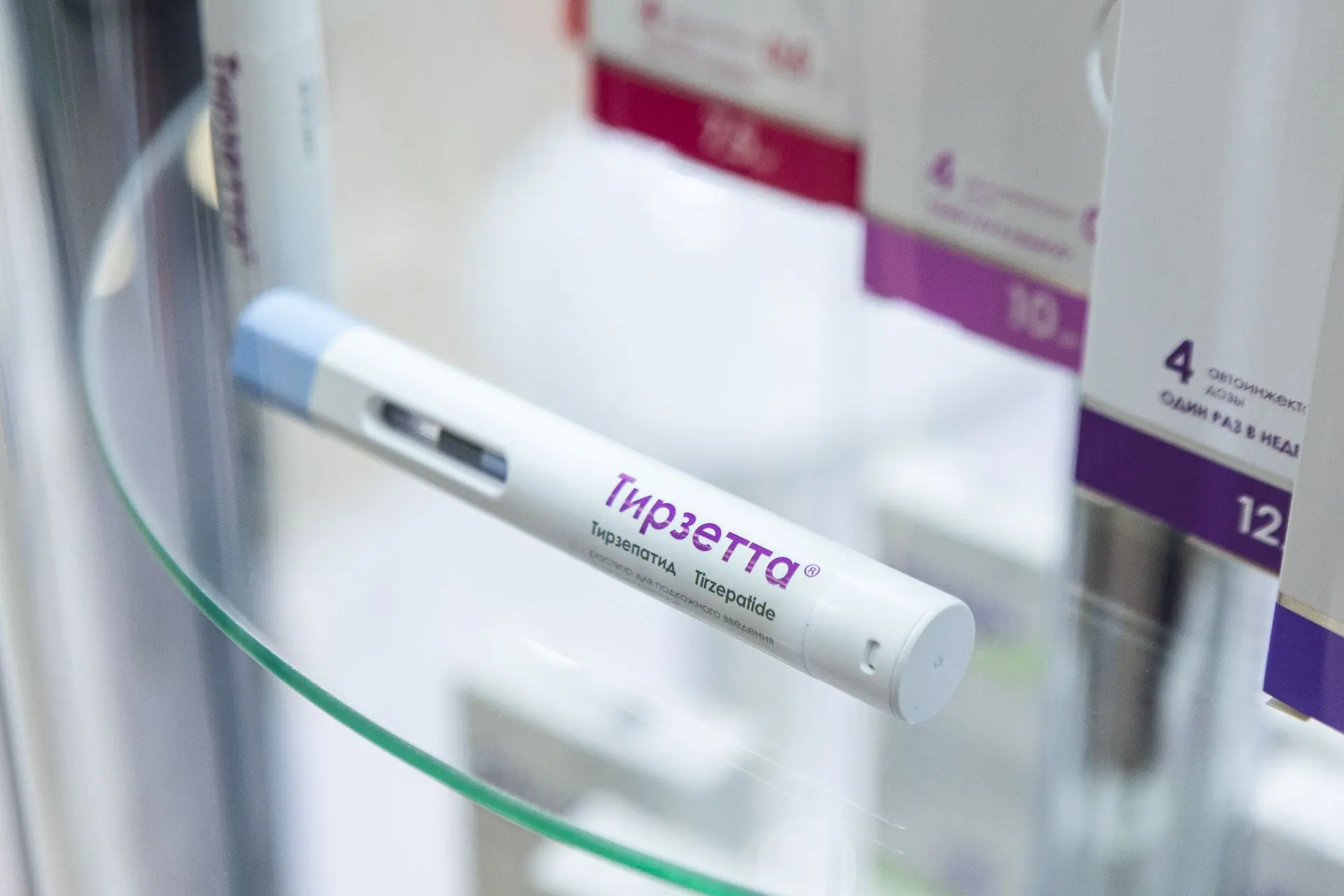
— These are the demands of life — you can't stop there. Semaglutide-based drugs are different. And Tirzette based on tirzepatide acts on several targets — for the first time it was possible to activate the receptor directly in adipose tissue, so weight loss is due to fat loss, and muscles are preserved or even strengthened. This is a healthier weight loss.
But the patients are different. Someone has a higher risk of cardiovascular disease - studies have shown that IVF therapy reduces the risk of strokes and heart attacks by 86%. Someone has prediabetes or relatives have diabetes - Tirzetta reduces the risk of developing diabetes by 96%. There is Enligria, a first-generation drug that is taken every day: This is important in intensive care, when it is necessary to carefully titrate the dose, or in patients with polypragmasia, when prolonged action is undesirable. Tirzetta is suitable for those who need to lose weight faster — for example, to enter the IVF protocol — or for those who have already tried another therapy. Semaltara, the first Russian tablet—based semaglutide, also appeared: it is both the first line of diabetes therapy and the opportunity to switch to pills after a course of injections and maintain weight. The doctor selects the drug for a specific patient, taking into account the metabolic profile, weight loss goals and risk factors. A next—generation triple agonist drug is currently in the works.
— That's what I wanted to ask you about triple agonists. Here you are moving in the global mainstream. What is the stage of your development?
— Our own original triple agonist is in the final stage of preclinical development and will enter the first phase this year.
— In 2025, the flagship drug in the treatment of cancer was Pradetro, the first Russian second—generation androgen receptor inhibitor, apalutamide. What are you cooking next?
— Promomed has several dozen oncological drugs in development, including the next-in-class format, when we take something already known and modify it. Pradetro, for example, is made with its own synthesis substance, which has fewer impurities than even the original preparation.
I would like to highlight the conjugate of a monoclonal antibody with a chemotherapeutic agent — it is already in registration clinical trials. Its peculiarity is that the monoclonal antibody here is bispecific: the more receptors are involved, the higher the chance of success and the lower the risk of resistance. Such a conjugate delivers "lethal" chemotherapy to the tumor by targeting the cancer cell.
— So you're removing the dangerous side effects of chemotherapy by targeting its effects specifically on cancer cells?
— Yes, targeting a cancer cell is the big goal.
— Where is the line between business and scientific interest and benefit for a person? I'm also asking about orphan diseases that have affected my family. My relative died of ALS a few years ago.
— Orphan diseases are not so much a business issue as a challenge for a developer. These are genetically induced diseases, often of childhood age, so there are a lot of ethics and increased efficiency requirements. But working with orphan drugs expands the expertise so much that then the development of conventional drugs is easier.
There is an example: We have released teduglutide, a Glutegris drug that is fully localized in Russia. Initially, it was intended for the treatment of orphan syndrome of the short intestine in children, and then we realized that it would be effective in patients with traumatic intestinal injury — in other words, in the wounded; now such studies are underway at the Burdenko Center. That is, the orphan drug may have a wider potential.
I have been working for the company since 2009, since I was a student, and I say sincerely: Promomed always puts the health of patients as a priority. Back in 2012, I had a project with the endocrinology center. We were contacted when there were 15 children with a rare disease in which phosphorus was not absorbed, and there were no foreign drugs at that time. It was a non—commercial project, but we did everything quickly and handed over the development, simply because it is important to help. Businesses, of course, need money, including for development, and we spend billions on them. But life expectancy and a person are always at the forefront.
— We talked about monoclonal antibodies, which are one of the vanguards of pharmaceutical development. And what do you think about the recently very fashionable CRISPR technology? Are you working in this direction?
— We have a project with Vladimir Petrovich Chulanov on CRISPR-Cas for the treatment of hepatitis patients, which is still at a very early stage. Curiously, the CRISPR developer himself, who won the Nobel Prize for it, said that he did not believe in the feasibility of the technology in practice. Nevertheless, there are currently projects in an advanced stage and in clinical application, so the direction is certainly worth continuing.
— So the technology is still promising? To be honest, I haven't seen any breakthrough solutions yet.
— I haven't seen it yet either. But you shouldn't give up — perhaps you just haven't found the trigger mechanism that will bring the matter to an end. Both in RNA, the key problem was delivery, and in CRISPR: the problem of delivery and targeting will be solved, and the technology can fire. I would not advise those who have such an opportunity to leave it.
— Last year, at the Promomed forum, I signed a number of interesting agreements. What have we agreed on this year? Will Biochemist develop?
— We have signed several agreements. This includes the Industrial Development Fund, which helps us increase production capacity and covers a significant portion of capital expenditures; one of the agreements is aimed at expanding production facilities.
But development is closer to me. We have signed an agreement with the Academician Dedov Endocrinological Research Center to conduct an epidemiological study of the epigenetics and biological age of Russians. It is important to obtain real data about the biological age of people and the markers that determine it, which needs to be affected in order to prevent premature aging. It is known, for example, that metabolic diseases and obesity increase the biological age by about four years. The idea is to compare obese and normal-weight patients, identify these markers, include their definition in routine clinical practice and in the state guarantee program, and develop treatment algorithms. We will conduct this large epidemiological study together with the center.
Interviewed by Andrey Reznichenko
Get the most interesting news and publications first!
Sent successfully!

Press office
To request a press release or interview, please contact our press office