
Expert RA upgraded PROMOMED DM's credit rating to ruA
19.09.2017
Corporate
Industry development
19.09.2017
The head of the enterprise spoke about the achievements and development prospects of the Biochemist plant.
PJSC Biochemist is one of the most important manufacturers of medicines in Russia and one of the leading industrial enterprises of the Republic of Mordovia. The plant was founded in 1959 by decision of the Council of Ministers of the USSR and has extensive experience in the production of medicines, the main of which are antibiotics. Today, the company is undergoing a global modernization: it is expanding its production facilities, reconstructing old buildings, and equipping them with modern equipment. Biochemist confidently looks to the future.
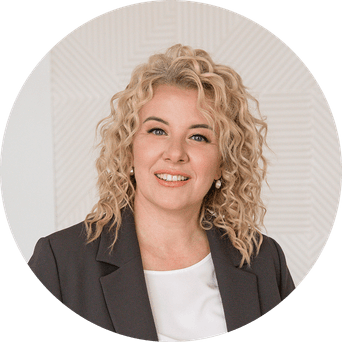
Marina Penkova, General Director of PROMOMED Management Company, told us about the development of the plant and plans for the future.
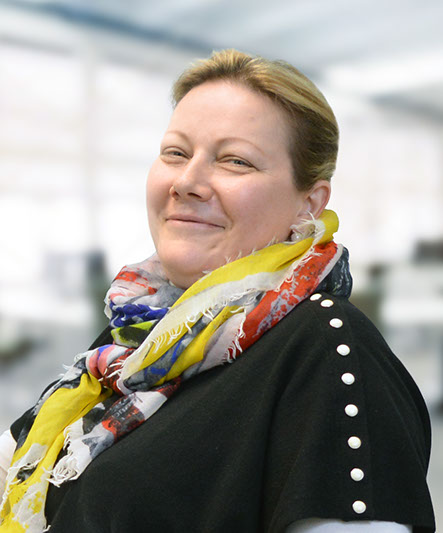
- Marina Vladimirovna, why did the modernization of production at Biochemistry begin?
- The Biochemist plant has been solving the most important tasks for many years, providing the country with safe and effective antibiotics. Just imagine: in the middle of the last century, up to 80 percent of surgical patients died from staphylococcal and streptococcal infections! It was at Biochemistry that Soviet penicillin was first obtained.… However, the once legendary enterprise, the flagship of the pharmaceutical industry, fell into disrepair in the 90s, there were no orders, people worked part-time. In the 2000s, the very existence of the plant was threatened.
In 2015, a new owner, PROMOMED, came to the plant, and a large–scale reconstruction and modernization began. Biochemist has found a second life, now it is a dynamically developing enterprise, successfully participating in import substitution and innovative development programs. Today, production volumes have increased by 162 percent compared to 2015, labor productivity by 25.5%, and exports by 10%. The laboratory base has expanded, and new personnel have joined the company.
- How many buildings and workshops have already been built and which facilities are under construction?
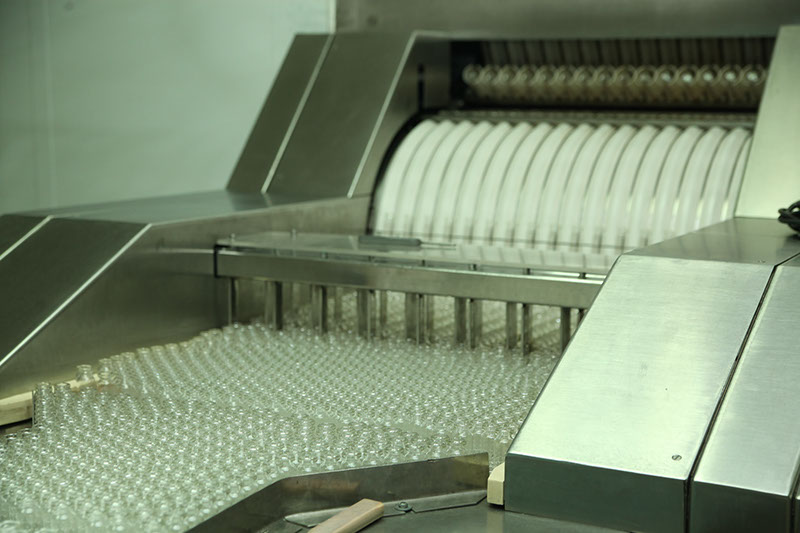
- In two years, more than 5,000 square meters of production space have been reconstructed and put into operation at the plant, and the equipment fleet has been updated by 60 percent. A new workshop has been opened, which can produce 400 million tablets per year. The site for the production of ointments and gels is being reconstructed. A site for the production of medicines in capsules has been created, which will increase production fivefold. A two-level workshop with an area of 16 thousand square meters for the production of liquid dosage forms is in the active construction phase. There will be two filling lines for ampoules with a capacity of 170 million units per year, a line for filling drugs into vials with a capacity of 30 million units per year, and a site for the production of nasal sprays with a capacity of 5 million vials per year.
- What is the reason for the decision to become a full-cycle production?
- I will not hide that we set ourselves an ambitious goal – to contribute to the national, drug safety of the country. Full-cycle production reduces the dependence of the Russian pharmaceutical industry on foreign drug manufacturers.
In addition, there is an economic feasibility in this approach. It is cheaper to work on their own raw materials, and accordingly, medicines produced at Biochemistry will be more affordable for Russians.
And of course, the development of the enterprise, its bias towards innovation, will create new jobs at Biochemistry, and this is important for the region.
- Biochemistry's main specialization is the production of antibiotics. But it's not just these drugs in the company's portfolio, is it?
- We produce antitumor, plasma replacement, antiseptic, cardiovascular, antiviral drugs, and tissue repair stimulants…
Today, Biochemist produces more than a hundred names of medicines in injectable, tablet, ampoule forms, ointments, gels and suppositories, more than 70% of which are included in the "List of vital and essential medicines". Among them, such well-known throughout the market as ceftriaxone, rheopolyglucine, lisinopril, amoxicillin, aminocaproic acid…
- Are the prices of medicines from the list of VED controlled by the state, is it profitable for Biochemist to produce them?
- Some of the drugs are really lowThey are marginal, and if there is no price indexation, we will have to abandon the production of some of them.
- What innovation awaits the company in the near future?
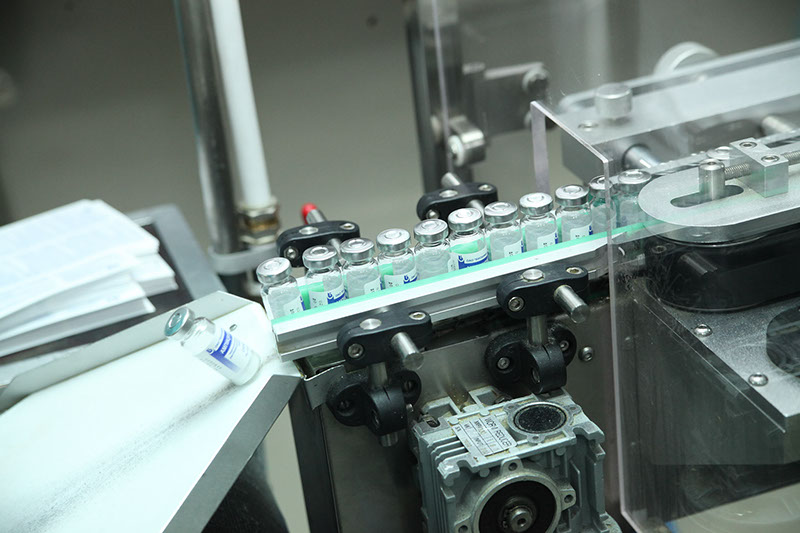
- A few months ago, we started construction of a building in which an R&D laboratory will be created, as well as workshops for the chemical and microbiological synthesis of active pharmaceutical substances. This is where innovative drugs will be developed. The second stage will be a complex of works on equipment commissioning and staff training. The implementation period is the fourth quarter of 2017 – the first quarter of 2018. The plant has already purchased equipment manufactured in Switzerland, Germany and Italy. In total, this project is designed for 550 million rubles of investments.
- Last December, as part of her visit to Mordovia, Minister of Health Veronika Skvortsova visited Biochemik. In her presence at the plant, a trilateral agreement was signed on the establishment in Saransk of Russia's first Scientific and Production Center for the development of new types of antibiotics. At what stage of operation is this Center now?
- To date, the staff has been formed, the NPC Antibiotics project office has started working, the laboratory and pilot production stage of the first substances has been completed.
The scientific base of the project is the Mordovian State University, and the production facilities are provided by Biochemist.
Minister of Health Veronika Skvortsova stressed that the NPC being created should become the leading domestic scientific and production base for the production of the latest generation of antibiotics. In turn, the Head of Mordovia, Vladimir Volkov, said that the project is of strategic importance for the whole country, therefore the Government of the Republic of Mordovia is the third participant. The new company will solve the problem of import substitution of antibiotics for today.
- This is the first and only scientific research center in Russia for the development of biological substances. Why aren't your competitors in a hurry to step on your heels? What is the specificity of the technology of synthesis of substances?
- Biotechnology is difficult: the multi–stage production process, unique knowledge and skills when working with crops, with the preparation of media ... A living cell does not behave like a chemical substance – it reacts sharply and individually to external influences. Each stage of work with this cage takes place in a specialized area, appropriately equipped. There are no standards here, as in chemical synthesis technology. It requires unique solutions, a deeper level of science, serious investments, and, of course, it requires experienced personnel who are worth their weight in gold.
- And how do you solve the personnel problem?
- Students of N.P. Ogarev Mordovian State University practice at our laboratory bases. Every year we select the top five and award them with personalized increased scholarships. After completing their studies, these students first get the opportunity to get a job at the NPC and at the Biochemist.
- How many antibiotics will the NPC eventually release?
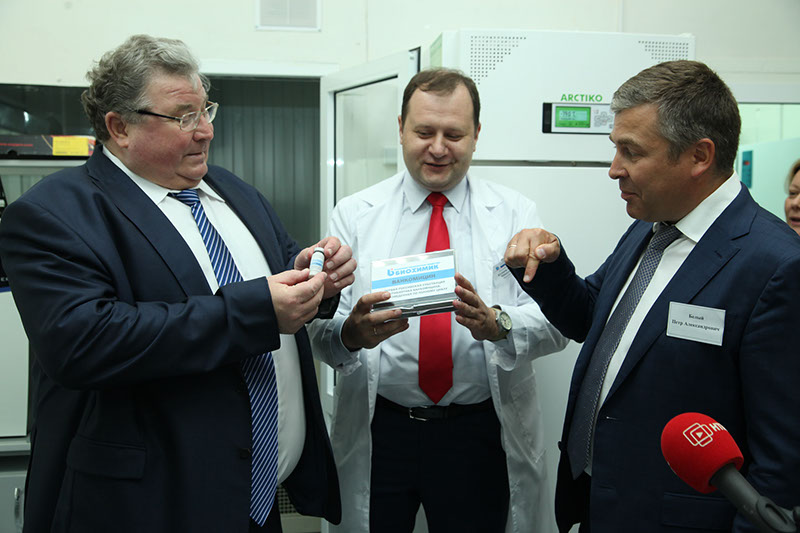
- 4.08, 2017 During his visit to the Biochemist plant, the Head of the Republic of Mordovia, Vladimir Volkov, was presented with vial No. 1 of the series No. 1 of the Vancomycin antibiotic substance, developed from the molecule to the finished form in our laboratory. The drug has a wide range of applications.
By the end of the year, the NPC will prepare four antibiotic substances for commercial production at Biochemistry. Within three years, up to 20 new fourth- to fifth-generation antibiotics will be put into production.
Now, together with the Gause Research Institute for the Development of New Antibiotics, the NPC is developing several latest-generation antibiotics, including plans to start working together on the original lipoglycopeptide drug INA-5812. These antibiotics are intended for the treatment of tuberculosis, pneumonia, soft tissue and bone infections, etc.
- Are you taking steps to develop contract manufacturing at your company?
- Many contractors are interested in us, and the range of offers is wide – from the production of tablets, ampoules, and packages to the rental of production facilities. We successfully cooperate with some companies. DoomI believe that after the modernization, the plant will become a powerful contract site.
- Does the plant export its products?
- Last year, Biochemist exported products worth 134 million rubles. There are plans to significantly increase the volume of supplies. Currently, medicines manufactured by PJSC Biochemik are registered in Russia and in countries near and far abroad. We have been cooperating with Kazakhstan, Kyrgyzstan, Azerbaijan, Uzbekistan and Georgia for a long time. We are actively developing sales markets with Armenia and Vietnam. Negotiations are underway to supply Biochemik's drugs to Iran, Yemen and Africa. In fact, we work with all continents. We supply such well-known drugs as ampicillin, cefazolin, cefotaxime, indapamide, sodium chloride, glucose, the same lisinopril and rheopolygukin, and many others.
- What are Biochemist's long-term plans?
- In the coming years, we plan to bring about 170 new drugs to the market, most of which are antibiotics, and we expect to increase production capacity by more than three times.
It is no secret that today there are serious threats associated with antibiotic resistance, while Russian doctors often have outdated drugs in service that are not used even in third world countries.
According to scientists, the economic damage from infectious diseases in Russia in 2015 amounted to 549 billion rubles, most of which accounted for acute respiratory infections. In Russia, approximately one in four patients with pneumonia cannot be treated with antibiotics, despite the fact that the incidence of community-acquired pneumonia increased by 24% in the previous year alone. In addition, our country is characterized by a high prevalence of drug-resistant tuberculosis.
If this continues, there may simply be no antibiotics in the country that would be able to treat people. Biochemist sees its mission as providing Russia with the latest domestic drugs and protecting its citizens from these threats.
Reference
According to scientists, in 2050, about 10 million people in the world will die annually from infections caused by resistant bacteria, and deaths from infections will exceed deaths from cancer. That is why the production of the latest generation of antibiotics is the most important task for domestic and global medicine.
Biochemist will provide the country with innovative antibiotics
Get the most interesting news and publications first!
Sent successfully!
Press office
To request a press release or interview, please contact our press office