PROMOMED presented the first results of the "Start with Yourself" health support program for medical workers
19.09.2025
Corporate
For investors
Medicines
Industry development
19.09.2025
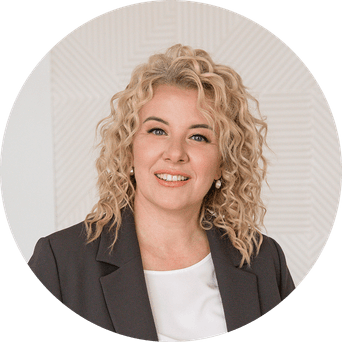
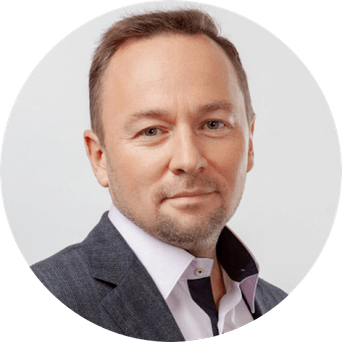
How new medicines are being created in Russia, why the domestic pharmaceutical industry is investing more not in the production of generics, but in the creation of original drugs, whether mRNA technologies and mRNA vaccines are safe, and whether the country and the world have drawn the right conclusions after the COVID-19 pandemic, Promomed's director of new products told TASS in an interview Kira Zaslavskaya
Innovative molecules as a matter of national security
— Why is the creation of our own original molecules perceived today not only as a scientific breakthrough, but also as a matter of national security?
— A well—developed pharmaceutical industry is as important a part of the country's economy as, for example, energy or electronics. It should be independent, high-tech, and independent of foreign suppliers. Unfortunately, we see vivid examples when foreign pharmaceutical companies stopped supplying important drugs to Russia, for example, antibiotics or medicines for the treatment of diabetes, obesity, a number of oncological diseases, and multiple sclerosis. Moreover, foreign companies have practically stopped conducting clinical trials in Russia: since 2022, their number has decreased by 20 times (this is open data, anyone can check on the website of the State Register of Medicines). And without such studies, it is impossible to register a new drug. As a result, there may be a situation where new drugs for cancer or autoimmune diseases appear in the United States or Europe, but we will not have them. Therefore, true import substitution is the creation of our own innovative drugs. On the one hand, we provide effective therapy to patients, on the other hand, it is beneficial for the economy. The original drugs are protected by patents, they open up the possibility of international expansion and increase export potential. Promomed sees its mission in creating domestic innovations that bring medicine to a qualitatively new level.
From generics to innovation — What are the key factors that forced Russian pharmaceutical companies to switch from the generic model to investing in long-term R&D projects? After all, it is easier for many companies to deal with generics.
— Each company chooses its own strategy independently. If we talk about Promomed's strategy, we are absolutely confident that it is innovative drugs that can ensure the rapid growth, sustainability and development of the company. As the head of R&D, I am particularly inspired by the passion with which we treat medicine. For example, during the pandemic, when most people were in quarantine, we worked around the clock and felt especially strongly that we were creating medicines for our loved ones and for ourselves. Now we are trying to predict what will be in demand in medicine in 10 years, which technologies will bring really significant results.
— How has the structure of investments in the industry changed over the past five to seven years? How much has the share of spending on science and clinical research increased?
— If you look at the industry as a whole, the number of bioequivalence studies has increased — these are often simple clinical studies necessary for the registration of generics. Most pharmaceutical companies in Russia have historically been engaged in the manufacture of generics. But I am glad to note that several companies, including ours, are significantly increasing investments in the development of innovative drugs. Over the past few years, we have upgraded our R&D center and now we can implement every stage of creating original drugs - from computer modeling of the structure and synthesis of a new substance to scaling technology and creating almost any dosage form. We have conducted dozens of studies of different phases, received registration certificates for the latest drugs, and now the bulk of all our medical research is our own drug development for the treatment of various types of cancer, obesity, diabetes, autoimmune diseases, infections, etc.
— How does "import dependence 2.0" differ from simple localization or packaging of finished products?
— These are fundamentally different approaches. Simple localization is when we pack ready—made preparations or use imported substances. "Import independence 2.0" is the creation of a complete production cycle: from the production of a substance, in fact, the synthesis of a substance, to the release of a finished dosage form. The production of pharmaceutical substances is becoming critically important for the future of the industry. This is not only independence, but also a change in the structure of the economy, the formation of new niches for related industries — instrumentation, chemical industry, biotechnology. Now at Promomed, we can do almost anything we can.about modern pharma. We have technologies for the synthesis of small molecules and the production of biotechnological drugs. We are able to produce more than 10 dosage forms and work with technologies that are owned by literally a few companies in the country: long-acting dosage forms, RNA therapy, peptide drugs — we have mastered all this in recent years, purposefully building technological platforms.
— What technological barriers and personnel challenges had to be overcome when creating such an infrastructure?
— We have been modernizing our enterprises for many years. Currently, the Biochemist plant is one of the largest biopharmaceutical enterprises in the country: 22 hectares of industrial space, 6 workshops and 23 production lines. It didn't appear in one day. We worked within the framework of the government's Lean Manufacturing program, optimized processes, understood where automation could be done, and purchased the appropriate equipment. We have a fully automated production of tablets and capsules, the only one in Russia. Such systems are available only in Germany, South Korea and here. These are billions of tablets and capsules per year. In 2023, the President of Russia opened the largest pharmaceutical substances production facility in the country. At the end of this year, we will open a high—tech workshop for the production of oncological drugs, including monoclonal antibody conjugates - no one in our country has such equipment.
— Under the conditions of sanctions, where do you get the equipment? It's mostly imports, isn't it?
— We are still cooperating with European countries and Korea, and we are working a lot with China. And here it is important to note that Chinese equipment, especially for biotechnologies, is now very high-end. Over the past few years, the Chinese have bypassed Europe and America in many directions. When we say that we are buying Chinese equipment, we say it with pride — it is high-quality high-tech equipment. And the prices, by the way, are not low at all. We actively use, for example, preparative chromatographs from Russian equipment. They are of good quality, which is important for cleaning substances.
What is the strategic value of the patent portfolio for the pharmaceutical company? Why is it often more important than the production facilities themselves?
— Reliable patent protection is a true asset of the company, which ensures stability in the market and enables successful international expansion. We have a very strong patent directorate, which employs patent attorneys, both Russian and Eurasian, who are competent people with a scientific background. We also consider it necessary to fight patents that unfairly monopolize the drug's presence on the market, the so—called evergreen patents. We are forming our position and working on the cancellation of such patents in the Chamber of Patent Disputes. One example of winning such a fight is the work on one of the drugs for the treatment of breast cancer. The development of new proprietary technologies, even for a reproduced drug, often improves the quality of the drug. We have a number of patents on technologies for the synthesis and production of medicines. As part of this innovative activity, we have managed, for example, to make drugs cleaner than even their foreign predecessors.
MRNA technologies and the future of oncology
MRNA technologies and mRNA vaccines — how safe and promising are they? After all, during the pandemic, there was talk of a revolution, but then there was evidence of side effects. And doesn't mRNA "transform" an organism into a bioreactor?
— Yes, this is the essence of technology. MRNA makes it possible to teach the immune system to see a tumor and destroy it with its own cells. But any load must be managed. The extent to which the effect of the mRNA vaccine on the immune system is pronounced and how it affects the body is carefully checked in preclinical and clinical studies. Without this, the drug simply will not be allowed to be used in practice. It is important to understand that we are talking about a therapeutic cancer vaccine — it is not a vaccine to prevent cancer, it is a cancer treatment. It's a medicine.
How does it work for cancer?
— Tumor cells are dangerous because they have a huge number of mechanisms for evading the immune system. The tumor grows in the body, but our immune system, the very killer cells that kill everything foreign, does not see it. Therefore, cancer is often diagnosed at the third or fourth stage - too late. The MRNA vaccine makes our immune system begin to "see" the tumor cell, acts on specific targets in the tumor cell and destroys it.
— Do you think that mRNA vaccines are the near future?
— Yes, I think that this is a very close future. We are working on the development of mRNA drugs for the treatment of oncological diseases.levaniy. Preclinical studies are currently underway. I think that in the future, 7-10 years, these drugs will become routine practice.
— To what extent is the export strategy a mandatory component of the pharmaceutical companies' business model today?
— The share of exports in our revenue already exceeds 5%, we aim for a share of more than 15%. We actively supply the EAEU and CIS markets with a convenient registration system and historically close cooperation. We also actively work with the countries of the Middle East and Southeast Asia - Iraq, Saudi Arabia, the Emirates, Vietnam, the Philippines, etc. We have passed not only the Eurasian GMP inspection, but also a number of international inspections, and there will be several more this year. We have proven that the production at our factory meets international quality standards.
— What drugs are in demand for export?
— Drugs for the treatment of oncological diseases, antiviral drugs, antibacterial drugs, drugs for the treatment of obesity and diabetes are in high demand. An interesting story: we were contacted, for example, from Saudi Arabia and a number of other countries, and we supplied them with antibiotics even without registration, because they had a critical defect in these drugs. Do you remember last year we had a problem with amoxicillin? We are found thanks to our active scientific work — we publish each of our research in peer-reviewed journals, in Scopus, Web of Science. We publish in English in the journals of the first and second quartiles. The quality of our drugs is becoming known to the international community.
— The problem of antibiotic resistance is becoming more acute...
— This is a serious problem. We are working on both the latest generation of antibiotics and new original combinations. The Biochemist plant was originally established back in 1952 as the largest microbiological antibiotic manufacturing company in the Soviet Union. Those multi—ton Soviet reactors that we now have in the museum at Biochemistry are the true biotech. Therefore, when people ask about Russia's competencies in biotech, they existed back in the Soviet Union. We have drugs that can be combined with antibiotics or even used to reduce antibiotic consumption. We have a unique peptide drug that has an anti-inflammatory effect. We recently completed a clinical trial led by the country's chief pulmonologist. We treated patients with pneumonia and showed not only high efficacy, but also a reduction in the need for antibiotics. There is an original RNA-based drug. It controls the work of the immune system, enhances the production of all three types of interferons: alpha, beta, gamma. This simultaneously allows the body to fight infection and has an anti-inflammatory effect. During the pandemic, we proved that just one injection can prevent the disease even in people living with coronavirus patients. And the drug is effective for any infection.
— Equipment is good, but people are the main thing. How is the work with leading medical research centers and universities organized? How do you educate young people?
— They really want to come to work with us, because we solve interesting problems, we are leaders in conducting clinical research, and we are working on complex technologies. Our goal is not to increase the number of packages, but to create high—tech products for the treatment of complex diseases, and, of course, this importance of activity attracts real professionals, and especially young people. Youth is our future and our support. We are actively working with a number of universities: Moscow State University. Ogareva, Lomonosov Moscow State University, Mendeleev Russian Technical Technical University, Rosunimed, St. Petersburg Polytechnic University, Samara University. We have target areas, our own departments — we have opened the Department of Pharmaceutical Technology, the Department of Medical Cybernetics to develop the use of artificial intelligence in the pharmaceutical industry. Undergraduates are interning at our company — some in the office, in the registration department, the patent department, or directly at the factory. When students work with their hands from the first year, they are ready-made specialists by the time they graduate. And most importantly, their eyes are burning, they understand what they are working for.
— What needs to be changed to stimulate the further development of the domestic pharmaceutical industry?
— Firstly, the improvement of the patent system. Mirror measures of responsibility are needed for companies that illegally monopolize the market with "evergreen patents." If there is a penalty for patent infringement, there should also be liability for illegal monopolization. This will create conditions for fair competition. Secondly, to strengthen support for scientific activities — preferential loans not only for infrastructure development, but also for conducting clinical research.their research. After all, clinical trials of oncological drugs, especially original ones, cost billions of rubles. We know this firsthand. We are currently conducting two studies of biotechnological drugs for the treatment of a wide range of oncological diseases, and we are launching a number more this year. In order to increase the effectiveness of cooperation between pharmaceutical companies and research centers in our country, in my opinion, it is worthwhile to intensify the implementation of the initiative to create a platform for R&D inventory, announced as part of the Pharma 2030 strategy.
— What lessons have the government and pharmaceutical companies learned from the COVID-19 pandemic? Have we drawn the right conclusions?
— The pandemic has certainly contributed to the development of the pharmaceutical field. From a medical point of view, there are revisions of approaches to the treatment of viral diseases and the consolidation of an early start of antiviral therapy to prevent the development of complications, the development of telemedicine and drug delivery capabilities. Our specialists learned all this very quickly. Our company has created a number of innovative drugs — these are platform solutions. It is very important to note the rapid reaction of the regulatory system. A fast-track system has been developed in Russia for conducting clinical trials and registering drugs. The fast track is not a reduction in the quality of the study, it is a prioritization within the framework of the examination at the Ministry of Health and a significant reduction in the time of this examination. This effective system continues to work and ensures priority consideration of drugs for which there is already a defect or there is a risk of its development. In general, the domestic pharmaceutical industry feels confident and demonstrates active development. When we say that the mission of Promomed company is to make people healthy, beautiful and happy, we set ourselves an ambitious goal — to be an ambassador of the latest drugs and opportunities in medicine. We are working on new ways to fight cancer (CAR-T, conjugates of biotechnological molecules with chemotherapy), new generations of drugs to combat diabetes and obesity that implement three mechanisms of action in the body at once, and approaches to the treatment of neurodegenerative and genetic diseases. Every year, together with other companies, we produce dozens of drugs, ensuring the confidence of the healthcare system in the high quality of domestic medicine.
SourcesStay informed
Stay informed

Get the most interesting news and publications first!
Sent successfully!
Press office
To request a press release or interview, please contact our press office