PROMOMED expands its portfolio of incretin drugs in Belarus
03.07.2025
Corporate
For investors
Medicines
Industry development
03.07.2025
The Russian pharmaceutical industry is not only successfully solving the tasks of achieving drug sovereignty, but is also taking a step forward by creating innovative medicines that are in demand all over the world. Peter Bely, founder and Chairman of the Board of Directors of Promomed, told RIA Novosti in an interview during the SPIEF about how pharma and biotech are developing, how artificial intelligence is used, as well as about the novelties and potential opportunities of the industry.

© RIA Novosti / Vladimir Astapkovich
Chairman of the Board of Directors of Promomed Group Peter Bely
– Peter Alexandrovich, what proposals did you come to the forum with?
– The signing of an agreement with Sberbank and the AIRI Institute on the development of the next stage of a joint program on the use of artificial intelligence in pharmaceuticals was a strategically important event. Artificial intelligence in the pharmaceutical industry is a very big story. Usually, when they talk about AI, they mean events taking place on the other side of the screen: the neural network outputs a picture, text, analysis, but all this is somewhere inside the computer. Meanwhile, artificial intelligence in the pharmaceutical industry is able to do something that exists in the real world: to give new qualities, new drugs, new approaches. I know very few areas of such AI applications that directly affect our lives and our bodies.
Together with our partners, we have successfully implemented the first stage of the project, creating a platform for molecular modeling of the activity of molecules. This technology makes it possible to determine the optimal structure of molecules, minimizing energy costs for binding molecules to the receptors of target cells, and therefore improving the quality of this binding. This increases the effectiveness and safety of medicines. At the next stage of development, we focused on creating improved models, searching for new ways of molecular interaction and targets that can trigger these interactions. Our priority is not to prolong survival, but to achieve a complete cure for diseases, even such as oncology, by identifying the fundamental mechanisms of pathology development and ways to interrupt these processes.
Artificial intelligence can also predict the behavior of doctors and patients, analyze adherence to therapy, and accurately calculate the number of medications needed for different time periods. As a result, new approaches in medical marketing may appear, aimed at ensuring that patients receive supernova therapy as soon as possible, and doctors learn about the new drug and understand how it works as soon as possible. Such a symbiosis of digital technologies and practical medicine can give the industry a completely new quality.
Another important event for us at the forum was the session on intellectual property, which was attended by the heads of Rospatent, deputy ministers of Industry, Economy, health and Finance. A very important issue is the improvement of the patent system and legislation in the field of drug circulation. This is directly related to the budget expenditures for the purchase of medicines and the overall prospects for the development of the industry within the framework of the import substitution tasks set by the President. Many issues have not been resolved yet. In particular, everyone knows about the responsibility for patent infringement, which is well spelled out in various codes. But if the patent was subsequently annulled, it means that the monopoly that was given to the patent holder was not justified. The country spent a lot of money unreasonably, because it was possible to get these drugs from domestic manufacturers at times cheaper. No one is responsible for such an unjustified monopoly now. We have raised these issues, and they will be dealt with by the Council on Intellectual Property under the head of the Federation Council. The introduction of liability for unscrupulous patent holders and the encouragement of those companies who are fighting to overcome this monopoly and win will give the Russian pharmaceutical industry more opportunities to bring to the market modern drugs made in the country on a full cycle. This means lower costs for the budget, lower prices for consumers, and development support for the domestic pharmaceutical industry. This will be a huge step forward for the entire economy.
– At a recent meeting with investors, you talked about the launch of drug subscriptions. This is something completely new for the market. How will this mechanism work?– Previously, there was no subscription for patients to receive course medications in our country. The patient, who was prescribed long-term medications, was on his own. This can lead to improper use of medications. Even blood pressure medications that need to be taken every day, people often forget to take them or confuse dosages. There are three classes of medical errors: a very small class is medical errors, a small class is pharmacist errors, and a huge class is patient errors, which only increase over time. And what does the patient get with the subscription? First, he gets a discount, that is, direct economic support. Secondly, he gets a reminder when to take the drug, when to buy it in advance so as not to miss an appointment, and when to consult a doctor to review the dosage if necessary. This approach will make therapy more effective and avoid human mistakes. Thousands of people have already signed up for the program, and we hope that other market players will adopt our experience.
– There is a lot of talk about sovereignty now. For example, concepts such as "technological sovereignty" or "financial sovereignty" have long been ingrained. And what should pharmacological sovereignty ideally look like?
– Drug sovereignty is a key task set for the pharmaceutical industry by the President of Russia. Starting in 2022, the number of clinical trials conducted in the country by large international companies has sharply decreased, which means that registration and availability of cutting-edge foreign drugs on the Russian market will decrease dramatically. We have a very strong pharmaceutical industry, and we cannot allow the country to remain aloof from global progress in the treatment of diseases. To solve this problem, our company has invested significant resources in the creation of large production facilities and a research center that enable the production of any necessary medicines for domestic healthcare. We have already passed the stage of simple reproduction of generics, now we are creating complex therapy options to replace foreign drugs that may disappear from the market or are not present on our market at all. The motherland has set us the task of ensuring the uninterrupted supply of vital medicines, and this work has been done. Now it is important to increase the availability of domestic drugs for the population.
The next stage is the creation of the latest developments, in particular, in oncology. Russia already has all the existing capabilities in the field of targeted therapy and chemotherapy, but new promising methods are emerging that can radically change the approach to treating the disease. An example is CAR-T therapy, which is being actively implemented in the country's clinical centers. But you can go a step further. There are technologies for training the patient's immune system, and there are cancer vaccines. We face large-scale tasks, the solution of which requires active actions. Drug sovereignty does not mean simply copying existing global achievements, but actively creating its own innovative developments at an international level.
– What is the maximum program for Promomed in the coming years? What peaks do you want to reach by, say, 2030?
– The process of launching a new drug on the market takes at least five to seven years, including all three phases of clinical trials. Additionally, the timing of pharmaceutical development and preclinical research is taken into account. This is preceded by a lot of research work on the search for a new molecule, where artificial intelligence can provide serious help today. The events planned for 2030 are quite clear. The company has already launched a series of original drugs that have international patents and have passed the necessary expertise. These drugs are at various stages of research. In the near future, we will announce the launch of clinical trials of three new molecules that have completed the stage of pharmaceutical development and preclinical research and have confirmed their effectiveness and safety. This stage marks the transition to a new level, when Russia becomes a supplier of innovative solutions both for itself and for the whole world.
An important area of our work is to create conditions for the development and production of biotechnological drugs offering fundamentally new methods of treating diseases that were previously considered incurable. We are talking not only about cancer, but also about diseases of the central nervous system, such as dementia and Alzheimer's disease, for which there is no complete therapy yet. Today, we do not have the means to stop the destruction of nerve membranes, which slows down the transmission of signals and leads to impaired motor activity of patients. However, biotechnologies open up prospects for the creation of such medicines.
Biotechnological medicine is like a Lego set: by disassembling genomes and identifying damaged sections of DNA, scientists are able to create molecules aimed directly at repairing these damages. Such molecular structures make it possible to neutralize defects, correct cell biochemistry, or even replace damaged fragments of the genome. This approach takes medicine to a qualitatively new level of understanding of the human body and opens up a new era of medicine. And it is very important that Russia becomes a leader in this area.
Recently, a biotechnology center was opened at Mordovian State University, which has a strong scientific potential and qualified personnel. Such centers will allow Russian scientists to implement ideas at home, reducing dependence on foreign laboratories and minimizing risks. The university's state affiliation guarantees that there are no conflicts of interest between pharmaceutical companies, each of which can conduct research and test hypotheses on equal terms. The movement in this direction will contribute to the transformation of Russia into a leader in the global pharmaceutical industry. No one is surprised that we have the strongest mathematical and computer thinking, the best nuclear energy. We need to get used to the fact that Russian medicines can be the most advanced in the world.
– Promomed knows how to surprise. Recently, you were able to surprise even the stock market by issuing bonds with a coupon linked to stock dynamics. Give me a hint, what other surprises are you preparing to present?
– When the task is to bring the Russian pharmaceutical industry and biotech to the world leaders, the support of the investment community is of great importance. In conditions of high interest rates, when many investments could be frozen, it was the support of private capital that gave us the opportunity to move forward. And we, as an innovative company, have managed to offer the market a security design where the investor is guaranteed not to lose money, but can make money along with the growth of stocks.
But our main activity is making medicines. By 2030, we have a clear plan to bring drugs for humans to the market. At the same time, we began to solve the problem of substitution of veterinary drugs, which is extremely important for animal husbandry and pet owners today. We promptly formed a separate line by creating a subsidiary company Promomed – Animal Health. The first product has already been registered – a modern effective antibiotic, and there are dozens more drugs ahead designed to fill the shortage of medicines for animals. The new division will significantly reduce dependence on imports, as well as minimize the risks associated with the questionable quality of drugs obtained through parallel imports. We intend to ensure a full production cycle, large volumes and availability of products to maintain animal health.
– Is there any international interest in Promomed's developments? What exactly are foreign partners interested in?
– We see a very high demand for our drugs, especially from the innovative segment. Export sales have more than doubled over the past year, which has forced us to significantly expand our export directorate, recruiting even more strong professionals. In addition to the CIS countries, where we consider it our duty to supply good drugs, the countries of the far abroad are showing great interest: East Asia, the Persian Gulf and others. During the St. Petersburg International Economic Forum, we signed a trilateral memorandum with Mordovia State University and the Bahrain-based Riyadh Group of Companies. The agreement is aimed at jointly organizing the production of medicines, creating a hub for research and development, training scientific and production personnel, and ensuring the supply of vital drugs to the Riyadh Group's distribution network, which covers a number of countries in the Middle East, Africa, and Latin America.
There is a shortage of antibiotics in the world today, and many countries are actively switching to Russian drugs. The most important task is the fight against infections, in particular the Chikungunya virus, the only way to treat which is the induction of human interferons. We already have an effective solution – this is our Russian RNA-based drug that stimulates the production of all classes of interferons.
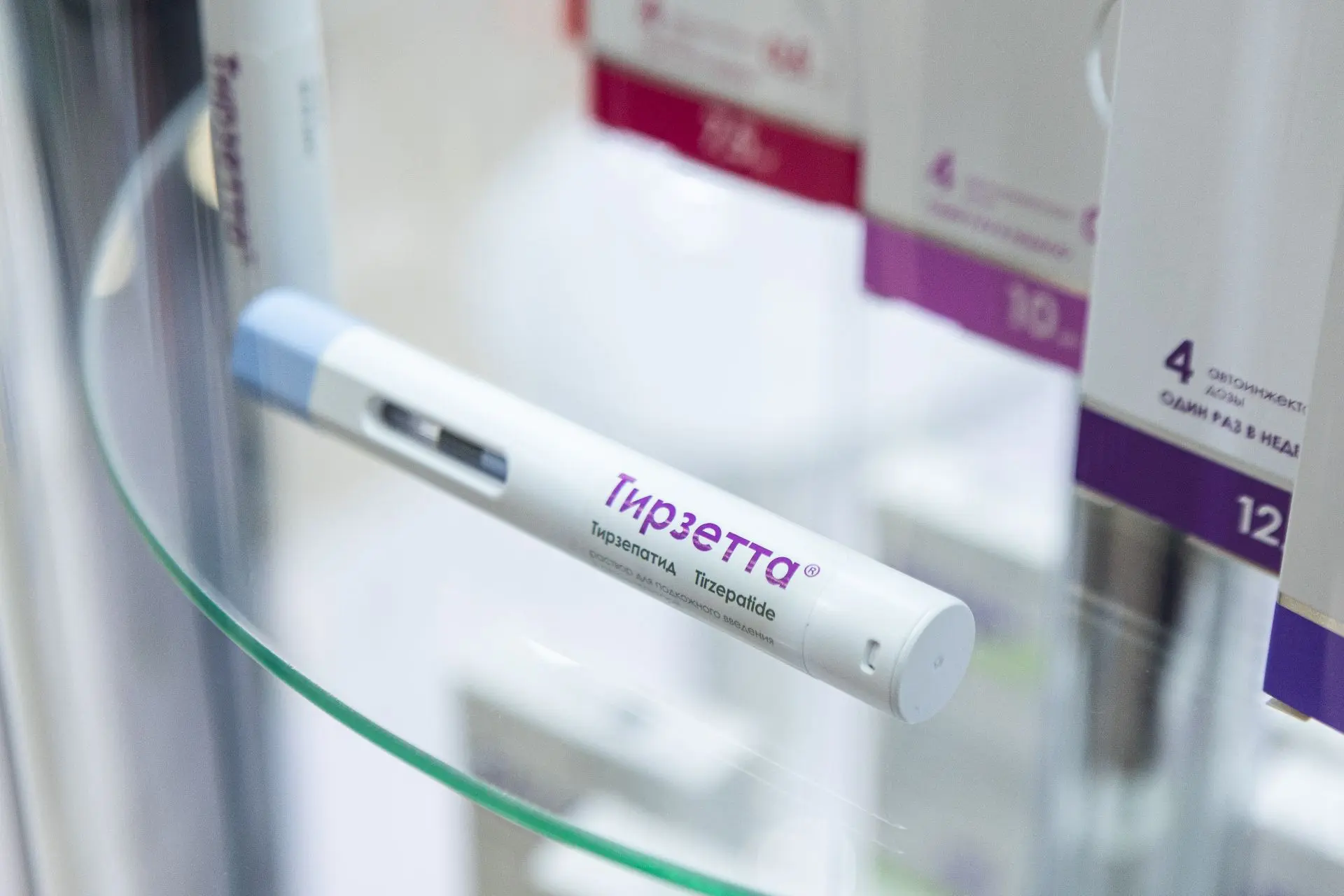
There are the best drugs and best practices in Russia today. An example is our group of drugs for metabolic health, which has a unique purity. It contains only the active substance and solution, without preservatives like benzyl alcohol or phenol, which are used even in Europe and have potential side effects. The high cost of similar American drugs ($1,500) when compared with the affordable price of the Russian equivalent (less than 10 thousand rubles), it creates a powerful incentive for global interest in the Russian product. As the next generations of innovative drugs enter the market, the company's export potential will increase significantly, strengthening Russia's position as a leading player in the international pharmacology market.
– Does Promomed have representative offices in other countries?
– There are representative offices in Vietnam, Uzbekistan, and work is underway in one of the Persian Gulf states and in Southeast Asia. Our strengthened export directorate is opening outposts in key regions for us, where a lot of work is underway to register drugs, create dossiers in national languages, and adapt information systems. Local representatives play a crucial role in liaising with local regulators by providing detailed information on clinical trials, quality and safety of drugs. In some cases, it is necessary to include a national sample of patients in the studies. This is a big and difficult job that strengthens the company's position as a reliable supplier of high-quality medicines.
– Now in Russia, everyone is talking about a shortage of labor. Are you planning to move production to other countries?
– Now we are actively developing the production infrastructure in Russia, while simultaneously solving the problem of staff shortages. It is important to create conditions that motivate employees not only financially, but also emotionally. Work on the creation of innovative drugs aimed at improving health and saving people's lives is a powerful attraction factor for young scientists and researchers. We work closely with leading universities, implementing a system of grants and scholarship payments, organizing training at joint departments and accepting students for practical training. This helps to train future specialists with the necessary competencies.
As for the opening of production abroad, this issue depends on a number of circumstances related to medical standards, economic conditions and political aspects of individual States. Some countries require a certain degree of localization of production processes, which affects decision-making regarding plant location and technology transfer. Strategically, Russia's internal potential remains our main resource.: scientists, experienced specialists, talented university graduates, own technologies and IT solutions. We are part of a large country and we feel its support: we were born here – here we can grow and create new opportunities for all of us.
Get the most interesting news and publications first!
Sent successfully!
Press office
To request a press release or interview, please contact our press office