
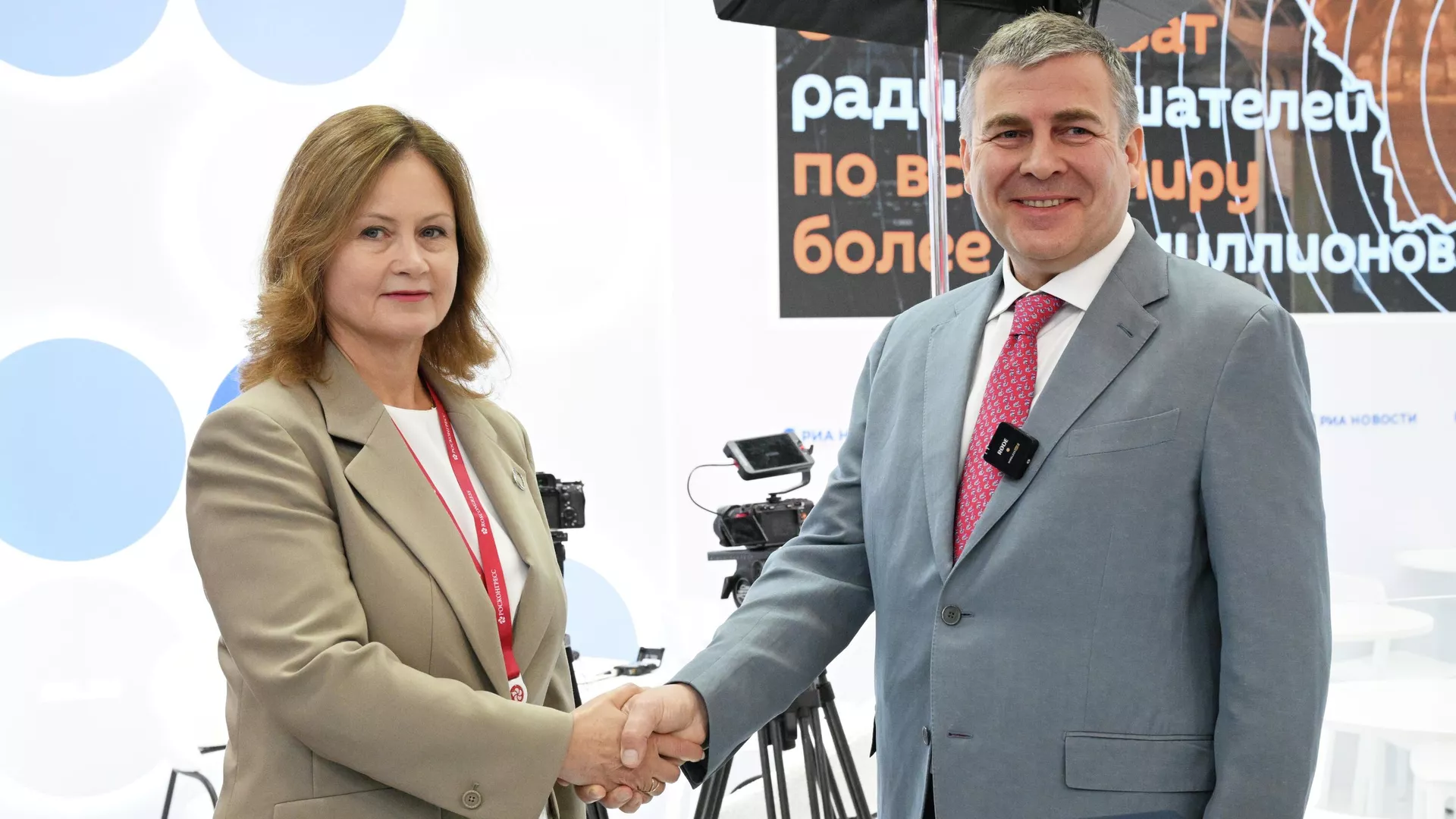
Access to therapy is part of the protection of the constitutional order: Peter Bely spoke at the SPIEF session on intellectual property
02.11.2018
Production
Industry development
02.11.2018

The domestic manufacturer JSC Biochemist from Mordovia makes a pharmaceutical breakthrough
A few years ago, the world began to actively sound the alarm about antibiotic resistance. This problem has not escaped our country either.
Attempts to find an effective means to combat bacteria have been made since ancient times. Even before the first drug was isolated, mankind used improvised natural remedies. It was not until 1929 that the British bacteriologist Alexander Fleming published a paper on his breakthrough in medicine, the discovery of penicillin, for which he and his compatriots Howard Florey and Ernst Cheney, who developed methods for purifying the antibiotic and began its production, were awarded the Nobel Prize in 1945. Unfortunately, the outstanding Russian microbiologist Zinaida Ermolyeva did not become a Nobel laureate, although in 1942 she created the first effective domestic antibiotic (the antimicrobial drug krustosin) and established its production during the difficult wartime.
It would seem that modern science is continuously moving forward, sometimes with leaps and bounds, nevertheless, scientists and researchers cannot yet boast of great achievements.In recent years, cases of the appearance of multidrug-resistant bacteria have been recorded, in the fight against which, as they say, "medicine is powerless." This is evidenced, in particular, by the death of a patient in the United States in 2016 from a superbug resistant to 26 types of antibiotics available in the United States.
New challenges are prompting researchers to search for more advanced treatment methods. The World Health Organization has called on governments around the world to develop a plan to combat antibiotic resistance. Russian Minister of Health Veronika Skvortsova also voiced the position of her department that Russia will prepare a state strategy in this regard and continue work on the creation of new antibiotics. The Ministry of Health plans to release more than 20 types of original fifth–generation antibacterial drugs by 2020. At the same time, the level of control in the production of such drugs meets all Russian and international requirements. "Besides us, the United States is the only country where fifth–generation antibiotics are being developed in tablet form," the minister stressed.

The absolute leader
Domestic manufacturers are now actively involved in the process of creating new-generation medicines and vaccines, conducting antimicrobial research and development to solve the problem of antibiotic resistance. The leading enterprise, which V.Skvortsova spoke about with pride, is the Biochemist plant located in the Republic of Mordovia, where for the first time in the country's recent history, a unique industrial production of a full cycle of new generation antibiotics has been organized.
The idea is firmly rooted in the minds of many, they say, the main technological platforms for solving global problems are most often capitals and megacities. But in this case, the obvious exception to the rule is encouraging – reaching the industrial level of synthesis of antibiotic substances has started in Saransk. Entrepreneurs and regional authorities realized before many that one of the priorities for the development of sectoral government policy is to reduce import dependence in the segment of the pharmaceutical and medical industries. Therefore, we have set ourselves an ambitious goal aimed at developing domestic production on an innovative basis in order to almost completely replace foreign analogues with domestic drugs.
It should be noted that the new modern production was not started from scratch. It seems that the representatives of the older generation are familiar with the former Saransk Medical Products factory with its easily recognizable logo in the form of a stylized drop of substance. Even after the rebranding, they decided not to abandon the traditions of the plant, its best practices, and the logo itself, because the company has a glorious almost 60-year history, which is still preserved in a preserved museum. In Soviet times, the plant was famous all over the world, as it was one of the first in the country to produce antibiotics of the first and second generations.
Speaking at the opening ceremony of the industrial production of antibiotics, V.Skvortsova noted this: "It is a great happiness that the plant has acquired a new lease of life. He was reborn in a new capacity. We are engaged in state–of-the-art production, full-cycle production: from the producer strain to ready-made dosage forms. This plant produces products that meet the requirements of the pharmacopoeia of the world. The level of product quality is the highest, there is simply no higher in the world. This production has a huge export potential.cial".
Today, the company is part of the PROMOMED group of companies, which is engaged in the production, development and sale of medicines. According to Dmitry Zemskov, the plant's executive director, it was difficult to transform the company in a short time, but thanks to the well-coordinated work of the team that joined the management in 2015, as well as the entire team, everyone in their place, this task was completed. Initially, it was clear that the company was not hopeless, rich experience and traditions serve as a kind of additional bonus. Therefore, the production of antibacterial drugs was designated as one of the non-dominant, but priority tasks.
Of course, at the start, the technological equipment left much to be desired, because for a long time nothing new happened at the enterprise and it slowly faded away. In order to breathe life into this inertial production, we primarily focused on financial and economic components, strengthening the material and technical base and technical re-equipment.

A lot of money was invested in establishing safe production, in soil reclamation, since phenylacetic acid, which was previously used in the harmful production of penicillin, made itself felt. New times require social responsibility from businesses, which, among other things, concerns environmental safety. The plant's management is primarily concerned about the health of employees and residents of the city, realizing that the industry must be as environmentally friendly as possible.
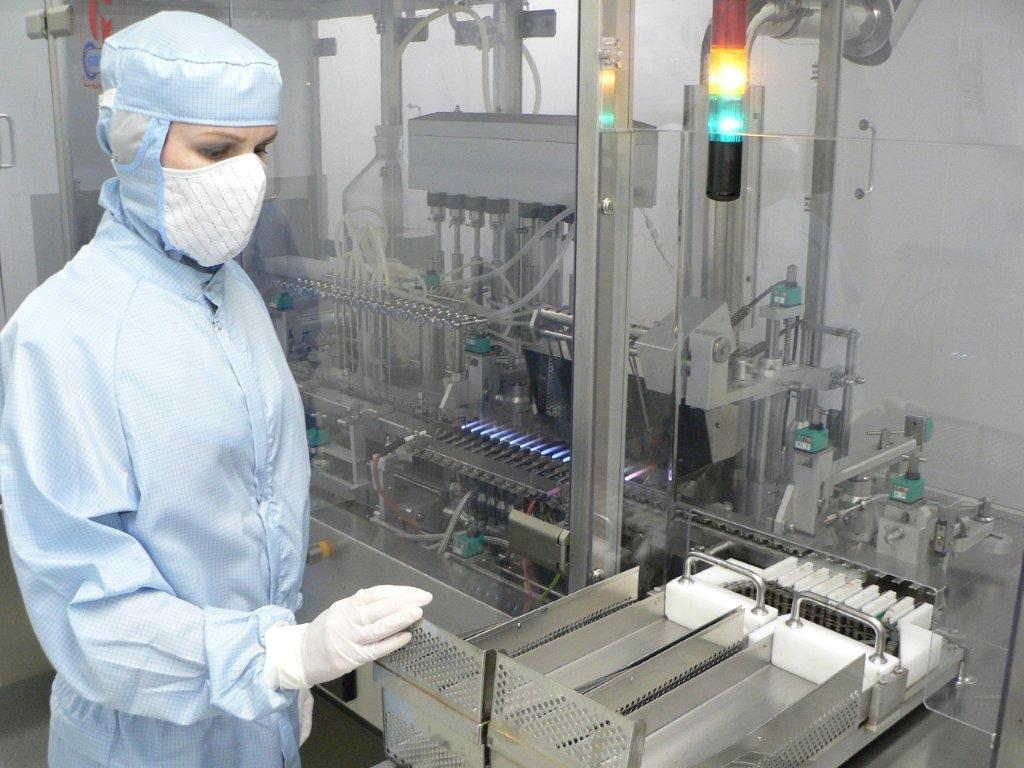
First of all, a workshop for the production of solid dosage forms was opened, which is dictated by economic expediency, because it provides funds for further development. Then we focused on the priority of the release of active antibiotics. Thus, a promising project was born to create the scientific and technical center "Antibiotics" for the creation of glycopeptide-type drugs. But they did not repeat the technologies for creating cephalosporins and benzylpenicillins that were produced here, because this is already yesterday. We started with vancomycin, a reserve antibiotic, which, although it has been known for a long time, has not been produced in our country before. The plant rightfully has the status of a scientific and production enterprise, because it represents a comprehensive engineering for the creation and implementation of new medicines.
It is important to take into account that the state and the government of the republic provide support to the growing production. The plant's management carried out a complete reconstruction of the workshops, installed the most modern equipment to produce products that meet the requirements of the State Pharmacopoeia of the Russian Federation, USP, BP and EP. The manufacturing process of the substances fully complies with GMP standards. Over 80% of the drugs produced by Biochemik are included in the List of VED.
The upgraded infrastructure of the enterprise will fully satisfy the needs of the Russian market for this drug. In passing, we note that the assortment portfolio of the plant includes about 200 items. The management is focused on the future, trying to work ahead of schedule. Therefore, the company's specialists have mastered full–cycle technologies for the production of three more glycopeptide antibiotics - telavancin, oritavancin and ramoplanin. Although they don't stop there either, they are looking one step ahead – like all over the world, they are thinking about alternatives to modern antibiotics.
Nurturing specialists
As, perhaps, in any enterprise, one of the key problems is personnel, because pharmaceuticals is a high–tech, specific, knowledge-intensive industry that requires a large amount of specialized knowledge and, of course, is very responsible. The new team of the plant was formed from among the leading specialists from all over the country, holders of deep knowledge, and owners of unique experience in the pharmaceutical industry. They were accepted on the condition that they would pass on their knowledge to the young. A good specialist should become a mentor for others who will go beyond their teacher.
To this end, the Biochemist plant and the Ogarev National Research Mordovian State University signed a strategic partnership agreement with the opening of a department of Chemistry and Technology of physiologically active substances directly on the basis of the enterprise. This department, which trains specialists in the field of antibiotic biosynthesis for the pharmaceutical industry, is taught by both university professors and leading manufacturing professionals. During the next picThe Minister of Health of the Russian Federation was also present at the opening of the department and warmly greeted the students. Undoubtedly, the practical skills acquired directly in production at the basic education level will help graduates of the university to immediately get involved in the production process.
The training is performed within the target set. According to the results of academic performance, students receive personalized scholarships from the plant. An agreement is concluded with each of them, according to which, upon graduation, he is obliged to work at the enterprise for 5 years. In addition to scholarships, the plant's administration allocates grants to young researchers to conduct scientific and practical research. Undoubtedly, inquisitive young people are attracted by the opportunity to participate in the creative process of creating new medicines, because now the company is developing almost 200 drugs, which is quite a lot even by world standards.
The factory laboratory facilities are being improved every year. In 2019, a new pilot industrial site will be built, which will allow developers to provide the most modern and comfortable conditions at the level of world standards. There will also be a reconstruction of the vivarium, which will correspond to the international level.
Within the framework of cooperation with the I.M.Sechenov First Moscow State Medical University, St. Petersburg State University of Chemistry and Pharmacy, and Kazan State University, the company sends its students to major Russian scientific and university centers to broaden their horizons and exchange knowledge in the field of biotechnology. In order to gain new knowledge using the best global manufacturing practices, it is also planned to send them to pharmaceutical enterprises outside the country so that they can get acquainted with the best practices and adopt the best.
It should also be mentioned that gifted children who study at the lyceum in a special program, where chemistry and biology are specialized subjects, are frequent guests at the plant. Who knows, perhaps these young inquisitive biochemists will also soon become colleagues of the current employees of the Biochemist plant. I would like to believe that, since the strategic modernization program of the enterprise is very broad and multifaceted, the plant is only at the beginning of a long journey, and young people will firmly link their fate with this promising production.

A look into the future
Upon closer acquaintance with the company's work experience, it becomes obvious that the domestic pharmacy is developing and ready for a breakthrough. Using the example of a single Biochemist plant, we can see how sustainable, coordinated, coordinated actions can change our lives for the better, which is especially important when it comes to nothing less than the pharmaceutical safety of the country. The Government of the Russian Federation, represented by the Ministry of Health of Russia, the government and the head of the Republic of Mordovia are contributing to this breakthrough. The plant is increasing its potential. The new production facility will allow not only to saturate the domestic market, but also to establish export supplies. Of course, the young production has a lot of problems, but thanks to the developed development strategy, the plant's management finds optimal solutions to any situation, which allows it to confidently move forward. We have to act at an accelerated pace, as required by the rapidly changing realities of the modern world.
Alexander IVANOV,
Special correspondent of MG

Get the most interesting news and publications first!
Sent successfully!
Press office
To request a press release or interview, please contact our press office