
Access to therapy is part of the protection of the constitutional order: Peter Bely spoke at the SPIEF session on intellectual property
27.11.2023
Production
Medicines
Industry development
27.11.2023
What solutions do Russian pharmaceutical manufacturers offer?
A quiet epidemic is raging in the world, with economic damage comparable to COVID-19. This is obesity: increased body weight contributes to the development of a huge number of diseases, from diabetes to heart attack, increasing the burden on national health systems. With this scale of the problem, the list of drugs developed by the pharmaceutical industry and approved by regulators for the treatment of excess weight is relatively small: in the United States, for example, there are six of them, and in Russia, until recently, only one of the three recommended drugs was completely Russian. In 2022, the supply of imported drugs began to decrease, and prices began to rise. Russian pharmaceutical manufacturers intend to change this situation as part of import substitution.
The global epidemic
According to the World Federation against Obesity, in 2020 there were already 2.6 billion overweight people, or 34% of the world's population.
In Russia, the problem is even more acute: in June 2023, Deputy Prime Minister Tatyana Golikova gave an estimated number of obese people in the country - from 35 million to 45 million people. According to Rosstat data provided by the Parliamentary Gazette, in 2022 in Russia, more than half of the population had weight problems: 35.9% of Russians were diagnosed with overweight, and 20.6% were obese.
The researchers note a correlation between the worsening of the obesity situation and higher health care costs. For example, a retrospective analysis of medical expenses in 2001-2016 in the United States published by a group of American researchers in the scientific publication Journal of Managed Care and Specialized Pharmaceuticals in 2021 showed that obese adults spend an average of $2,505 more on medical care per year than those who do not suffer from this disease, and the amount increases depending on the degree of obesity. U.S. losses from the economic and social consequences of obesity, according to analysts at the Milken Institute, an independent think tank, increased from $976 billion in 2014 to almost $1.4 trillion in 2018. The figures include both direct spending on the treatment of obesity-related diseases ($370 billion) and the economic effect of lost working days (more than $1 trillion).
Healthy lifestyle and medications
WHO considers a healthy diet (caloric restriction and increased consumption of healthy foods) and regular physical activity to be reliable measures to prevent obesity.
In the clinical guidelines of the Russian Ministry of Health for the treatment of obesity in adults, dietary and exercise correction is called "the first, mandatory and permanent stage of obesity treatment." Drug therapy can be prescribed to patients who, as a result of these measures, have not been able to achieve clinically significant weight loss, if we are not talking about complications associated with obesity (then drug therapy can be prescribed immediately).
Of the drugs, the Ministry of Health recommends the use of orlistat, sibutramine, sibutramine with metformin and liraglutide. They act in different ways: orlistat prevents the breakdown and subsequent absorption of fats, and sibutramine reduces hunger, accelerates the feeling of satiety and increases the energy consumption of the body. "Among the domestic drugs for the treatment of overweight and obesity, it is worth noting the original fixed combination of sibutramine with metformin," adds a representative of the Russian pharmaceutical company Promomed (it produces these drugs). "This drug not only reduces calorie intake, contributing to the formation of rational eating habits, but also helps to restore glucose and lipid disorders associated with overweight."
Liraglutide is a receptor agonist (analog) of glucagon-like peptide (GLP–1), a hormone produced in the human intestine. This hormone helps regulate blood glucose levels, and is also able to increase the feeling of fullness in the stomach and reduce hunger.
In Russia, the volume of consumption of anti-obesity drugs is growing from year to year. For example, in the first half of 2023, according to the research company DSM Group, 4.2 billion rubles were sold in pharmacies. This is 15.6% more than in the same period a year earlier.
It's expensive and you can't get it.
Until 2023, drugs of the GLP-1 receptor agonist class liraglutide and its prolonged form (administered once a week, not daily) semaglutide were registered in Russia and supplied by the Danish insulin manufacturer Novo Nordisk.
According to the DSM Group, in the first half of 2022, sales of semaglutide increased 5-fold to 1.77 billion rubles, and liraglutide – 2.3-fold to 1.56 billion rubles. Nevertheless, in January – June of this year, sales decreased significantly year–on-year - by 21 and 49%, respectively.
The reason is that Novo Nordisk decided to withdraw from Russia in the fall of 2022.The Russian market for semaglutide, its deliveries will be completed by the end of 2023, TASS wrote in March, citing data from Roszdravnadzor. But in the spring, the drug disappeared from pharmacies – the company sells it only on discounted prescriptions, Vademecum reported in April.
No plans to withdraw liraglutide from the market have been openly announced. However, according to the consulting company RNC Pharma, in the first nine months of 2023, 6690 packages of liraglutide entered the market (a drop of 94.3% compared to the same period last year) and 82 170 packages of semaglutide (a drop of 81%). Nikolay Bespalov, Director of Development at RNC Pharma, emphasizes that these data take into account only legal supplies. In April, the Russian Association of Pharmacy Chains identified cases of semaglutide being sold in non-chain pharmacies in foreign packaging without proper labeling, RBC wrote. There was also a drug at a price four times higher than the maximum allowed retail price.
The press service of the Russian office of Novo Nordisk refused to answer questions from Vedomosti& about the prospects of supplying liraglutide and semaglutide to the Russian market.
Drugs will become more accessible
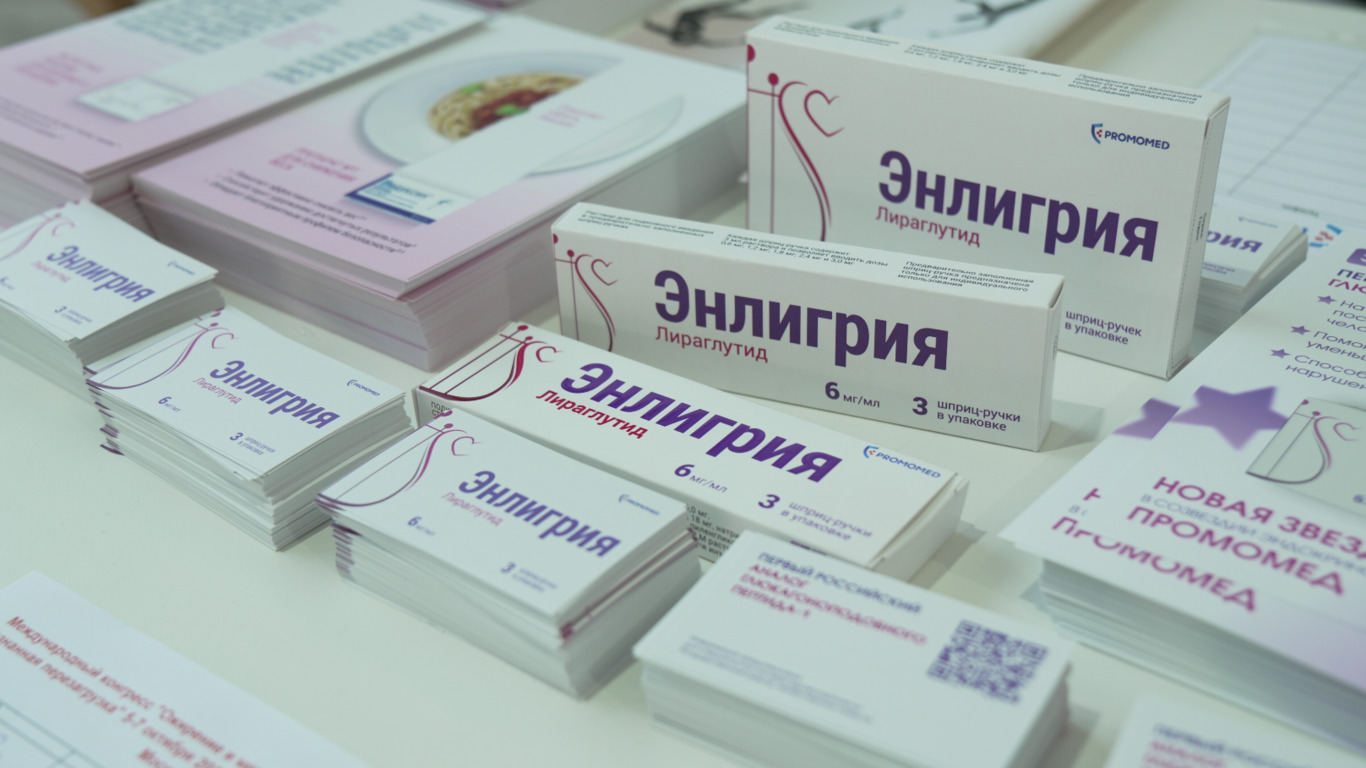
In September, the Ministry of Health registered liraglutide, developed by Promomed. The drug became the first approved Russian drug in the class of GLP-1 receptor agonists. According to the company's representative, the drug is indicated as an adjunct to a low-calorie diet and increased physical activity for long-term use in order to correct body weight in overweight adult patients. A distinctive feature of the Russian liraglutide is the new pharmaceutical substance production technology, said Kira Zaslavskaya, Promomed's Director of New Products. Unlike its analogues, it is produced by chemical synthesis. According to Zaslavskaya, this choice has a number of advantages over the biotechnological method: a controlled result of chemical reactions, stable production of a well-defined structure, and the absence of potentially allergenic protein impurities. All of this generally provides a favorable safety profile, says Zaslavskaya. The drug has passed all the necessary clinical trials for registration in accordance with the requirements of Russian legislation, the company emphasizes.
In conditions of shortage, the cost of one dose of imported liraglutide reached 12,000-15,000 rubles, and in terms of packaging it is 45,000-50,000 rubles, said Ilya Bardin-Denisov, the company's chief operating officer.
The demand for Russian anti-obesity drugs will depend on the pricing policy, says Sergey Shulyak, CEO of the DSM Group. He believes that at a price of 30-40% cheaper than the original drugs, domestic pharmaceutical manufacturers will be able to attract new customers who previously had such drugs unavailable due to the high cost. According to him, the potential demand for these drugs is quite high.
Many consumers of previously marketed anti-obesity drugs have already switched to GLP-1 receptor agonists and, judging by the pharmacy supply that appeared in the spring, they are ready to buy them even for a lot of money, Bespalov points out. "On the other hand, a number of consumers have returned to the weight loss drugs of previous generations, in particular to orlistat. This year, against the background of a reduction in the supply of GLP-1 receptor agonists and rising prices for these drugs, the demand for classics has increased many times," Bespalov notes. In his opinion, if consumers have access to GLP-1 receptor agonists at adequate prices and with a competent promotion strategy, the drugs will be in demand.
Liraglutide is already available in pharmacies for consumers, and doctors again have the opportunity to prescribe this group of drugs to all patients who need it, the company notes.
Liraglutide against obesity is just one of the GLP–1 receptor agonist drugs that Promomed is preparing to release. The Ministry of Health has already registered the company's second liraglutide with the indication "type 2 diabetes in adults, adolescents and children over 10 years of age" and semaglutide with the indication "treatment of type 2 diabetes in adults".
In addition, Promomed has been producing sibutramine + microcrystalline cellulose and sibutramine + metformin for patients with obesity accompanied by metabolic disorders for several years. "Thanks to obtaining registration certificates for liraglutide and semaglutide, Promomed now has a full line of drugs for the treatment of diseases of the endocrine system aimed at combating obesity," says a company representative.
According to the World Federation against Obesity, by 2035, most of the world's population (51%, or over 4 billion people) will be overweight, and one in four will be obese. By 2035, the economic consequences of this will grow from $1.96 trillion in 2019 to $4.32 trillion, or 3% of global GDP, which is comparable to the consequences of COVID-19 in 2020.
A source: vedomosti.ru
Sources

Get the most interesting news and publications first!
Sent successfully!
Press office
To request a press release or interview, please contact our press office