Expert RA upgraded PROMOMED DM's credit rating to ruA
11.06.2024
For investors
Medicines
Industry development
11.06.2024
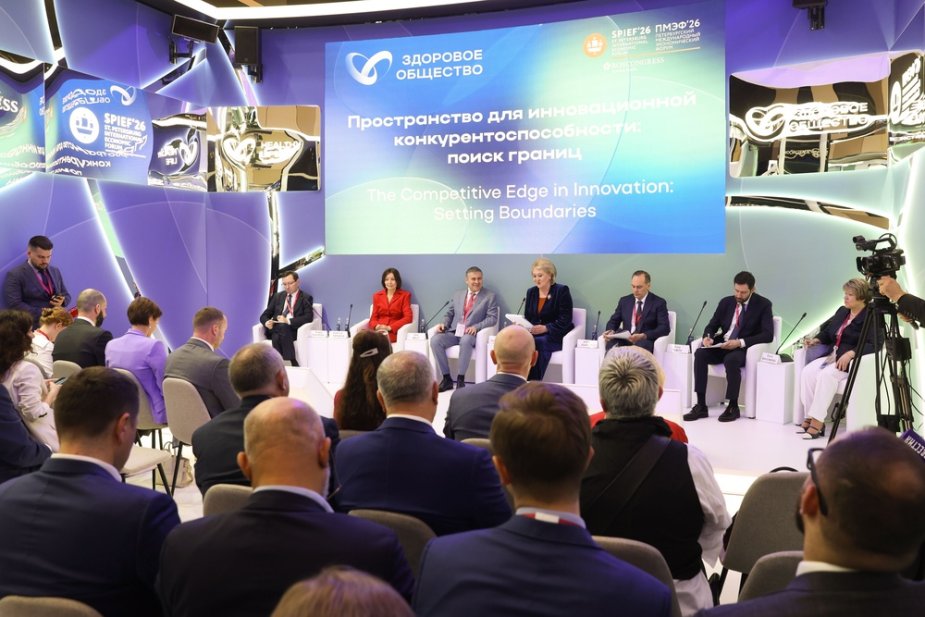
The Russian pharmaceutical market is undergoing a large-scale transformation: the share of foreign drugs in it is decreasing due to import substitution. A similar process is taking place in the field of intellectual property: according to the Federal Institute of Industrial Property (FIPS), in 2023, the number of patent applications filed by Russian residents in the field of pharmaceuticals exceeded the number of applications from foreigners for the first time in the last seven years. According to domestic manufacturers, a turning point has come for the pharmaceutical industry: it is time to actively engage in increasing intellectual capital. Intellectual property issues for creating domestic innovations were discussed at SPIEF 2024 at the session "Intellectual Property in Pharmaceuticals: Dispute or discussion?" with the participation of Deputy Minister of Health Sergey Glagolev, Head of Rospatent Yuri Zubov and other representatives of government authorities and the pharmaceutical industry.
Strategic industry
The head of Rospatent, Yuri Zubov, confirmed at the SPIEF-24 session "Intellectual Property in Pharmaceuticals" that the balance in the number of patent applications is gradually shifting in favor of Russian pharmaceutical companies. However, he noted that foreigners mostly patent new active substances, which are the basis for further production of high–tech products, these are the so-called primary patents, and Russian companies are more focused on secondary patents - improving already known formulas and technologies.
"It is primary patents that make a really significant contribution to the state of the art, allowing manufacturers to competently build patent protection for their own drug in order to create its invulnerability and create the very monopoly that patent law gives. Russian companies, perhaps due to certain technological capabilities and specific business strategies, mainly focus on patenting so-called secondary technological solutions," he said.
The expert suggested that while the Russian pharmaceutical industry is at the stage of creating mostly reproduced drugs, which cannot be quickly skipped in order to arrive at breakthrough developments such as the Sputnik V vaccine for the prevention of coronavirus infection COVID-19. But you always have to start somewhere. Russian developments should be aimed at creating competitive advanced products and technologies. And then Russia's intellectual capital will be transformed into a reasonable financial value, Zubov noted.
According to Peter Bely, Chairman of the Board of Directors of Promomed Group, the industry is ready to take the next step forward. COVID-19 has shown that domestic manufacturers can make any drugs, he noted.
Bely is confident that in the coming years, most of the initial applications will be submitted by Russian companies. He added that Promomed is already conducting research on original biopharmaceutical drugs for the treatment of cancer and autoimmune diseases, and the first results are encouraging.
According to Vyacheslav Shulenin, CEO of the Moscow Center for Innovative Technologies in Healthcare, the situation is changing for the better: of the medicines supported by the center (not counting vaccines), only 24 are generics and biosimilars (i.e., reproduced drugs. – "Vedomosti &"), and 37 – original developments of Russian scientists.
"True drug independence and safety can be ensured, of course, not by reproducing foreign drugs, but by creating domestic innovations protected by reliable patent protection. After all, then a huge reserve of added value will be formed in our country. And this is an economic effect that can only be compared with the effect of the country's largest export destinations: oil, gas, atom, space," says Bely.
How can the state help
Russian companies have many opportunities to receive government support in the creation of innovative medicines. The Ministry of Industry and Trade offers various measures to the industry, from financing research and development (R&D) to preferential loans for the construction of production sites.
The Ministry of Health gives advanced scientific organizations government assignments that will ensure the creation of a product – medical devices or medicines, said Deputy Minister of Health Sergey Glagolev. The new national project "Medical Science for Humans" will provide an opportunity to increase the development potential.
Also, within the framework of the EAEU, the regulatory framework has been modernized: the possibility of accelerated registration of breakthrough projects has been added.reparations to meet unmet medical needs, the Deputy minister noted.
Glagolev drew attention to the need to improve the professional training of industry representatives in patenting tactics. After all, without reliable patent protection of intellectual property, it is impossible to successfully export products not only to non-CIS countries, but also to the friendly states of the EAEU, the countries of the post-Soviet space.
"One of the important areas of further work seems to us to be the synchronization of the patent strategies of the Eurasian Patent Office and Rospatent in order to create reliable protection for domestic innovations and ensure the export potential of our country," the Deputy minister concluded.
"State support measures are not needed to literally support someone - we already have a strong pharmaceutical industry. They are needed so that we can move forward faster, creating innovations," Bely believes.
"There is a clear understanding that intellectual property in the biopharmaceutical field is not the capital of a specific company, it is the capital of a country," Shulenin agrees with him.
The Evergreen problem
The tactics used by pharmaceutical companies to extend the validity of their expiring patents are well known not only in Russia, but all over the world. Some minor changes are made to the application, and it is submitted anew - this is the so–called evergreen patent.
Russia has gained some experience in combating evergreen patents: in 2021, the "Rules for Drafting, Filing and reviewing documents that are the basis for legally significant actions on state registration of inventions" were changed: It was found that an invention cannot meet the "inventive step" condition if it is based on the creation of a chemical compound that is a form of a known chemical compound, and it does not have new properties.
"Since 2019, the number of applications for greening a patent has dropped from 40 to 11," Zubov shared.
Work in this direction will continue, he is confident. As part of the Pharma 2030 program, it is proposed to assess whether there is a need to introduce additional restrictions on the patenting of technical solutions in the pharmaceutical industry that do not significantly contribute to the state of the art. The head of Rospatent said that the agency has already prepared its proposals and is ready to discuss them with the professional community.
/Evgeny Razumny / Vedomosti
Medicines and safety
The imposition of sanctions against Russia has made its own adjustments in the field of intellectual property rights protection in the field of pharmaceuticals. Despite the fact that medicines are not sanctioned goods, the Russian authorities are afraid of stopping the supply of a number of vital drugs to Russia. Therefore, in April 2023, the government approved the so-called "Goods on the Shelf" project, which provides for subsidizing the development of analogues of patented drugs.
According to the document, the developer can fully or partially cover his R&D costs, the amount of state support is 100 million rubles. for biosimilars and 50 million rubles. for other medicines. The funds can be spent on purchasing equipment and paying employees directly involved in the creation of replacement medicines. In January – February 2024, tenders were held for the development of 25 INN, information about the winners was not disclosed.
Another protection measure is a compulsory license. It is issued to a domestic manufacturer in the event that the foreign copyright holder for some reason does not want or cannot supply the necessary medicine.
"I'll give you an example: a foreign drug for diabetes mellitus left the market at the beginning of the year, and at the end of the year there was already a Russian drug. Thanks to our technological capabilities and research experience, we were able to develop not just an analog, but an improved version in the shortest possible time. The government has given a compulsory license. That's it, the patients are protected," says Bely.
In February 2024, the president signed a decree according to which a special government subcommittee will be responsible for issuing compulsory licenses. It will review applications from companies and prepare permits for the use of foreign intellectual property products without the consent of the patent holders.
Permits will be issued in exceptional cases at the request of companies in which the state or Russian citizens directly or indirectly own a share of 75%. The patent holder must refuse to usetransfer the rights to your invention or do not respond to a request for this within 30 days.
Zubov stressed that all decisions in the field of intellectual property rights are made in accordance with international law: "If we use intellectual property rights in an illegal format, cross some line, then the prospects for the investment climate will become more complicated in the future."
Glagolev recalled that compulsory licensing is a routine tool used in necessary cases, since patent protection should not lead to the unavailability of a particular drug therapy.
"The created subcommittee on compulsory licensing operates on the basis of civil and patent legislation and makes it possible to make the use of this tool more effective. I would also like to note that the current set of measures for import substitution and prevention of defects (shortage of medicines in demand. – "Vedomosti&") It is not a violation of patent law either in the national or in the international dimension," he stressed.
The participants of the SPIEf session agreed that the Russian pharmaceutical industry is ready to take the next step and, with the help of the state, is actively working to increase the intellectual capital of the industry.
"It is important that the interaction of all pharmaceutical market participants and government representatives aimed at developing domestic innovative biopharmaceuticals and ensuring its reliable legal protection not only ensures drug and even medical independence, but also becomes a key factor in significant economic growth and capitalization of the country," says Bely.
Source: VEDOMOSTI
Sources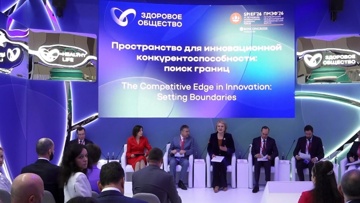
Get the most interesting news and publications first!
Sent successfully!
Press office
To request a press release or interview, please contact our press office