Expert RA upgraded PROMOMED DM's credit rating to ruA
28.06.2023
For investors
Production
Medicines
Industry development
28.06.2023
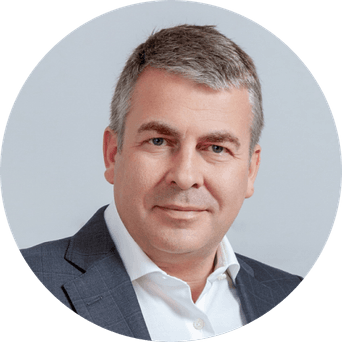
Peter Bely, Chairman of the Board of Directors of Promomed Group of Companies, talks about plans for the development of the company's projects
The coronavirus pandemic has shown how important it is for Russia to have a full cycle of its own production of the most in-demand drugs for the treatment of major diseases. Peter Bely, Chairman of the Board of Directors of the Promomed group of Russian companies, spoke about the prospects for the country in terms of creating next—generation drugs, why it is necessary to increase the production of substances in the Russian Federation and what support measures domestic pharmaceutical companies need.
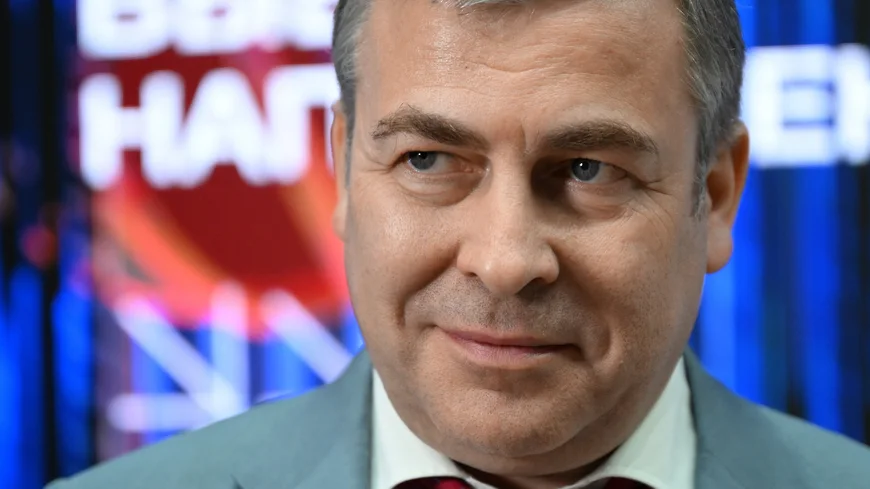
— During the SPIEF, you signed a cooperation agreement with the Moscow Department of Investment and Industrial Policy, which involves the creation by the Promomed Group of companies of a center for the full production cycle of biotechnological drugs of the latest generations in the Technopolis Moscow special economic zone. Tell us, why did you choose this particular project for investment? How does it fit into your company's global development strategy?
— The creation of biotechnological drugs is now one of the most promising areas of development for the pharmaceutical industry worldwide. Their active substance is based on living cells or genetic material, and a complex combination of biological and physico—chemical methods is needed to give them specific properties. These drugs include vaccines, monoclonal antibodies, enzymes, blood products, and plasma factors.
Biological drugs, in fact, open a new era in the treatment of a large group of diseases that were previously considered incurable. Take, for example, such a severe systemic disease as vasculitis, which is a chronic inflammation and necrosis of the vascular endothelium resulting from a constant autoimmune attack. Now, with the help of biopharmaceuticals, we can ensure a high quality of life for these patients for a long time and, most importantly, a high survival rate. And the same breakthrough has already taken place or is obvious in the future for many other groups of diseases that previously did not respond well to therapy. These are diseases of the degradation of the nervous system, such as Alzheimer's dementia or Parkinsonism, oncological diseases, and autoimmune diseases. In other words, biopharmaceutical drugs are in high demand, and Russia could provide them not only to its domestic market, but also to other countries.
In the 2010s, thanks to government support under the Pharma 2020 program, Russian pharmaceutical companies significantly increased their capacities and expertise. As a result, the share of Russian medicines in the domestic market has increased, and we have moved closer to technological sovereignty in this area. Now Russia needs a similar breakthrough in the creation and production of biological drugs, and we will work intensively on this as part of our joint project with the Moscow government.
At the site of the Pechatniki Technopolis, we plan to create a modern research laboratory with a pilot production site for the development of new drugs, scaling up technological processes, including original ones, and the production of original domestic biological products will be created at the site in Alabushevo. We see development in monoclonal antibodies, vaccines, and RNA products. The project is based on the development of our own portfolio of the latest biotechnological substances.
— In March, Russian President Vladimir Putin participated in the opening ceremony of the Promomed plant for the synthesis of active pharmaceutical substances at the site in Saransk. Please tell us in more detail what kind of project it is and why it has aroused interest at such a high level?
— This is a production facility with a capacity of more than 340 tons of substances per year. These are seven lines, including isolated oncological ones, which enable the production of more than 150 types of molecules per year. Today it is one of the largest and probably the most modern and environmentally friendly plant for the synthesis of substances in the country. And we are very grateful to the President of the country and the leadership of the Republic of Mordovia for such attention to the achievements of the team!
The opening of this plant was the biggest step in the consistent development of our substance synthesis program. So, in 2018, we launched the synthesis of the latest generation of antibiotic substances and opened R&D to combat infections. This is microbiological synthesis. In 2020, we created our own RNA platform for a whole group of drugs. This is already a biological synthesis.
— Why did you choose such a development strategy for your company? What is its ultimate goal — the drug safety of the Russian Federation?
— Of course, our own synthesis of substances is the basis of the country's medicinal sovereignty. And the opening of our plant is another step in its provision. In addition, the proprietary synthesis of molecules is a direct access to the creation of supernova drugs. They, in turn, make it possible to treat what previously could not be treated, to make it more effective and safer.
I'll give you an example. At Covid, we have redesigned our Infection Control R&D Center to work with antiviral drugs. As a result of our work, the entire line of anti-covid drugs has appeared in the country. This allowed us to solve the problem of accessibility of therapy for patients. Moreover, the first direct antiviral drug appeared in the Russian Federation a year and a half earlier than, for example, in Europe and America.
I would like to emphasize that it is important for us not only to ensure Russia's drug safety, but also to bring Russian products to global markets. After all, all countries of the world need cutting-edge therapy. Therefore, our own molecules and original drugs created on their basis represent the real export potential of the country.
— As you have already said, thanks to the Pharma 2020 program, Russian companies were able to increase their share in the domestic market and, thus, make Russia more independent of supplies from abroad. What exactly is your company doing to keep this process going?
— At the end of 2022, we launched the latest high-tech tablet production based on JSC Biochemik, where vacuum transfer technologies are used instead of human labor. The line is equipped with the most modern technologies, including for the manufacture of multilayer and composite tablets, for production in conditions of photosensitivity and low humidity. Due to the exclusion of the possibility of human errors, the level of pharmaceutical safety in this production is significantly higher. Not all European factories can boast of such equipment. That's the answer to the old question, "which pills are better — domestic or imported." Those pills where pharmaceutical safety is higher are better. And now these are our pills! And this is also a significant factor in increasing the export potential of Russian medicines.
— You mentioned that at the previous stage of the development of the domestic drug market, the role of government support was great. And what measures would you need now to develop the production of biological drugs?
— First of all, I must say that the government is already doing a lot to support and develop the industry. We are also talking about a wide range of tools of the Ministry of Industry and Trade, including the programs of the Industrial Development Fund, which we actively use. And about the fast-track system that the government has provided for the accelerated market launch of particularly important categories of drugs. And about the priority investment development programs implemented by state financial institutions.
A lot is being done at the regional level. For example, Mordovia State University, with the active support of the republic's leadership, is preparing the opening of the federal Center for the development of biotechnologies, a kind of state—owned sharing center that will localize important stages of the biotechnological drug development process in Russia, which are currently available only abroad.
The implementation of the Pharma 2030 strategy, which was developed by many major manufacturers, would be a great help to the industry. It provides for a clear policy for the development of the production of national substances. And, most importantly, much attention is paid to supporting the export activities of Russian pharmaceutical companies.
Exporting medicines is not just about shipping products to another country. This is primarily a recognition of the quality of the drug and the proper conditions for its production, that is, the results of GMP inspections and data from clinical trials.
That is why the work that the Ministry of Industry and Trade is currently doing with the UAE government on the mutual recognition of GMP documents is so important. This includes access to the markets of more than 40 countries that have a free trade agreement with the MENA countries. Of course, it is necessary to continue working with regulators on mutual recognition of quality documents at the state level and with countries in Africa, Asia, and Southeast Asia. So that our production standards are accepted there without additional confirmations.
With this systematic approach, the Russian pharmaceutical industry has everything it needs to become one of the world's leaders in exporting innovations in the field of medicines in the coming years.
The interview was conducted by Anastasia Manuylova
Source: www.kommersant.ru
Get the most interesting news and publications first!
Sent successfully!
Press office
To request a press release or interview, please contact our press office