
Access to therapy is part of the protection of the constitutional order: Peter Bely spoke at the SPIEF session on intellectual property
11.07.2023
Industry development
11.07.2023
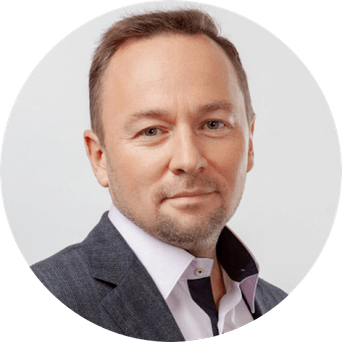
Dmitry Zemskov, Director of Information Policy at Promomed Group of Companies, spoke about new biologics and the principles of sustainable development.
Import dependence and the development of domestic innovative medicines are the main priorities of the Pharma 2030 strategy. The emergence of a large number of original medicines that doctors and their patients need today can be accelerated if there is government support for the export activities of Russian pharmaceutical companies. Dmitry Zemskov, Director of Information Policy at Promomed Group, talks about what support measures the pharmaceutical industry needs, what sustainable development is and why it is necessary to revive the system of industry research institutes that would develop technologies for the production of new antibiotics.
— Your company participates with its developments in the exposition of the Ministry of Industry and Trade at Innoprom in Yekaterinburg. Tell us, what medicines are you presenting at the exhibition?
— As a company that monitors and forms the most up—to-date treatment standards, we present products in socially significant and sought-after therapeutic groups, including infection control, oncology, and the future of medicine - biologics. The creation of a line of biological drugs is one of the main directions of our development in the coming years.
Promomed is a company with a huge production base in Saransk, including a new plant for the synthesis of active pharmaceutical substances (API). There are about 250 registered drugs in our portfolio, 80% of them are included in the list of vital and essential medicines (VED). Innoprom will have ten innovative medicines: antiviral, antitumor, for correcting eating behavior and relieving chronic fatigue syndrome, immunological and neurological. They have been developed by our scientists and technologists and are manufactured on a full cycle, are commercially available and are already used in clinics.
— The main theme of Innoprom 2023 is "Sustainable production: a strategy for renewal." And your factory for the synthesis of active pharmaceutical substances, opened in Saransk in March, has been named the most modern and environmentally friendly in Russia. What principles of sustainable development does the company adhere to?
— Promomed Group of Companies not only pays great attention to sustainable development, it lives in sustainable development and follows its principles.
In accordance with this, the Biochemist plant, our main enterprise, was actually built anew. The production program currently includes ten types of dosage forms produced in the most modern conditions. And in March, we opened a new plant for the production of APIS, which can produce about 150 types of substances in a volume of 340 tons per year. These are seven full-fledged lines, two of them completely exclude the contact of the product with humans and the external environment and are intended for the production of cancer drugs. Huge amounts of money have been invested in the construction of infrastructure, modern local wastewater treatment plants, providing high-quality treatment of industrial wastewater and media. The plant is certified according to GMP standards of the Eurasian Economic Union.
All business processes: development, production, storage, sale of medicines are harmonized with international quality standards. Lean manufacturing technology has been introduced in each workshop. The company's priority is to protect its staff from the effects of adverse factors.
In 2022, Promomed Group published the first report in its history, in which we revealed our basic principles in the field of environmental protection, social responsibility, corporate governance, and reflected achievements in achieving the UN Sustainable Development Goals.
"What's that?"
— For example, continuing education and staff development. We not only take care of our employees, but also train them, and carry out systematic work on training young personnel. Five years ago, we established the Department of Chemical Technology at the Ogarev Mordovian State University. Last year, chemical classes were opened in two gymnasiums in Saransk, we became participants in the Ministry of Education's Professionalism training program, and now we are preparing college graduates to work at our company.
Another principle of sustainable development is transparency in everything. The company has a compliance committee, and we strive to bring all our purchases to electronic platforms, making commercial activities as transparent as possible.
— What is the percentage of domestic machines, appliances and imported ones at the Biochemist plant?
— About 20% of the equipment is of domestic production, mainly capacitive (reactors, centrifuges). We have equipment made according to our Russian designs and drawings, which is manufactured in China. But pioneers in the field of domestic technologies have already appeared.: the first samples of analytical equipment, drying and granulation machines, mixers and enzymes. We would like to see more such manufacturers, and we will focus on them in our future plans.
— The full-fledged development of the pharmaceutical industry, including full-cycle enterprises, is impossible without the development of related industries. Which areas of cooperation are a priority in order to ensure technological sovereignty?
— The two main areas are chemical development and engineering. It is necessary to develop medium-sized machinery, small and medium-sized chemicals, and the Ministry of Industry and Trade is already taking concrete steps to create chemical clusters.
The main raw materials for the production of medicines in Russia are present. Currently, the domestic pharmaceutical industry has about 14-15 basic molecules, from which it is possible to produce up to 2 thousand molecules of medium and small chemicals, closing the entire list of VED and ensuring the country's drug safety.
Cooperation is needed not only with industry, but also with scientific centers and specialized universities.
Why did we open the Department of Chemical Technology at the Mordovian State University? Because we had a shortage of chemical technologists and there was nowhere to get them. Then we started cooperating with other universities, for example, the D. I. Russian University of Chemical Technology. Mendeleeva: here we order technology, and specialists are trained for it, and they become carriers of knowledge that has already been adapted to real production.
— Import dependence and the development of domestic innovative drugs are the main priorities of the pharmaceutical and medical industry development strategy until 2030 (Pharma-2030). In your opinion, what support measures are needed to accelerate the market entry of original drugs?
— The pharmaceutical industry has its own specifics — a long investment cycle. Therefore, if we focus only on the domestic market, then the release of original drugs will be quite difficult. We need export expansion into markets with billions of people, and for this we need government support measures, such as financing international clinical trials, which will allow us to bring a large number of original drugs to friendly markets in five years. Work is underway to harmonize standards and mutual recognition of GMP certificates with promising markets for the export of Russian medicines: the countries of Southeast Asia, Central Asia, and Africa. It will also be a good measure to support the export activities of Russian pharmaceutical companies and an incentive to create more innovative drugs. Exports will allow us to provide ourselves and other countries with new medicines and develop our technological sovereignty.
— The production of antibacterial drugs (antibiotics) is a separate area, which is very important, especially in light of the problem of antibiotic resistance (resistance of microorganisms to drugs). Promomed produces antibiotics and conducts its own developments. Tell us more about it.
— Antibiotic resistance is a serious problem, now the life span of an antibiotic molecule before obtaining stable resistance ranges from five to ten years. We have experience in creating an antibiotic molecule from scratch on the territory of the Russian Federation: we recreated a molecule of vancomycin (a reserve antibiotic of the glycopeptide group) and created four derivatives of antibacterial drugs from it. This is probably the only experience in the country today when pilot-industrial technology, rather than laboratory technology, has been developed. Soviet research institutes of antibiotics developed such technologies, which were then easily scaled to tonnage production. And today we need to revive this system of scientific institutes, which, by order of pharmaceutical enterprises, would develop technologies for the production of antibacterial agents. The Government should support this program, given the importance and scale of the problem.
It is important to understand that Russia does not need mass production of antibiotics already available on the market, but its own industrial facilities that support production technology and develop the latest antibiotics. So that if an emergency situation occurs, production can be built and started during the year. Our developers perfectly demonstrated this during the covid pandemic: the vaccine production technology was preserved, and it took only six months for factories to start producing domestic coronavirus vaccines.
In Russia todayThere are at least five leading pharmaceutical companies that develop antibacterial agents. We have a great scientific potential to ensure the country's drug safety in this area as well.
The interview was conducted by Natalia Timashova
Sources

Get the most interesting news and publications first!
Sent successfully!
Press office
To request a press release or interview, please contact our press office