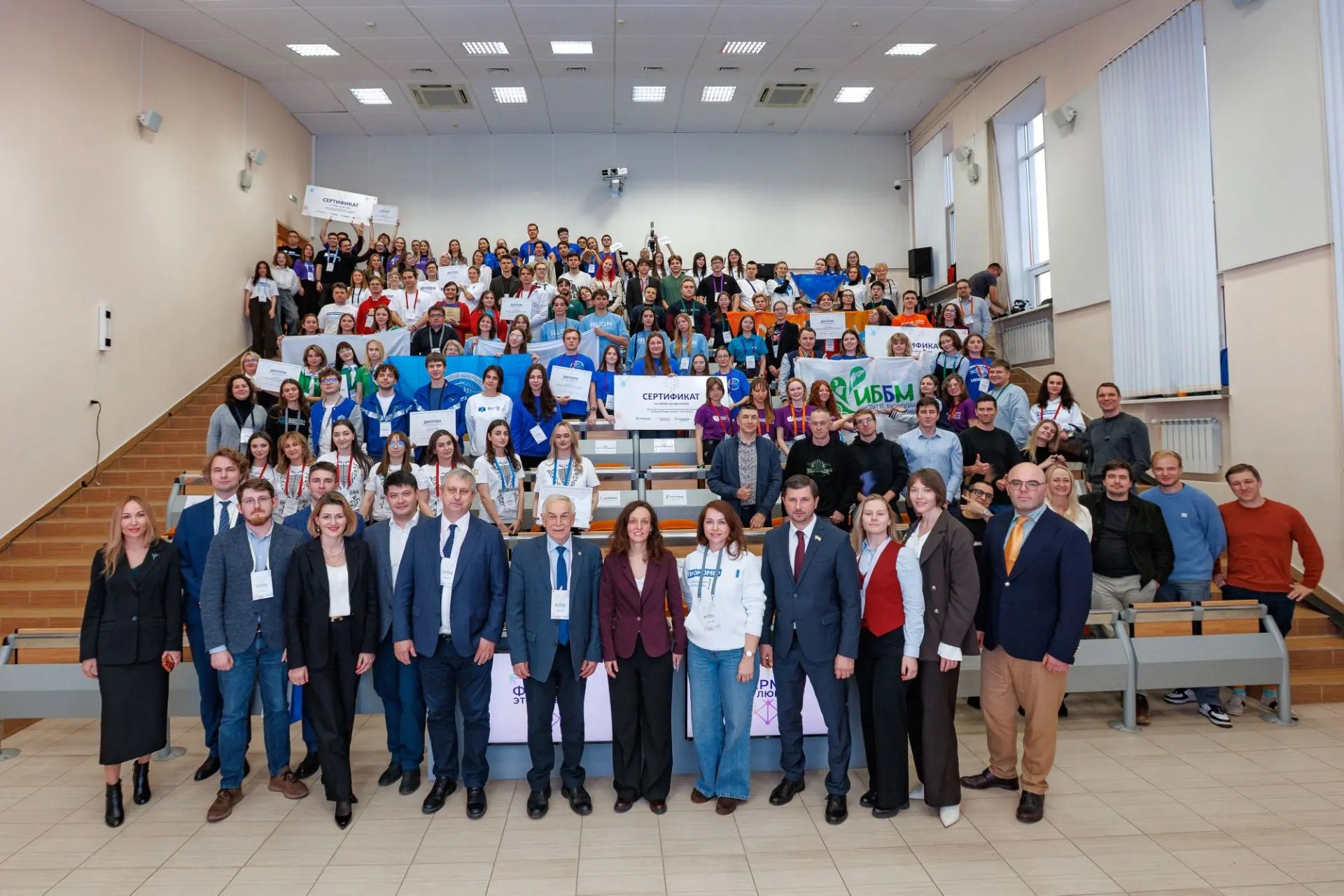
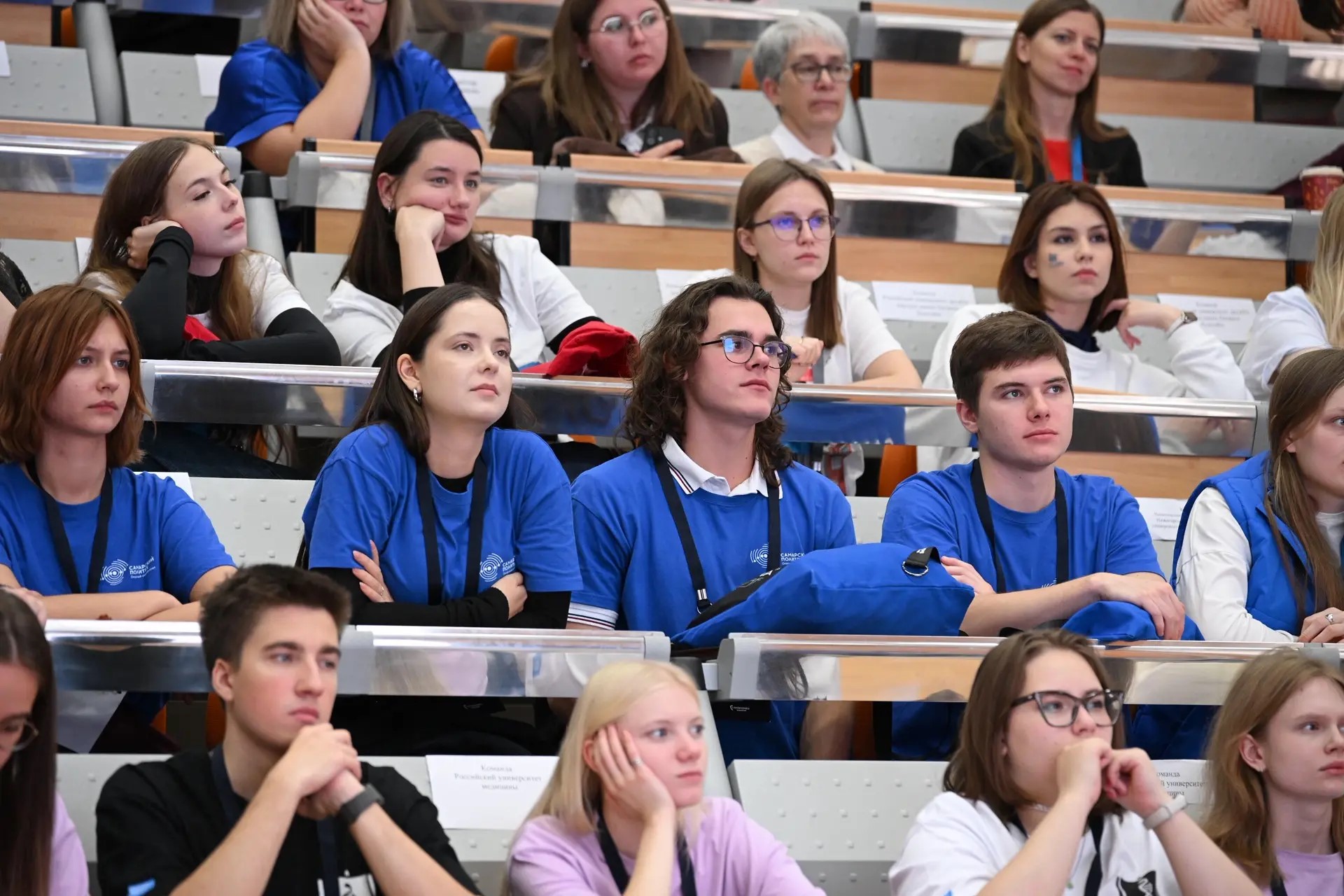
The All—Russian Festival of Young Scientists "Pharma is Love" has ended in Saransk
22.06.2022
Production
Industry development
22.06.2022
The St. Petersburg International Economic Forum has just ended. It is certainly a significant event for society and the country, where further trends in the development of the economy, science, and production are being determined, and business ties are expanding and strengthening.
.jpg)
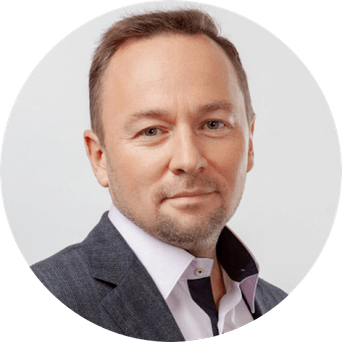
Dmitry Zemskov, Executive Director of the Biochemist production site at Promomed Group, one of the forum participants, answered questions from Komsomolskaya Pravda
— Dmitry, please tell us about your production. As you know, the plant is not new, but it produces products (medicines) that can compete freely on the foreign market, as we all know. Apparently, the production has been properly modernized.
— The plant is certainly not new. It was established in 1959, meaning the company is over 60 years old. And all these 60 years the plant has been existing and developing. There was a period when the plant, being the leader of the once Soviet pharmaceutical industry, was experiencing a crisis. However, at that moment (the end of the 90s, the beginning of the noughties), the crisis covered the entire pharmaceutical industry as a whole. Admittedly, in 2015, when we arrived and the plant became part of the Promomed group of companies, we got an old Soviet factory with old buildings, destroyed infrastructure, worn-out equipment, and a reduced level of production culture. Over the past seven years, the Biochemist plant has been constantly modernizing in all directions, including production sites, workshops, and staff, mastering the latest technologies.
In fact, we have built a new factory. It is now a completely different production site, but with a rich and glorious history. We have launched (the third stage this year) the production of solid dosage forms in the form of tablets and capsules. When we launched the first stage in 2015, it seemed like a breakthrough, but now it's something commonplace. Every year we launch new workshops, put new drugs on stream, and hire new employees.
— Your products are highly appreciated internationally as effective and safe. And how and by what means is expertise provided in the field of drug production?
— Expertise in the field of production is, first of all, professionalism. The professionalism of those people who work at the company: technologists, engineers, developers. All this is achieved by deep market expertise. This is what we teach our people, it is an element of industrial culture. This is where we started, with operational efficiency and production culture. Lean manufacturing tools and cooperation with leading scientific centers help us a lot here. Realizing at some point that we did not have enough labor market, we created our own department together with Mordovia State University and began to train specialists and managers there for the technologies and products that we produce. And it gave a very positive result.
— How is it possible to meet international quality standards?
— Quality for pharmaceuticals is generally the cornerstone of its existence. Without quality, we cannot ensure the safety of the medicines we produce. And the continuous improvement of the pharmaceutical quality system operating at the plant is a guarantee that our medicines are safe and meet the requirements that apply to them in Russia. But we always set our bar a little higher. I don't want to say that our requirements are somehow very different from the international ones — they are even tougher. But we have an attitude within the company — we fight for the quality of our products and demand more from them than even the legislation that regulates us.
— Dmitry, you have already mentioned this, but I would like to hear a more detailed story: do you grow your staff for yourself, how do you find specialists, and how do you attract them to your production?
— Yes, we are raising our specialists. And this process is continuous. After we opened a department with Mordovia State University, 20 students came to us in the first year. We trained them in the chemical technology program. We paid them scholarships and paid for their education. After some time, the state noticed this practice, and the places at the department became budgetary. That is, this fact can be regarded as a recognition that this profession is really important. And we began to expand our cooperation with other universities. For example, we have a joint project with the Mendeleev Russian Technical Technical University and Nizhny Novgorod. In addition, just here at the forum, we signed an agreement with St. Petersburg State University of Chemistry and Pharmacy. This is not the limit. Due to the fact that we paid attention to the higher school, we received high-quality, qualified specialists in our team.
In order to deepen this process, we are now moving towards secondary school. We are looking at the students of grades 9-11, we are popularizing chemistry among them in order to further guide the children through the university to our company. I think it's interesting to work with us, and that's why we attract employees. We set big ambitious goals that young people love to solve so much. Every year we release dozens of new drugs as a result of the active functioning of a large development center. And young people have the opportunity to prove themselves in our company to one degree or another. I can, of course, tell you about social packages, and that we take care of our people, that we are socially responsible producers. It's really like that. We also have a screening program, an additional health insurance program, and rehabilitation programs for our employees working in harmful conditions. All this is certainly there, but the most important thing is the interest that our activities arouse among young people. We are one of the most attractive employers in the region. People are willing to join us. To work at the factory, they must pass the competition.
— It may be difficult to communicate with foreign colleagues now. Or are the connections still not severed?
— We have a large network of contacts with enterprises, for example, in Southeast Asia. And our contacts have not been interrupted in any way. We also maintain certain relations with colleagues from what are now called unfriendly countries, but the activities we conducted with them were mostly reoriented towards Russia. We find suppliers within the country, and we start doing something ourselves. For example, we bought film casings in the UK. Now we make them at home. It can be said that restrictive measures to some extent have a positive effect on the development of domestic production, in particular, on the development of the Russian pharmaceutical industry. There is no silver lining.
A source: kp.ru
Sources
Get the most interesting news and publications first!
Sent successfully!
Press office
To request a press release or interview, please contact our press office