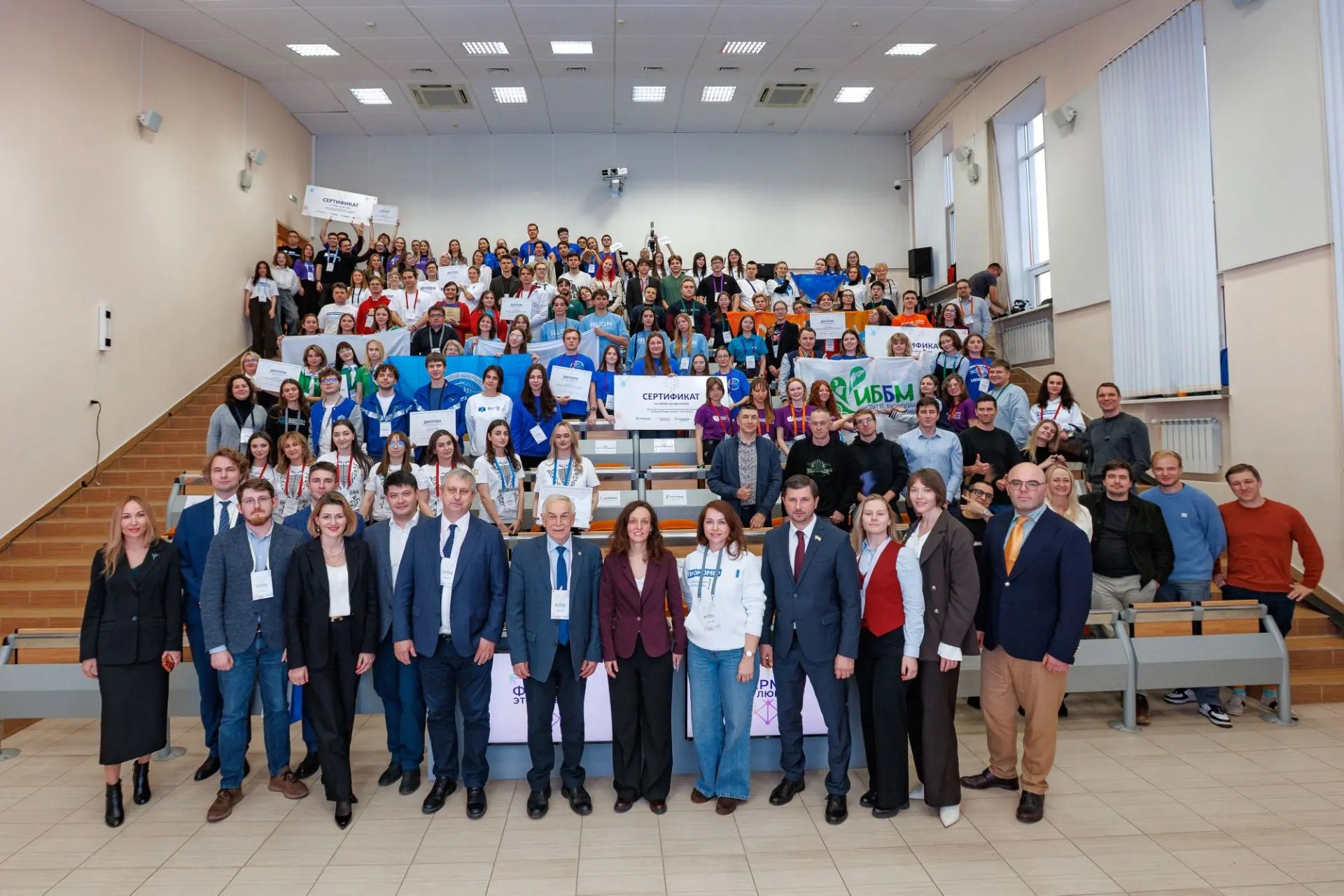
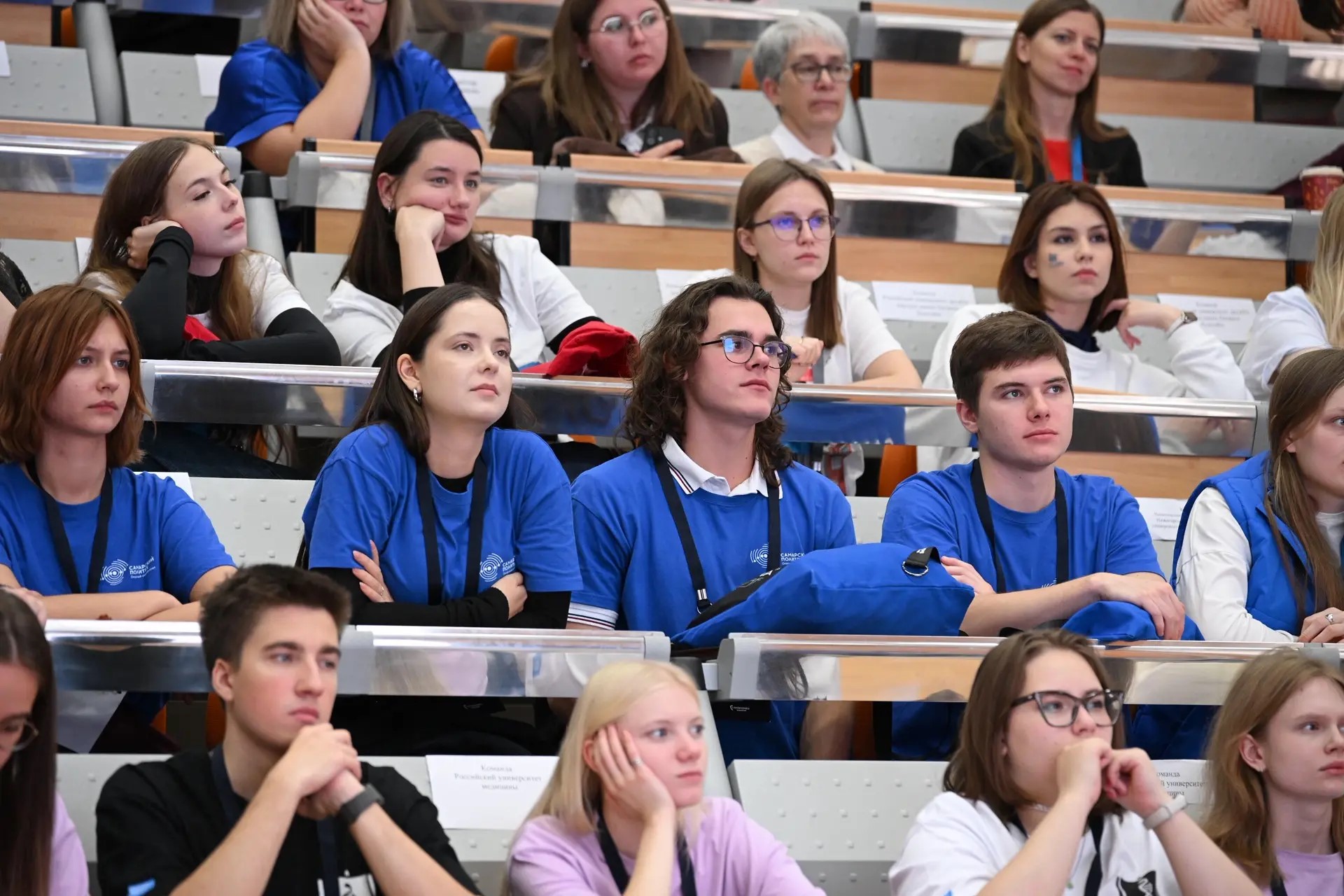
The All—Russian Festival of Young Scientists "Pharma is Love" has ended in Saransk
22.12.2021
Production
22.12.2021
The first results of the national project to increase labor productivity have been summarized. By 2021, the economic effect in the participating companies of the national project has already doubled the budget expenditures for its implementation. About what was achieved in the first three years, and what the employees themselves think about the project, "Lenta.
Whether it's good for spouses or parents with their children to work in the same company is often a matter of disagreement. This is not welcome in Western companies, and there are many precedents when one of the newlyweds was forced to leave the team after a wedding ended in an office romance. But if we talk about industrial production, then the presence of family labor dynasties, on the contrary, is an indicator of the sustainability of the company. This is a great responsibility not only for oneself, but also for family and friends, and professionalism, and the opportunity to share knowledge and skills. Such people are more united and dedicated to the company, which is especially valuable when the company is facing new challenges that require new approaches.
Shared values
One of the enterprises where the continuity of generations is of great importance is the Saransk Biochemist plant, part of Promomed Group of Companies. Meet the Artyushin family. The head of the family is Alexander Nikolaevich, who works as a chief mechanic at a pharmaceutical company, his wife Lyubov Pavlovna works as the head of the filling and packaging section of shop No. 9 and their daughter Tatiana Alexandrovna is the deputy head of shop No. 3 for technology. An extraordinarily kind and positive family, whose total work experience only at Biochemistry is about 60 years.
At the end of 2018, Biochemist became a participant in the national Labor Productivity project initiated by the Ministry of Economic Development. Its goal is to ensure by 2024 the growth rate of labor productivity in medium—sized and large enterprises of the basic non-resource sectors of the economy is at least 5 percent per year.
"If you compare how the plant worked in the late 1990s and today, these are two big differences," he says. Alexander Artyushin. — The new owners (Promomed Group acquired a controlling stake in Biochemik in 2015 — approx. "The tapes.
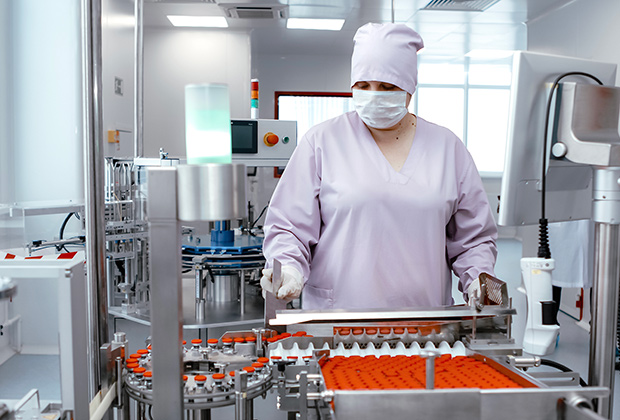
"Since March last year, I have been working at a new site for the production of active pharmaceutical substances. The old one was closed, and we were transferred to new equipment," says Lyubov Artyushina. — Everything is new here, we are sorting it out. Some of the plant's employees were sent for retraining as part of this very national project, and they were taught how to work carefully. They're teaching us now."
The daughter of Alexander and Lyubov, Tatiana, is constantly developing and gaining new knowledge necessary to work at a modern pharmaceutical company. At Mordovia State University, she is undergoing a retraining program in the specialty "Chemical technology of synthetic biologically active substances" and is studying at The Russian Presidential Academy of National Economy and Public Administration. A year later, Tatiana will receive an MBA degree. This new knowledge allows the girl to move step by step up the career ladder at the factory.
The workshop where Tatiana works is involved in the implementation of the national project. "We assessed the existing workshop infrastructure and the current state of affairs, identified all our problem areas, then discussed them with the management and came to common thoughts," she says. — The improvement process is continuous, and we are working on it every day, hourly, from shift to shift. As a result, the productivity of our site has doubled." "There was a lot of manual labor at the old site, but here everything is computerized, the equipment is new. It has become much more interesting to work," says Lyubov Pavlovna.
Family history
The Artyushins have known each other since high school, they studied in the same class, but got married a few years after graduation, when fate brought them together again at the Centrolit foundry in Saransk.
The head of the family began his career in 1978 at the Saransk Instrument-Making Plant. "Everything was like many people's: he graduated from high school, enlisted in the army, then entered a technical college, got a job at a factory," says Alexander Nikolaevich, who worked at the Orbita Electrotechnical plant, Centrolite, and NIITFA (Scientific Research Institute of Technical Physics and Automation) before becoming a Biochemist. And already in 1994, Artyushin got a job as a Biochemist.
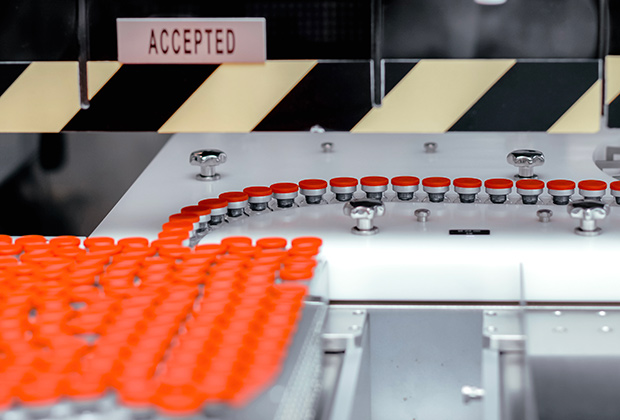
"A stable salary was only there," says Alexander. At first, he worked as a boring turner, and after studying in absentia at Ogarev Mordovian State University, he went on a promotion. First he became a deputy, then the head of production for equipment, then the head of the workshop. Since 2016, he has been working as the head of the operation service, and two years ago he received the position of chief mechanic of the enterprise.
He called his wife to the factory in 1998, after the collapse of Centrolit, where she worked for 16 years. "In 1997, my workshop was closed, everyone was fired, and I was left without a job," Lyubov Pavlovna recalls. — My husband said they're recruiting drug dispensers. I was hesitant at first: with higher education, I didn't really want to start all over again, but in the end I agreed. A month after she started working, she became shift supervisor, and then head of the filling and packaging department. I worked there until March 2021." Then the site was closed, and Lyubov Pavlovna was transferred to a new workshop, engaged in a new production, where their daughter Tatiana also works now.
After graduating from high school, the girl graduated from the Mordovian State University and left with her husband for Kadoshkino near Saransk. She taught school there for a while, but then returned to her parents and went to work for her father. "I persuaded her to get a different education, and now she is the deputy head of the technology department," Alexander Nikolaevich proudly says. "Dad called, he was the head of the third workshop, and I agreed," recalls Tatiana. — Then I just got out of maternity leave and was looking for a job. I didn't even have any thoughts about another place. In May 2011, she came to the factory as a product handler. Then she worked as a process technician, technologist, and at the end of 2017 she received the position of deputy head of the technology department of the active pharmaceutical substances production site."
Alexander Nikolaevich himself is also studying: "We are being prompted by new approaches to proper production in order to achieve greater productivity at lower cost, and we use our best practices for this: how to save money, how to put, deliver, and how to start our working day correctly. And I set clear tasks for my subordinates and explain them clearly, and if something is unclear or cannot be done, we immediately sort out possible mistakes on the fly." This is how they increase productivity at Biochemistry, and the plant itself provides great opportunities for career growth.
New horizons
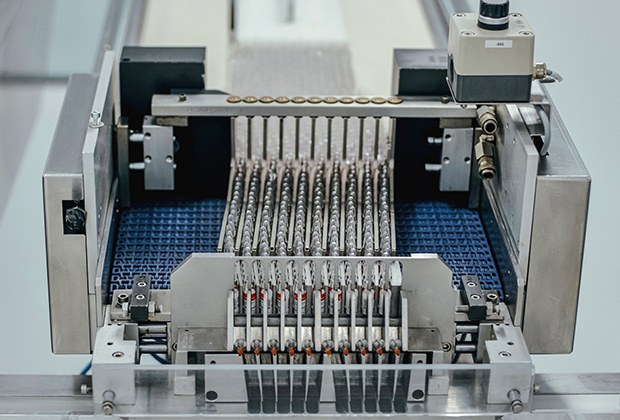
The results of the first stage of work to increase labor productivity at Biochemistry were not long in coming: due to a reduction in the duration of the production cycle and a reduction in scrap, the production of finished medicines in ampoules doubled. The plant has redeveloped the premises, optimized and reconstructed the production.
The redevelopment not only reduced the number of operations, but also allowed us to start saving on electricity. Participation in the project has become an incentive for employees for professional and personal development. The staff's production culture has improved, working conditions have improved, and more comfortable workplaces have been created. "The plant is growing, developing, and we have more opportunities," says Alexander Artyushin. — And it's not just about the salary. The company sends employees to various courses and gives them the opportunity to get higher education."
Most of Biochemik's employees have already been trained, and several people have been certified as internal trainers and are now teaching other employees. The goal is not to encourage people to work more, but to ensure that people understand what to do through comfort and well-established processes. Then the company will get the best financial result.
The national project "Labor Productivity" was launched on October 1, 2018. 10,000 companies and enterprises in 85 regions of Russia should become its participants. The main objectives of the project are to stimulate the growth of enterprise efficiency, remove unnecessary administrative barriers and develop export potential. Staff training and internships are conducted to fulfill these tasks.
Konstantin Lyapunov
A source: Lenta.ru
Get the most interesting news and publications first!
Sent successfully!

Press office
To request a press release or interview, please contact our press office