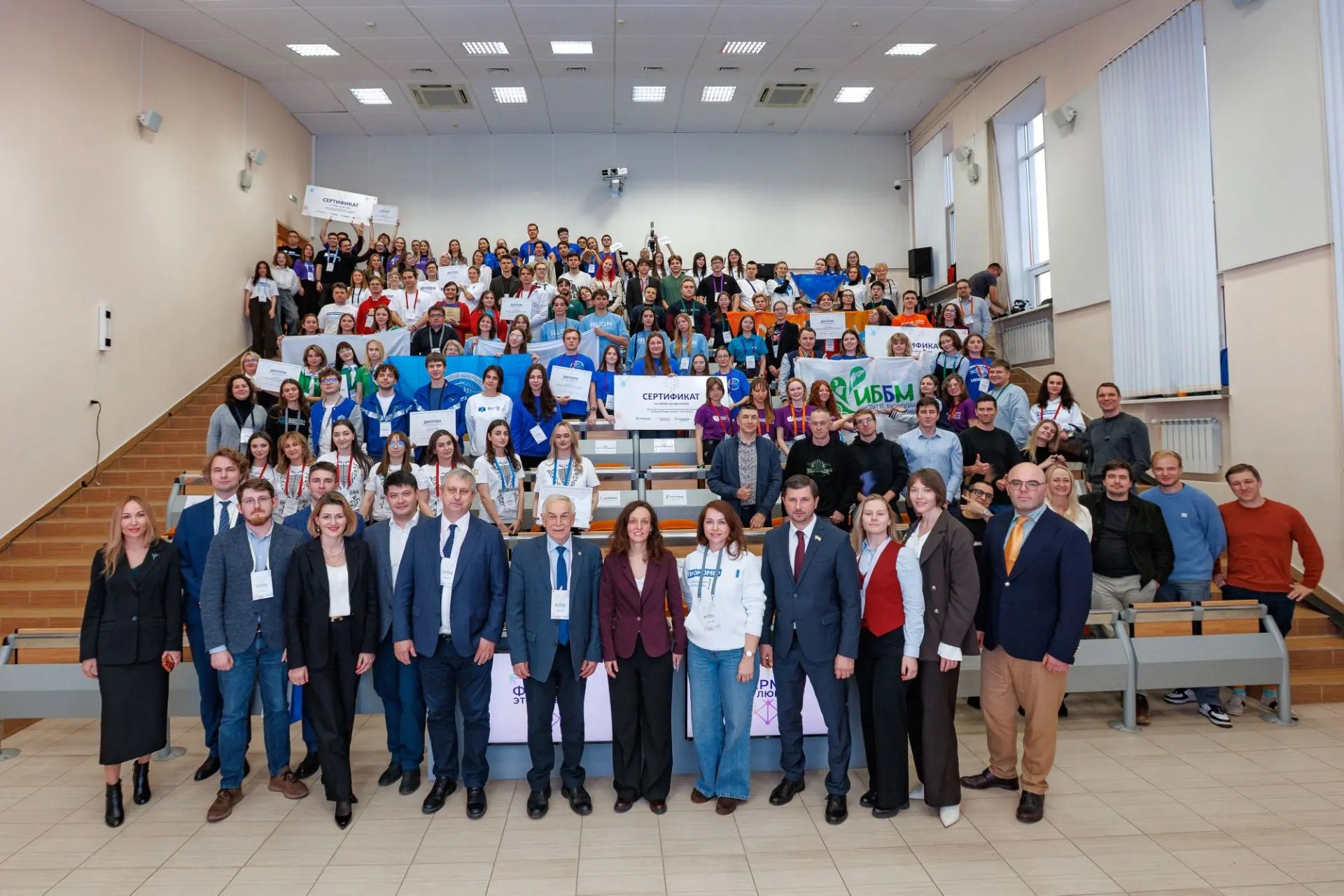
The All—Russian Festival of Young Scientists "Pharma is Love" has ended in Saransk
01.07.2020
Medicines
01.07.2020
MOSCOW, July 1 — RIA Novosti, Vladislav Strekopytov. The Ministry of Health has approved another Russian coronavirus drug based on favipiravir, Areplivir, from the Biochemist Saransk plant. The first one, Avifavir, was approved at the end of May. But clinical trials began only in April. RIA Novosti found out how pharmaceutical companies managed to meet such deadlines.
A new era in coronavirus treatment
The creation of a cure for COVID-19 can only be compared with the discovery of antibiotics that saved humanity from bacterial infections. And Russia was one of the first to develop a drug against a new dangerous disease.
Clinical studies have shown that its effectiveness is 90 percent, that is, nine out of ten people with timely treatment are guaranteed not to die.
In search of a cure
It usually takes years to create medicines. Therefore, while some scientists have hurriedly started developing vaccines against coronavirus, others have decided to try out existing medicines.
In particular, antiviral, immunomodulatory and respiratory agents were tested. Special hopes were pinned on the American Remdesivir, which was used against Ebola and proved effective in combating the pathogens SARS and MERS, as well as on the Japanese flu drug favipiravir.
Both drugs have a broad spectrum of action against RNA viruses, which include SARS-CoV-2. They inhibit RNA-dependent RNA polymerase, an enzyme necessary for pathogen replication in cells. Other drugs only prevent the virus from entering the cells.
Remdesivir has successfully passed clinical trials in the United States and Germany, and on May 1, the U.S. Food and Drug Administration (FDA) issued a simplified order — two days after testing ended — approval for the "emergency use" of Remdesivir for the treatment of COVID-19.
Russian scientists and representatives of pharmaceutical companies took the Japanese drug as a basis, quickly conducted clinical trials and launched the production of drugs based on favipiravir.
From favipiravir to Areplivir
Toyama Chemical, a part of Fujifilm Holdings Corporation, developed favipiravir as an anti-flu drug in 2002. However, animal experiments have shown that it cannot be used during pregnancy due to the possible negative effects on the child's DNA and the risk of damage to the fetus, so difficulties have arisen with approval.
In 2014, favipiravir was nevertheless registered under the trade name Avigan. It was allowed to be used only for new strains of influenza that are resistant to other antiviral drugs — that is, as a last resort. In six years, such a situation has not occurred even once, and the medicine could have been forgotten if it had not been for the coronavirus.
In February 2020, in China, where favipiravir is produced by Zhejiang Hisun Pharmaceutical as an anti-flu drug called Favilavir, the drug was tested for the treatment of COVID-19. In March, the Chinese followed suit in Japan and Italy.
In April—May, three pharmaceutical companies — KhimRar, Promomed and Technologiya Drugov, part of the R-Pharm group, began clinical trials of different versions of the drug in Russia. Avifavir, created at HimRar with the support of the Russian Direct Investment Fund (RDIF), was the first to receive approval from the Ministry of Health. And now there is Areplivir, produced by Promomed LLC at the Biochemist plant in Saransk.
"The difficulty of the new coronavirus infection is that there was no medicine that acts etiologically, that is, removes the cause," Peter Bely, chairman of the Board of Directors of Promomed LLC, tells RIA Novosti. "We took a molecule created in Japan to treat another disease, and we were one of the first to conduct full—scale clinical trials. In this, Russia was ahead of many countries."
JSC Biochemist is one of the largest manufacturers of medicines. The full-cycle plant produces all types of medicines.
"We have a huge biotech platform — employees, devices, technologies, scientists and clinicians who work with us. This allowed us to move pretty fast," explains Bely. — We have attracted biologists. People worked seven days a week. I had to recalculate both dosages and courses again, to determine what purity the substance should be. As a result, all the technological solutions are our own."
Proven effectiveness
Clinical trials involving 210 patients with confirmed coronavirus infection of moderate severity were conducted in medical institutions in Moscow, St. Petersburg, Saransk, Smolensk and Ryazan.
In 70 percent of patients taking this antiviral drug, the fracture occurred within the first day of the disease, and four days later the virus disappeared from the body. On the tenth day, the PCR test was negative in one hundred percent of the subjects. In the control group receiving standard treatment, 70 percent recovered during this period.
"Areplivir has produced very good results," says Corresponding Member of the Russian Academy of Sciences Larisa Balykova, director of the Medical Institute of the Ogarev Mordovian State University, one of the centers where the research took place. — Literally on the third day, people's temperature dropped, the symptoms of general intoxication quickly regressed, and their well-being improved. On the tenth day, the volume of lung damage decreased by 25-35 percent."
There are no side effects, except that the drug should not be taken by pregnant women.
The earlier the therapy is started, the higher the effectiveness and the lower the risk of complications. "Blocking virus replication immediately has a noticeable effect. Doctors had never had such a drug before," Bely notes.
The secret of efficiency
The fact that in such a short time we have developed and launched the production of innovative drugs, the effectiveness of which has been confirmed by clinical trials, is, according to experts, an absolutely unique situation.
"We found a cure for a new disease in a month and a half. Previously, it was impossible to believe in such a thing," says Dmitry Pushkar, Head of Clinical Research, Academician of the Russian Academy of Sciences. — But this is not only due to the biologists who quickly synthesized the drug. Combining the efforts of systems biologists and clinicians, scientists and manufacturers has become possible thanks to the legislative initiatives of the government."
We are talking about Resolution No. 441, adopted on April 3.
"According to this document, clinical trials, pharmaceutical expertise and expert evaluation are carried out on a full scale, but permits for clinical trials are issued not in months, as before, but in a matter of days. The results of these studies are also quickly evaluated," says Petr Bely. — And this applies not only to favipiravir. Our colleagues also promptly released monoclonal antibodies that block interleukins, preventing the development of a cytokine storm in patients with coronavirus infection. The government has provided an unprecedented opportunity for the pharmaceutical industry to provide healthcare with innovative life-saving drugs."
"Legislation is of great importance to us," continues Academician Pushkar. — After the 441st resolution, everyone seemed to start up, and the substance was immediately found. If it weren't for the government's initiative, no one would have remembered or found out about favipiravir. When people realize that legislation will not restrict them, we will definitely have breakthrough drugs and technologies."
When will the drug work?
The clinical trials of Areplivir have been fully completed, and the results are being processed and prepared for transfer to the Ministry of Health. If the agency promptly reviews them and reclassifies the temporary registration certificate into a permanent one, the drug will appear in hospitals in early July, and by autumn everyone will be provided with a life-saving medicine.
"Whatever the second wave of the disease, which is predicted in the fall, we have a safety umbrella," emphasizes Petr Bely.
Antiviral agents, interleukin blockers and antibiotics are three components of complex therapy for COVID-19. The first block the replication of the virus, its reproduction, and without this, it lives in the body for a few hours. The latter prevent the development of an excessive autoimmune reaction that causes uncontrolled inflammation. Still others are fighting the bacterial pathogens that are joining. And now all these drugs are produced in Russia.
Get the most interesting news and publications first!
Sent successfully!
Press office
To request a press release or interview, please contact our press office